


Better Design with a “Brain Break”
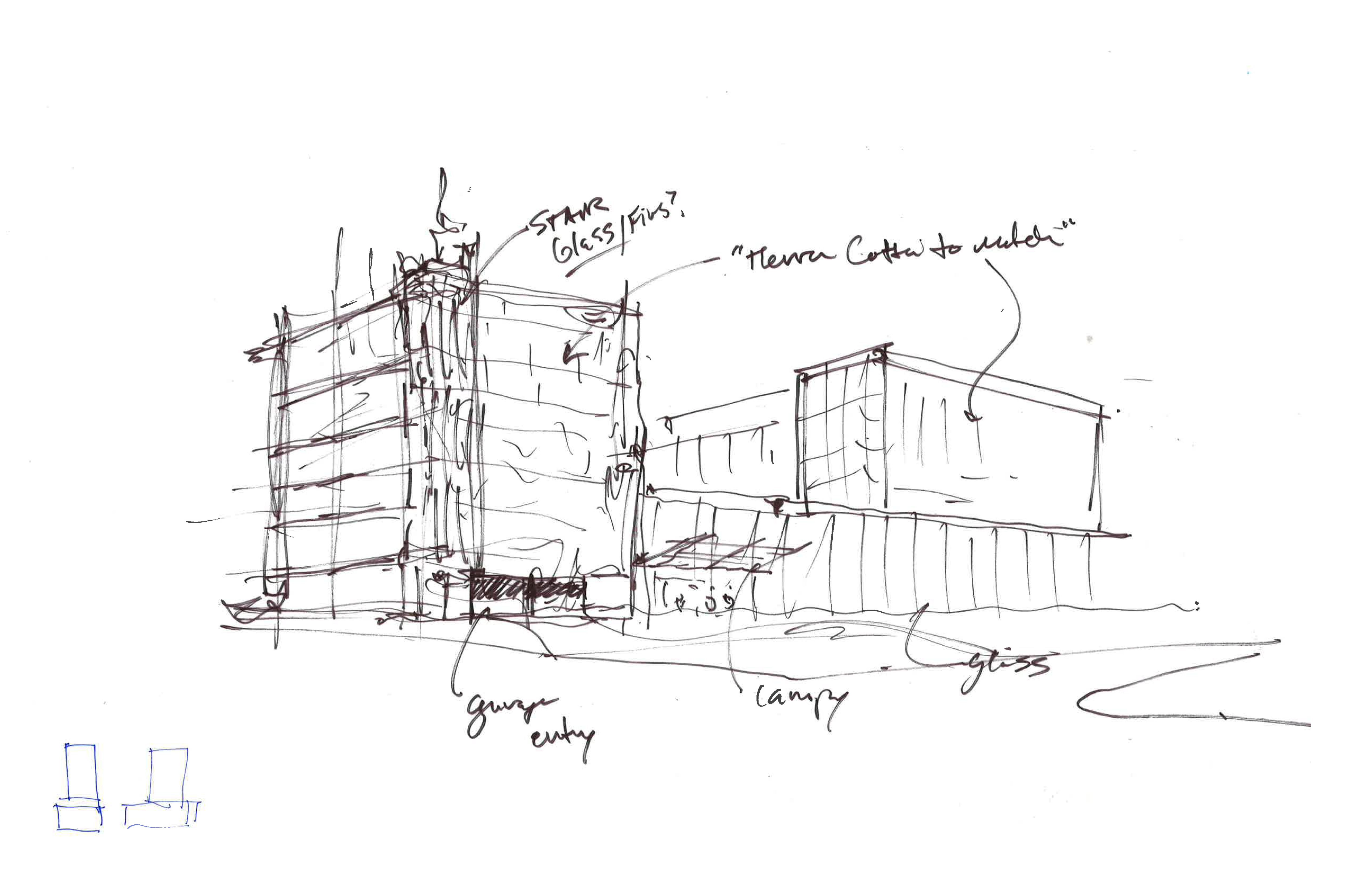
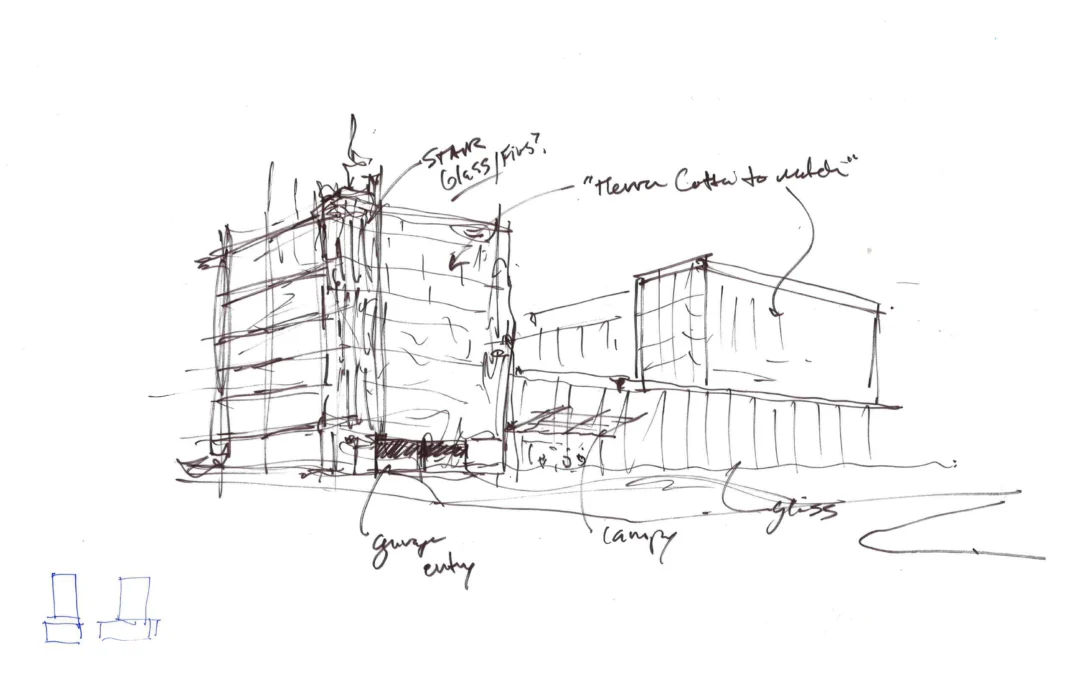
Yale New Haven Health Saint Raphael Campus Bedtower, New Haven, CT. Concept Sketch © Shepley Bulfinch.
Every healthcare design project is made up of thousands of decisions; how different pieces fit together impact the adaptability and future-readiness of the facility. But, because the design process can often be a fast-paced, deadline-driven experience, project teams rarely have the luxury of stepping back to reflect. We’ve found that intentional pauses, or “brain breaks,” can offer a chance for the kind of structured reflection that dramatically improves the long-term performance of the environment.
Why Brain Breaks Matter in Healthcare Design
We’re typically required to swiftly understand our clients’ evolving goals and bring design to life on a timely schedule. But the benefits of taking time to pause as an integrated team strengthens collaboration and gives the opportunity to discover hidden risks and opportunities. This became exceptionally clear during the COVID-19 pandemic. When major projects at Yale New Haven Health’s Saint Raphael Campus were temporarily paused, the unexpected break created space for deep evaluation—and ultimately, better design.

Yale New Haven Health St. Raphael Campus Emergency Department and Heart and Vascular Center, New Haven, CT. Photo by Raj Das.

Virtual Workshop Notes © Shepley Bulfinch.
A Real-World Case Study: Yale New Haven Health
In March 2020, over $1 billion in active projects at Yale New Haven Health’s Saint Raphael Campus halted. Across the healthcare industry, projects hit pause while working to adapt to the constantly evolving circumstances. However, instead of losing momentum, YNHH partnered with Shepley Bulfinch to turn this pause into a strategic advantage.
For the study, YNHH asked Shepley Bulfinch to complete a study discussing and documenting how lessons learned during the pandemic could change the design of three projects—a neuro-focused bed tower, an Emergency Department expansion and renovation, and a Heart and Vascular Center and Radiology and Biomedical Imaging expansion and renovation—for the better. The goal was to examine critical questions that emerged: Were the three projects in design resilient enough to adapt to unpredictable situations? How could we apply lessons learned during the pandemic to build better spaces? Are we making the right decisions for the campus?
Discussions were organized into seven task groups, including YNHH participants as well as representatives from BR+A Consulting Engineers, Turner Construction Company, and Shepley Bulfinch. Throughout the study, our team worked with YNHH to connect with stakeholders in the field and subject matter experts to inform design ideas and understand potential future crises and patient types. By grasping the likelihood of each scenario, we were able to take a measured approach to recommendations.
What We Learned: Key Strategies for More Resilient Healthcare Design
Through workshops, expert interviews, and scenario planning, several high‑impact recommendations emerged, many of which apply broadly to healthcare facilities everywhere.
Standardize Rooms to Increase Flexibility
Designing patient rooms with consistent layouts and infrastructure allows rapid conversion between care levels. Creating adaptable spaces allows a med-surg room to be quickly transformed into an ICU, or a conference center to be used for triage.
Strengthen Infrastructure for “Pandemic Mode”
Facilities benefit from built-in adaptability. This can include adjusting the quantity and placement of an Airborne Infectious Isolation Rooms in patient units, Prep/Recovery areas, and the Emergency Department.
Reevaluate Department Locations
By adjusting key department locations, we can better serve patients. For example, the pandemic led to many feeling discomfort with the potential proximity of infected patients. Moving outpatient services out of the hospital can improve the sense of comfort while adding capacity to the acute care environment.
Building in Brain Breaks
A brain break doesn’t have to be a months long study. Even short, structured pauses, like a one-day workshop or getting new eyes on a concept through a peer review can bring new light to a design and improve alignment across stakeholders. It’s worth taking a moment to reflect when the outcome is a more thoughtful and resilient solution.

Proposed Anteroom Solutions
Collaboration: The Foundation of Resilient Design
Our pandemic study succeeded due to the commitment from each member of the team to build a stronger project. By coming together to reflect on our work, we ensure that the projects we deliver for our clients are thoroughly vetted and optimized for the patients and staff that they serve. Our design team reached these recommendations, among others, through collaboration with the client, our consultants, and subject-matter experts. This multidisciplinary approach ensured that recommendations were grounded in real‑world needs and future‑focused thinking.
The Lasting Impact: Designing for the Unknown
The pandemic underscored a truth that remains relevant for every healthcare project: adaptability and resilience must be designed, not assumed. We’re constantly researching articles, trends, and talking to those with decades of real-world healthcare experience to provide efficient recommendations. Approaching design for the unknown is no different than how we have been approaching the pandemic: working together to provide quality and safe care.

Yale New Haven Health Saint Raphael Campus Bedtower, New Haven, CT. Rendering © Shepley Bulfinch.

Scott Mueller, AIA
Associate Principal, Healthcare Planner
Scott is a senior healthcare planner with experience in medical programming, planning and design.

Cathleen Lange, AIA
Principal
Cathleen is a principal at Shepley Bulfinch with more than 30 years of experience in healthcare design, specializing in planning, program coordination, and Lean methodologies.