


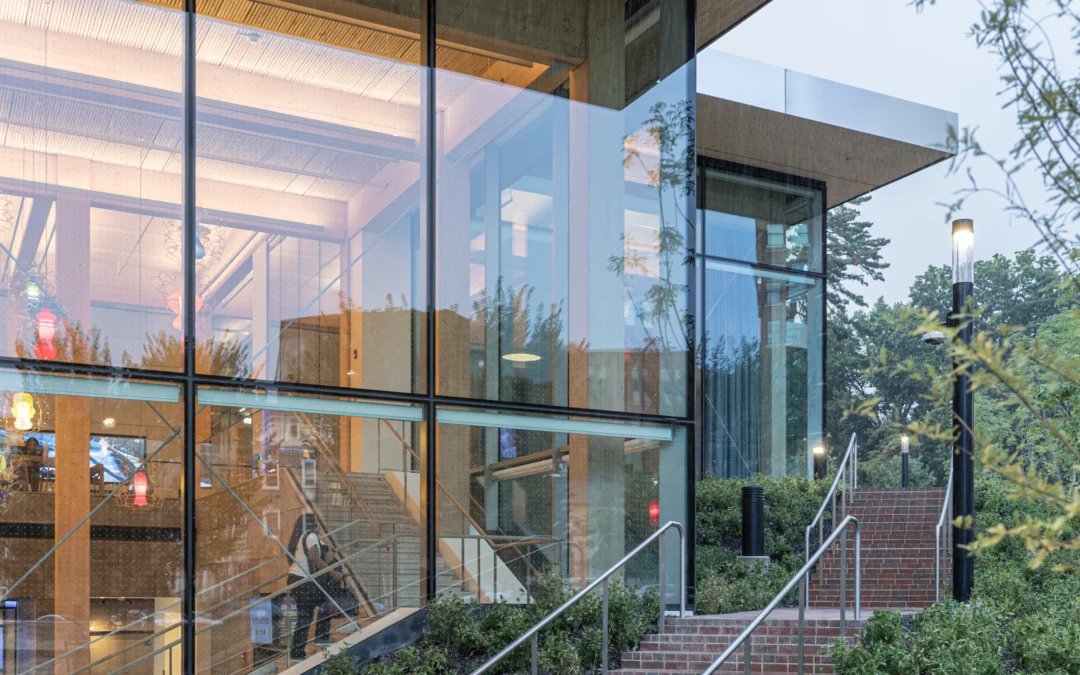
Sustainability at the Heart of Campus Life: Connecting Design with Nature
By Matthew Gifford, AIA, LEED AP, and Carrie Leneweaver, AIA, WELL AP, LEED GA
This is part two of a two part series exploring the sustainable vision behind the design of Johns Hopkins University’s Bloomberg Student Center. Read part one, where we explore how mass timber and advanced concrete technologies create a low‑carbon hub for campus life at the new Johns Hopkins Student Center.
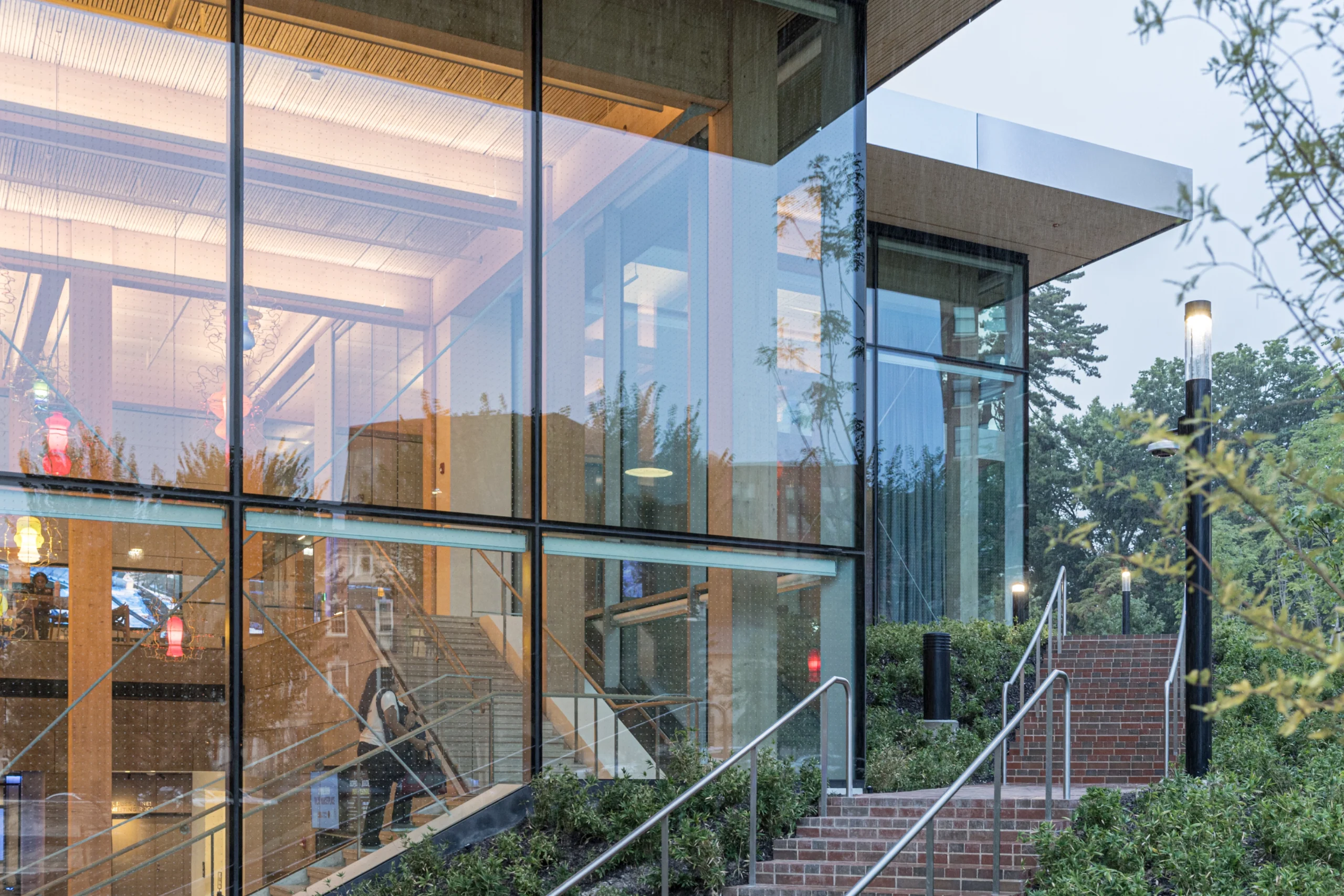
Bloomberg Student Center, Johns Hopkins University, Baltimore, MD. Photo by Laurian Ghinitoiu.
Energy Performance from the Ground Up
Energy efficiency is a cornerstone of the Student Center’s sustainability strategy. Designed to be Net Zero Ready, the building integrates multiple systems that work together to reduce energy demand and operational carbon:
- Nestled into a steeply sloped site, the building is able to utilize the earth’s thermal mass for natural temperature regulation. A dedicated outdoor air system (DOAS) and make up air unit (MUA) are located underground, taking advantage of naturally cooled fresh air intake.
- Radiant floors provide both heating and cooling, improving thermal comfort and energy efficiency while reducing the amount of ductwork required.
- Double and triple pane exterior glazing paired with carefully detailed air‑barrier connections contribute to a high performance envelope that improves thermal performance, reduces perimeter heating demand, and limits air leakage.
- Deep roof overhangs, particularly on the southern side, provide shading that reduces summertime solar heat gain and HVAC loads.
- Photovoltaic panels are integrated across the roofs and carefully coordinated with pavers and roof planes to maintain a clean and intentional aesthetic.
Together, these strategies support long‑term efficiency while maintaining comfort for daily use.
Landscape Integration and Water Stewardship
At the Bloomberg Student Center, sustainable strategies extend beyond the building itself. Through careful placement on a previously developed site, disruption to the historic mature tree grove to the north was minimized. The building is designed to fit seamlessly into the steeply sloped landscape, creating ample opportunities for indoor/outdoor connections and accessible pathways across all levels. On-site bicycle shelters and proximity to public transit encourage visitors to use alternative modes of transportation.
Rainwater cisterns enable capture and reuse for site irrigation and, in combination with variable frequency drives that respond to seasonal load variations, reduce potable water demand by 78% from baseline while supporting landscape needs. A stormwater retention tank and planted areas utilizing native species further manage stormwater runoff and support local ecosystems.
Together, these strategies reinforce a close integration between building and landscape, aligning performance goals with the character of the surrounding site.

Bloomberg Student Center, Johns Hopkins University, Baltimore, MD. Photo by Laurian Ghinitoiu.
Protecting Local Ecology
Given the extensive use of glass throughout the building exterior, the project team incorporated bird‑friendly glazing strategies including fritted patterns that reduce bird strikes without compromising transparency. It’s a subtle but meaningful move that reflects a broader commitment to environmental stewardship; it acknowledges that sustainable buildings must coexist responsibly within their surrounding ecosystems.
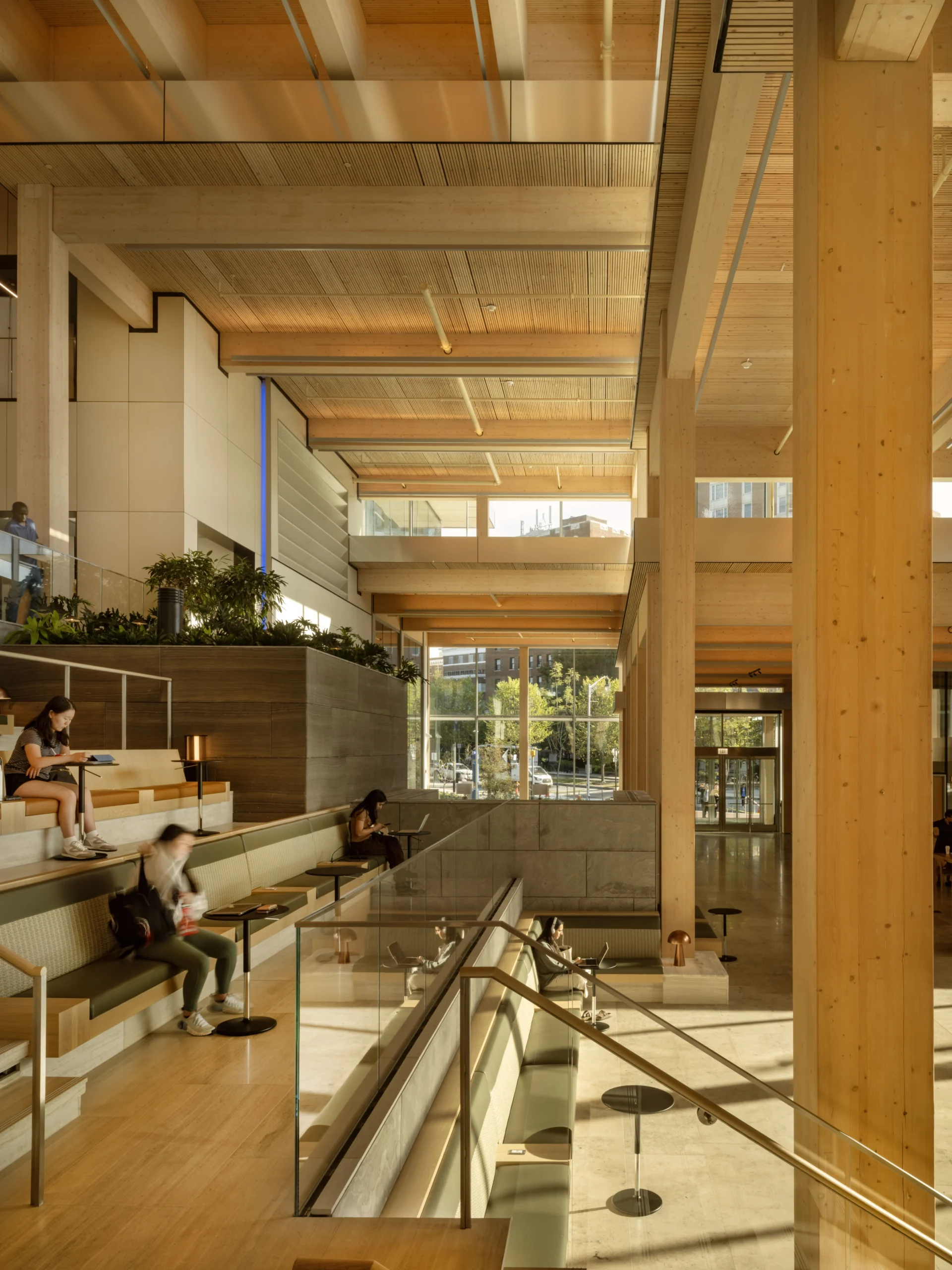
Bloomberg Student Center, Johns Hopkins University, Baltimore, MD. Photo by Nic Lehoux.
Teaching Through Design
Perhaps most importantly, the Bloomberg Student Center is designed as a teaching tool. Its visible systems, exposed materials, and layered sustainability strategies create opportunities for learning and engagement. From students to visitors, the building communicates that sustainability is an integral and intentional element of the design.
A Model for Future Campus Buildings
The Bloomberg Student Center sets a new benchmark for sustainable campus architecture. By combining mass timber construction, energy‑efficient systems, low‑carbon materials, and human‑centered design, it shows how large, complex buildings can meet ambitious environmental goals without sacrificing beauty, program, or function.
More than a place to gather, the Student Center is a living example of Johns Hopkins University’s commitment to sustainability, a commitment that will continue to shape campus life for decades to come.

Matthew Gifford, AIA, LEED AP
Principal
Matt’s collaborative approach to the design process has created highly sustainable, highly functional academic, library, and student life facilities. He is committed to developing solutions that are unique to each client’s culture and goals.

Carrie Leneweaver, AIA, WELL AP, LEED GA
Senior Architect, Associate
Carrie approaches each project as an opportunity to craft spaces that are not only beautiful, but functional and sensitive to the surrounding environment.