


Sound Check: Implications of Busier Libraries
by Barak Yaryan, AIA
Walk into the first floor of a modern library and you might feel like you’ve entered a train station. The hum of conversation, the clatter of footsteps, the buzz of collaboration—it’s a far cry from the hushed sanctuaries of the past. As libraries evolve into vibrant community hubs, the challenge of balancing quiet and activity has never been more pressing.

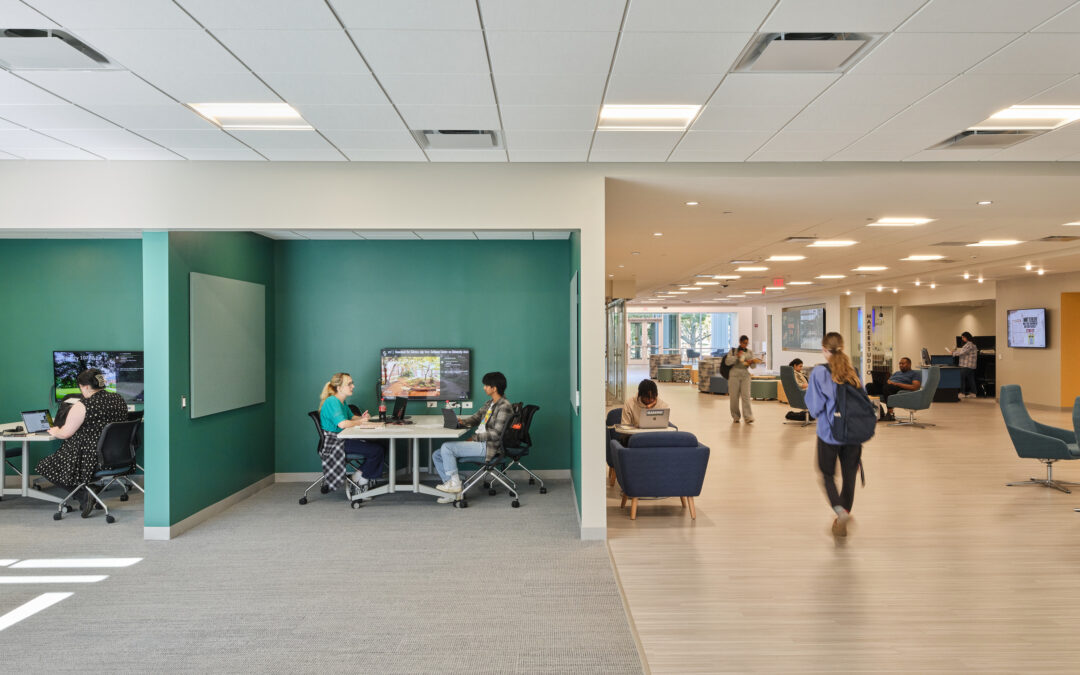
University of North Carolina Wilmington Library, Wilmington, NC. Photo by Keith Isaacs.
A Not-So-Quiet Revolution
Libraries today are expected to do more than house books. They’re places of study, social connection, digital exploration, and public programming. With patron space increasing—from an average of 25% in historical models to 75% in forward-looking designs—the acoustic landscape is shifting dramatically. More people means more sound. And while collaboration is essential, so is silence.
This is the paradox of the modern library: how do we design spaces that welcome noise without sacrificing the quiet that many patrons still seek?
Avoiding the Train Station Effect
The “train station effect” refers to the chaotic acoustics often found in large, open first-floor library spaces. These areas, designed to be welcoming and flexible, can unintentionally amplify sound, creating environments that feel more like transit hubs than places of reflection.
To counter this, architects and designers are turning to acoustic zoning. By strategically separating quiet zones from active areas, libraries can support diverse patron needs. Materials matter too—sound-absorbing panels, soft furnishings, and acoustic ceiling treatments can dramatically reduce ambient noise. Even the layout plays a role: avoiding central bottlenecks and dispersing traffic flow helps prevent sound from pooling in high-traffic areas.

University of North Carolina Wilmington Library, Wilmington, NC. Photo by Keith Isaacs.

Houston Freed-Montrose Library, Houston, TX. Photo by Chris Bacarella.
Designing for the Individual in Expansive Spaces
As libraries grow in size and scope, maintaining a sense of intimacy becomes essential. Patrons need spaces that feel personal, not cavernous. Designers are responding with human-scale interventions: cozy reading nooks, semi-private study pods, and thoughtfully lit alcoves that offer refuge from the bustle.
Accessibility also plays a key role. Quiet spaces must be inclusive: welcoming to neurodiverse patrons, those with sensory sensitivities, and anyone seeking a moment of calm. Universal design principles ensure that these spaces are not only quiet but also easy to navigate and use.
The Future Is Collaborative—and Considerate
The quiet revolution in library design isn’t about eliminating noise—it’s about managing it. It’s about creating environments where collaboration and contemplation coexist. Where patrons can engage, explore, and reflect without competing with the acoustics.
In our presentation, we’ll dive deeper into how design, behavior, and acoustics collide in today’s public and academic libraries. We’ll explore typologies, share real case studies, and offer practical solutions for shaping the future of library architecture.

Barak Yaryan, AIA
Senior Architect, Associate
Barak is a project designer specializing in systems thinking and conceptual integration.