


Bad Bunny’s Casita: When Architecture Becomes a Cultural Symbol
Mariela Ortiz and Omar Bailey, AIA, LEED AP, NOMA
As architects, we’re trained to read form the way others read language. We look for meaning in scale, in material, in the way a space holds memory. But every so often, architecture shows up somewhere unexpected and reminds us that design can transcend buildings to become a cultural force.
Recently, that reminder came from an unlikely place: Bad Bunny.
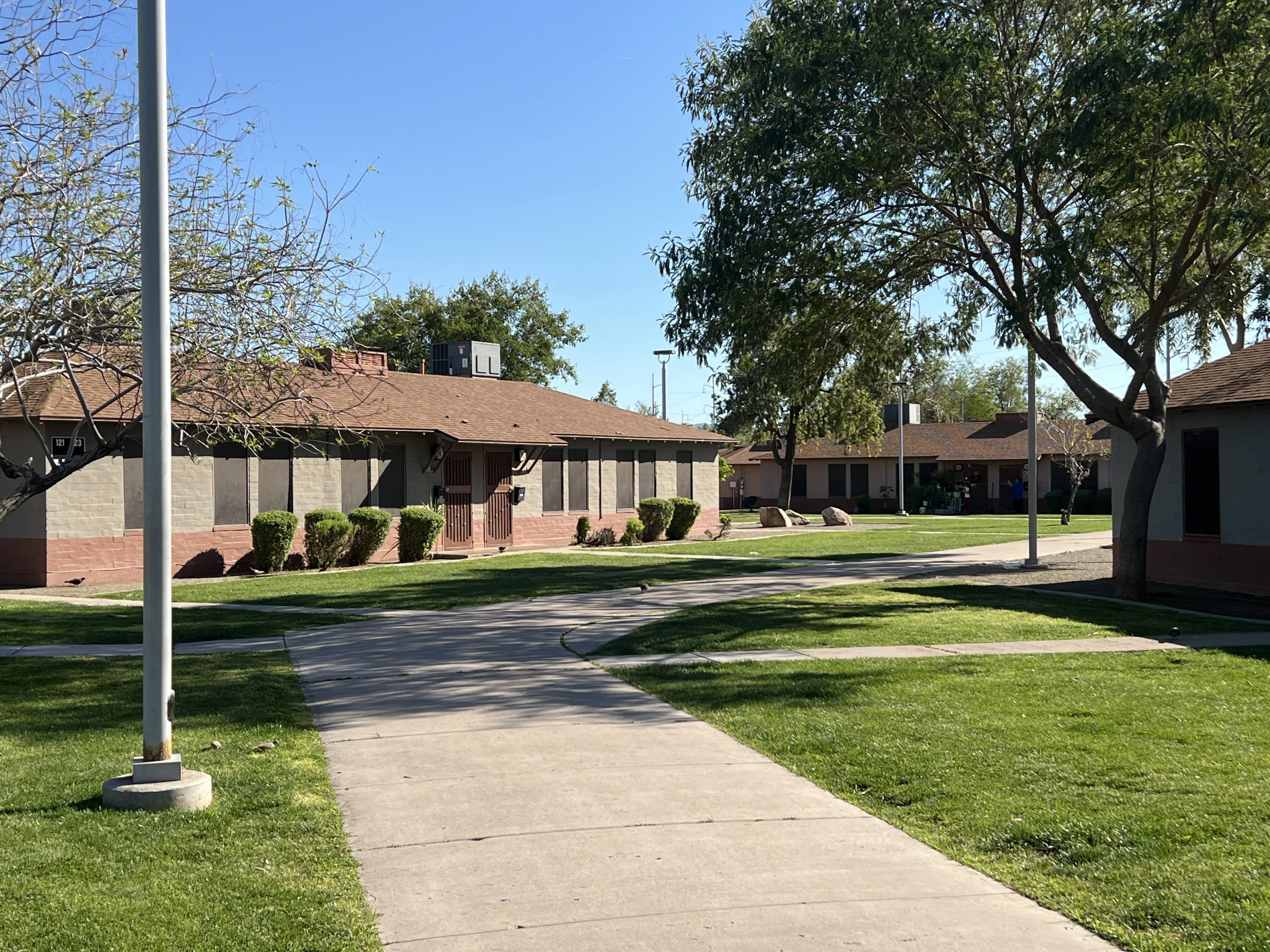
The historic Marcos de Niza apartments, Phoenix, AZ.
Over the past year, he has been everywhere—breaking records, redefining global pop culture, and expanding the reach of Spanish‑language music. But the captivation goes beyond the music. It’s how intentionally he uses architecture as part of his storytelling.
One prominent example: La Casita—which translates to “the little house.”
For Mariela, this wasn’t just cultural commentary. As a Puerto Rican architectural designer, she experienced this moment personally when she attended Bad Bunny’s first concert in Puerto Rico as part of his historic residency, Yo No Me Quiero Ir De Aquí. This is where La Casita first appeared. Spotlighting it—literally—on stage in the arena was more than a design choice; it was a large scale, emotional reminder of home, memory, and identity on a monumental scale for the thousands of Puerto Ricans in attendance.
La Casita: A House That Became a Stage
During his historic Super Bowl Halftime Show, Bad Bunny didn’t simply perform on a stage. He built a smaller version of La Casita inside the football field surrounded by dancers in lush greenery evoking a fragment of El Yunque, Puerto Rico’s rainforest. La Casita wasn’t iconic because it was monumental. It was iconic because it was vernacular.
La Casita wasn’t iconic because it was monumental. It was iconic because it was vernacular.
La Casita echoed the traditional rural homes many of Puerto Ricans grew up visiting— solid concrete construction built to withstand hurricanes, a welcoming balcón, “Miami” windows, and the familiar marquesina: a versatile, shaded social space often used for neighborhood gatherings, celebrations, and family time. It was domestic scale placed within monumental scale, a move architects use intentionally to trigger memory and emotion, to tell a story.
Bad Bunny used it to say, “This is where I come from.” And millions of people understood exactly what that meant.
From La Casita to South Phoenix: Designing for Belonging
Our ongoing Marcos de Niza Affordable Housing Study in South Phoenix shares a similar ethos. The project reimagines the 1950s single-story cottages of an affordable housing development into a dignified, modern community rooted in the people who already live there. Our approach to this design follows a clear vision: limit displacement and gentrification; support multigenerational families; honor the neighborhood’s cultural identity; and design with, not for, the community.
The team has centered engagement at every step. Residents aren’t just stakeholders; they’re co‑authors. Their stories, needs, and memories shape the design just as much as zoning or site constraints.
In that way, Marcos de Niza and La Casita share a common thread: both use form to affirm belonging.
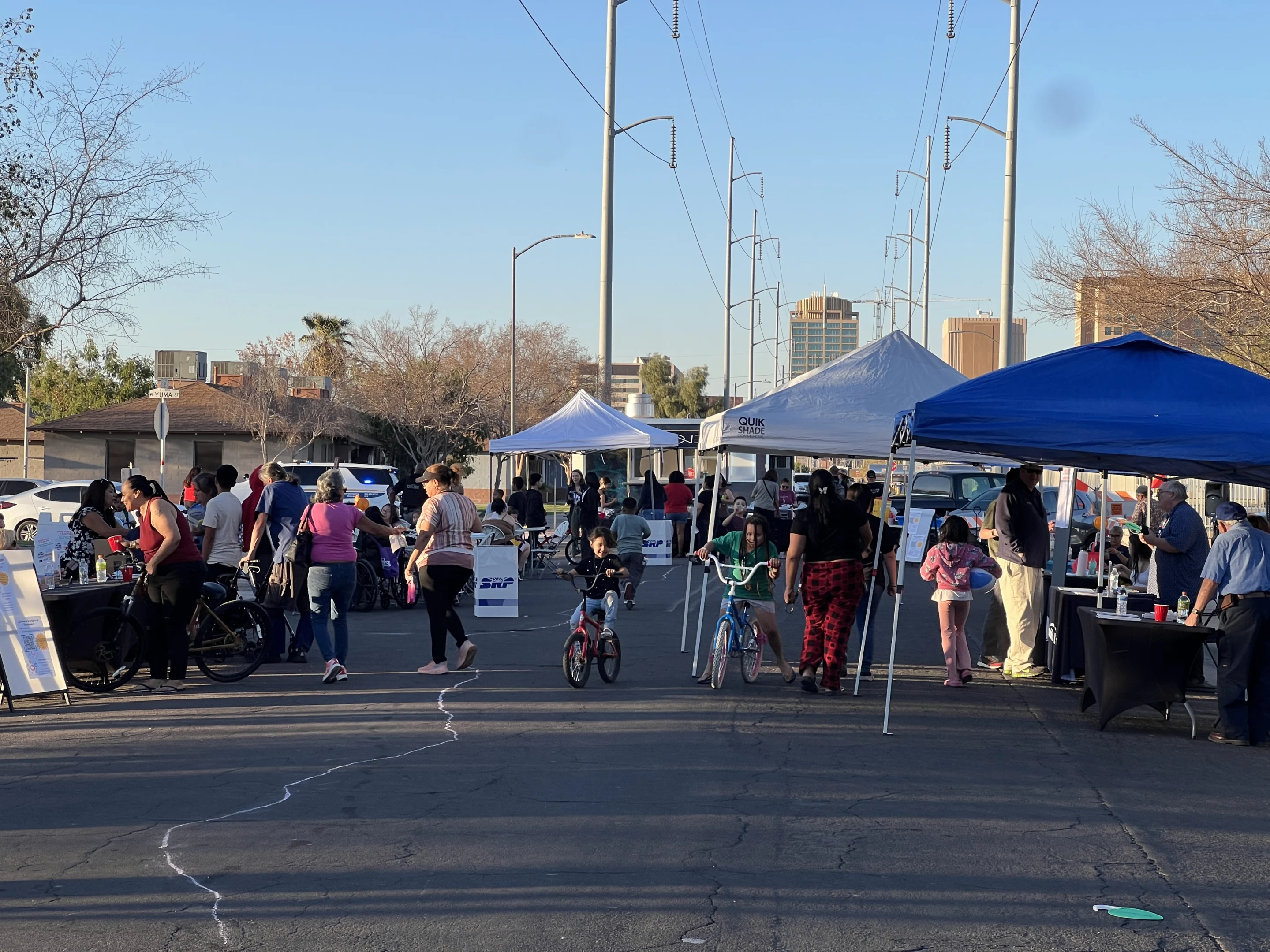
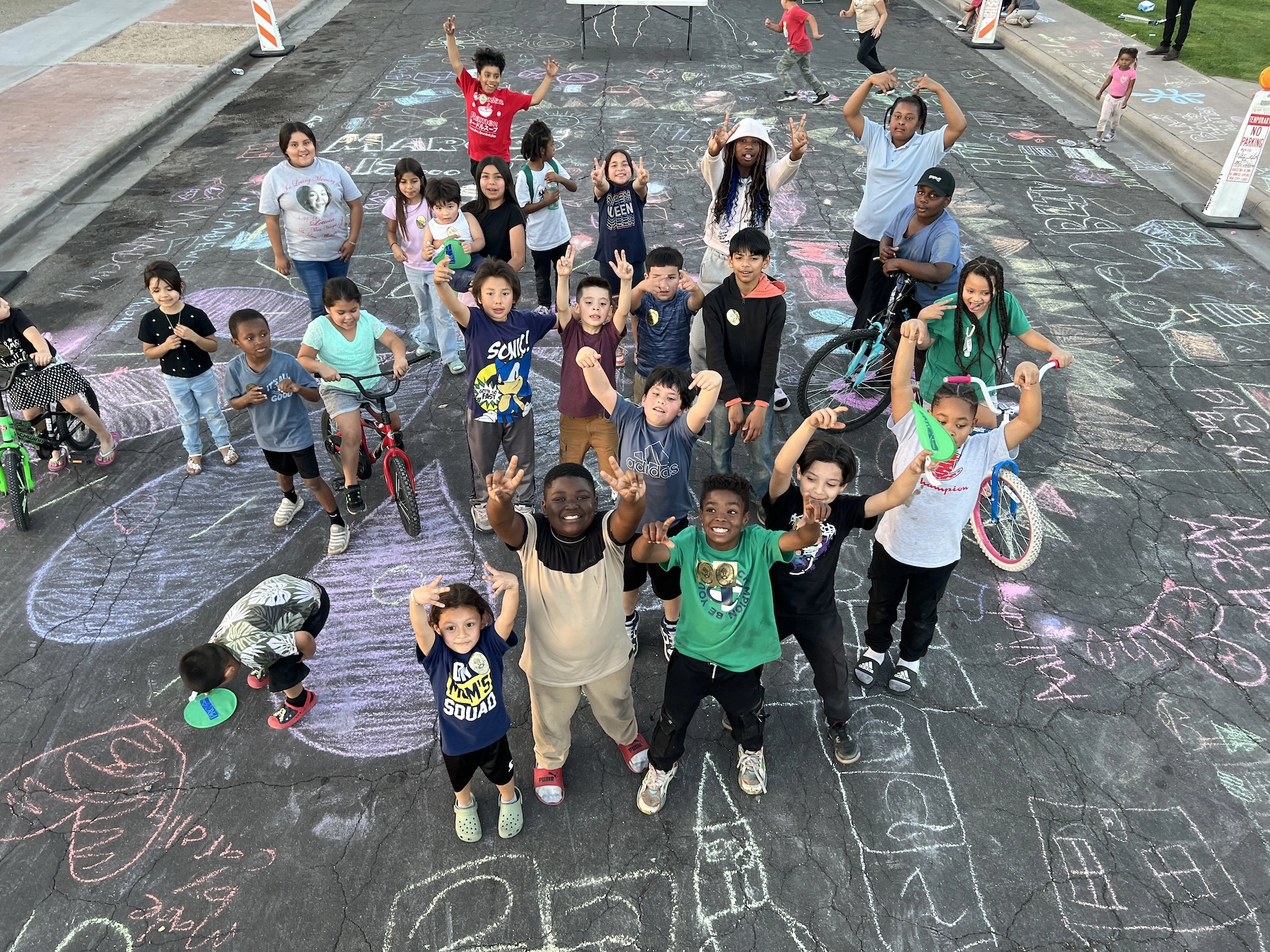
Over 330 residents and community stakeholders came to one of three community engagement events that kicked off the Marcos de Niza project.
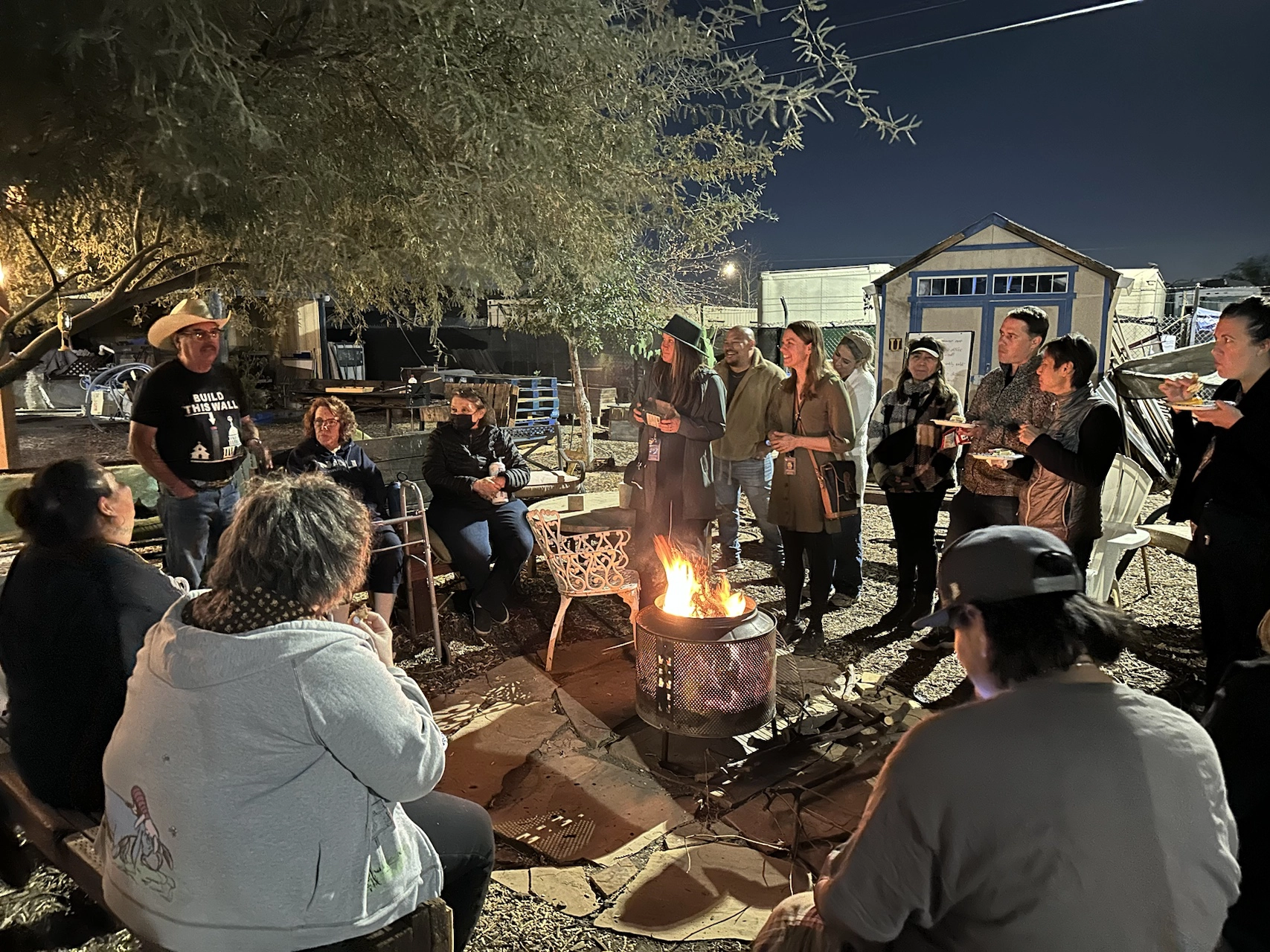
Stakeholders engage in a biophilic design charette. Lake City Collective Cultural Center, Seattle, WA.
Centering Community
This commitment to designing with community is echoed in our work for the Lake City Collective Cultural Center. That project highlights how architecture can uplift identity by honoring the lived experiences of the people who inhabit a place.
Through deep engagement, storytelling, and cultural listening, the project demonstrates that design becomes most meaningful when it reflects the histories and aspirations of the communities it serves. It reinforces a belief we hold strongly: architecture is not just about buildings; it’s about relationships.
Just as La Casita distilled the essence of Puerto Rican identity into a single, resonant form, and Marcos de Niza seeks to preserve the cultural fabric of South Phoenix, the Lake City Collective project shows how thoughtful design can strengthen belonging across diverse contexts.
Together, these efforts illustrate a shared architectural truth: when people see themselves in the spaces around them, those spaces become more than structures—they become symbols.
Home as Storytelling
Bad Bunny’s Casita inside an arena and a community‑driven planning projects in South Phoenix and Seattle may all seem worlds apart, but they ask the same architectural question:
What does home mean when it becomes a symbol?
For Puerto Ricans in that arena, La Casita was a reminder of origin, belonging, and cultural identity.
For families in South Phoenix, Marcos de Niza is a promise that redevelopment can honor the past while building a future.
For the Lake City community, the design becomes a platform for visibility and voice.
All three show that architecture is most powerful when it reflects the people it serves.
Architecture Beyond Buildings
Whether or not you follow Bad Bunny’s music, his work offers a compelling reminder: architecture transcends walls and roofs. It becomes memory. It becomes narrative. It becomes culture.
And as we continue shaping projects like Marcos de Niza—projects rooted in community, identity, and dignity—it’s worth remembering that sometimes the most meaningful architecture isn’t grand.
It’s familiar.
It’s personal.
It’s home.

Mariela Ortiz
Designer
Mariela believes that design is a lens to see the world differently. She brings this approach to all of her work.

Omar H. Bailey, AIA, LEED AP, NOMA
Associate Principal
With nearly 25 years of experience in architectural practice, Omar’s focus on community impact has been instrumental in conversations with developers.