


Designing With the Neighborhood
By Omar Bailey, AIA, LEED AP, NOMA
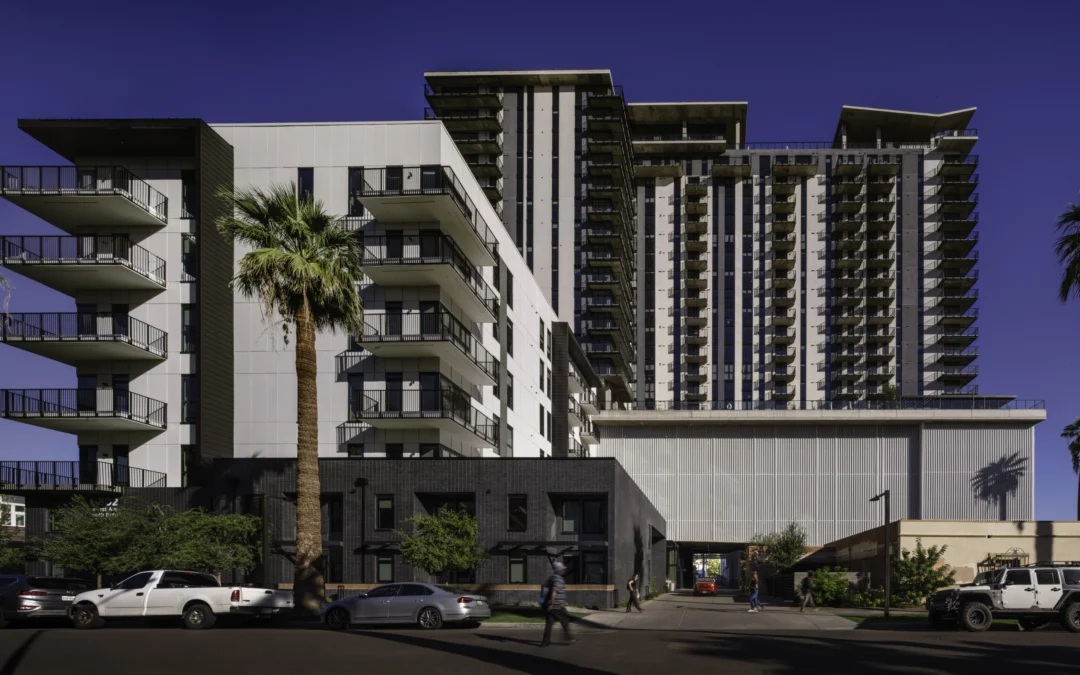
Seated at a critical juncture between Phoenix’s dense urban core and the historic Roosevelt neighborhood, the design for Saiya called for architectural rigor grounded in deep listening and collaboration. Here, community engagement was not a box to check, it was a driving force. The project’s form, materiality, and connection to downtown Phoenix were collectively shaped by residents, city and client stakeholders, and the broader arts community.
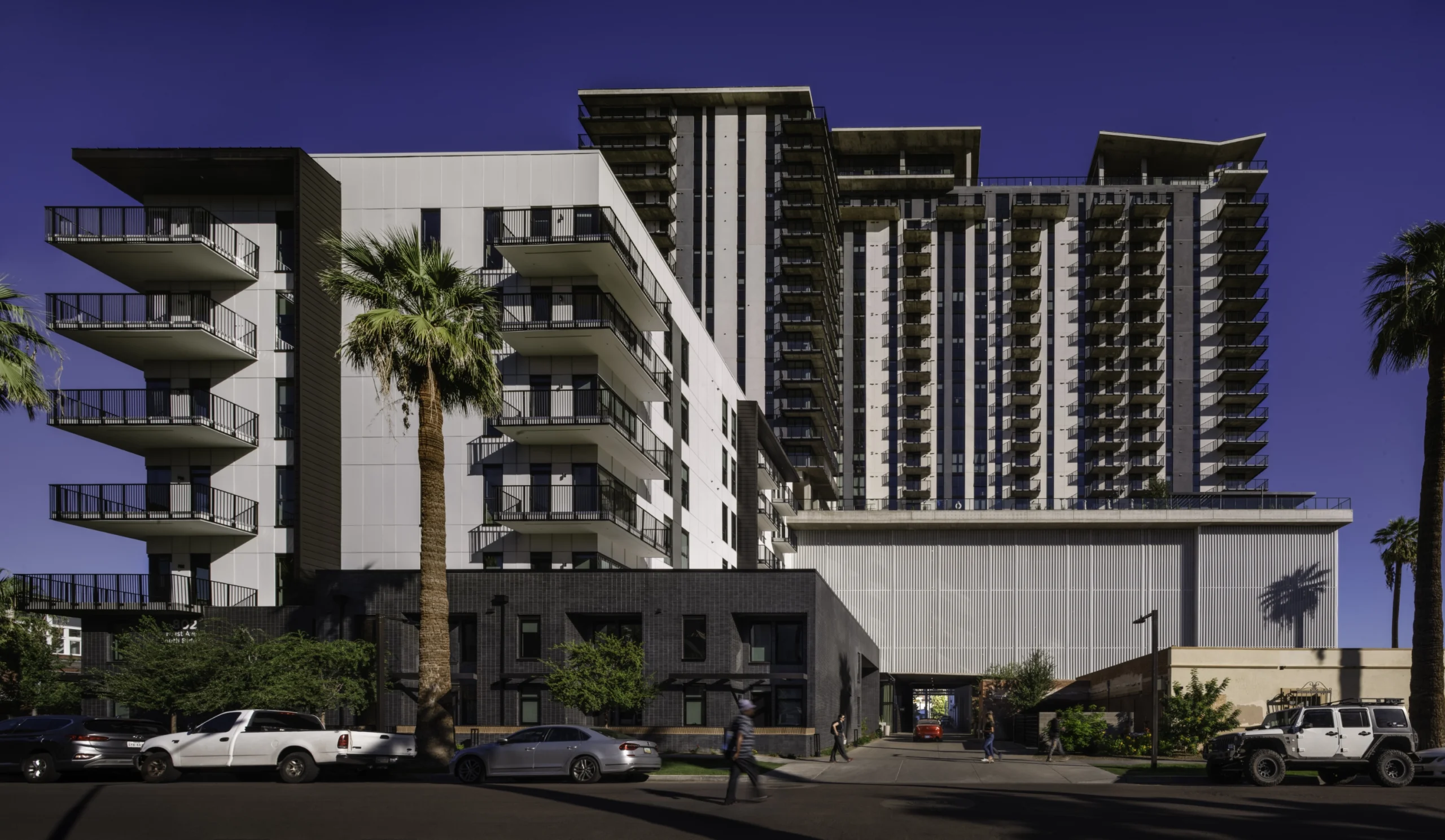
Saiya, Phoenix, AZ. Photo by Matt Winquist.
From the outset, this was approached as an opportunity to demonstrate how large-scale, infill housing can contribute meaningfully to its surroundings while respecting the character and concerns of an established neighborhood.
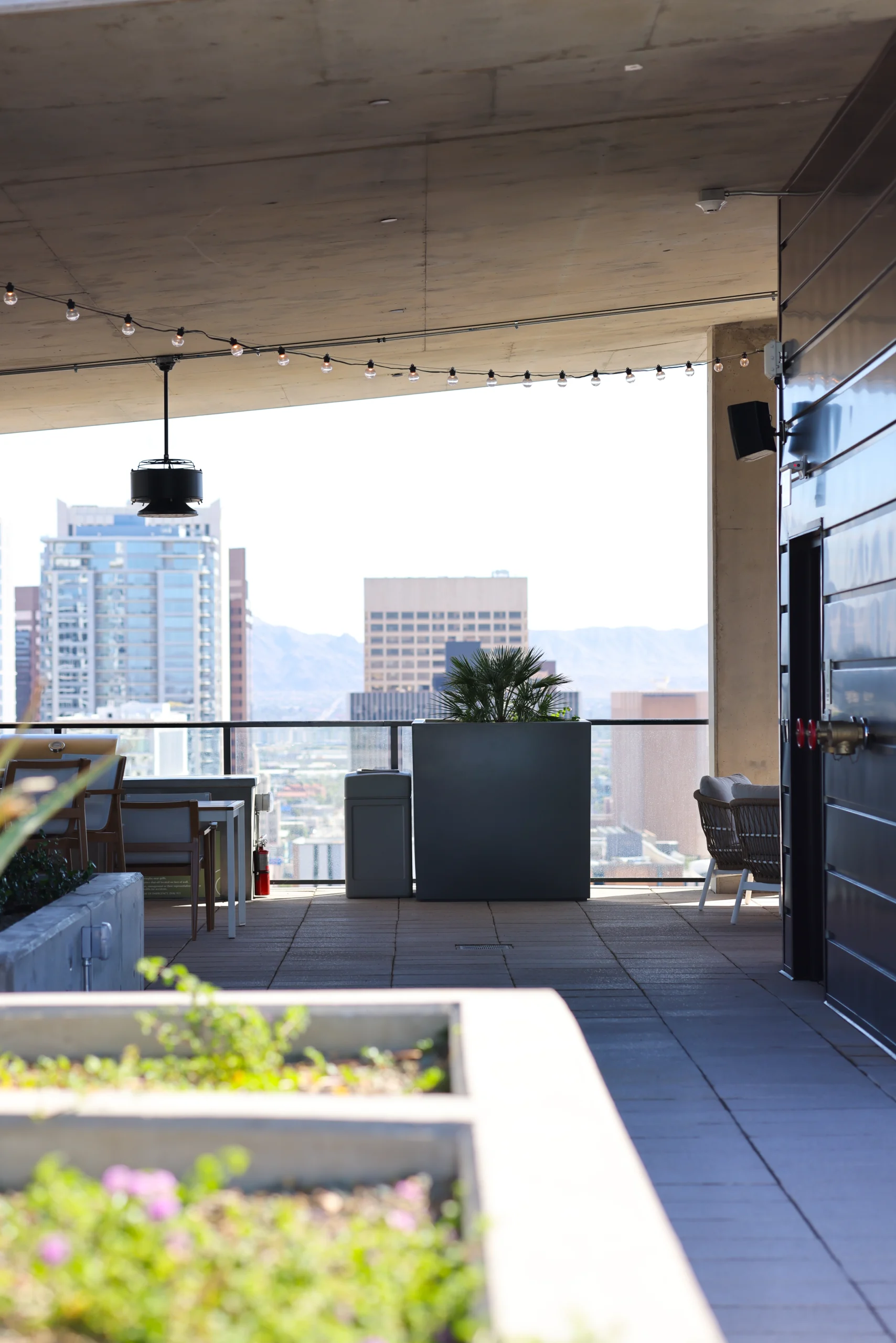
Saiya, Phoenix, AZ. Photo by Jenn Evans.
Listening First: Engagement as a Design Tool
The mixed-use site occupies a transition zone between two distinct character areas: the Downtown Gateway, defined by high-rise development and regional activity, and the Roosevelt Historic Neighborhood, a low-rise, residential area with a strong sense of identity and civic involvement. This context brought heightened scrutiny and expectations of transparency to the project.
The design team participated in extensive neighborhood meetings throughout the entitlement and design process. These conversations were not abstract or symbolic; they directly informed architectural decisions. The result is a design that responds to its context. Each side has a distinct approach, mirroring the community it exists in.
A Mixed-Use High Rise in a Historic District
While the project site permits high-rise development, it directly faces the quiet Roosevelt Neighborhood. As downtown Phoenix’s first designated historic neighborhood, Roosevelt limits building heights to five stories, with much of its fabric defined by historic bungalows. Given the area’s walkable character and strong sense of historic identity, residents expressed concern that the introduction of a high-rise could feel abrupt and disrupt the neighborhood’s established atmosphere.
The result was a west-facing frontage that steps down in scale, adopts a townhome typology, and uses brick as a primary material—echoing the cadence and texture of the surrounding historic fabric. Parking, often a flashpoint in high-density developments, is fully concealed behind brick screening on the residential side. Headlights, mechanical noise, and visual clutter are deliberately shielded from neighboring homes, reinforcing a sense of continuity rather than disruption.
The Paseo: Creating Shared Space in the City
One of the project’s most significant community-facing moves is the introduction of a pedestrian paseo that weaves through and connects the vibrant commercial corridor to the adjacent well-established residential neighborhood. In downtown Phoenix, where “mega-blocks” often limit permeability and walkability, this breaks down the scale and invites the public in and through the space.
The paseo emerged from a convergence of zoning realities and community dialogue, shaping both its intent and form. By transforming an existing north–south alley into a pedestrian‑oriented corridor that accommodates light vehicular movement, the project establishes a cross‑grain paseo that supports everyday circulation and reinforces downtown Phoenix’s growing walkable framework. Prioritizing civic connection over privatization, the design intentionally maintains an open and welcoming ground plane.
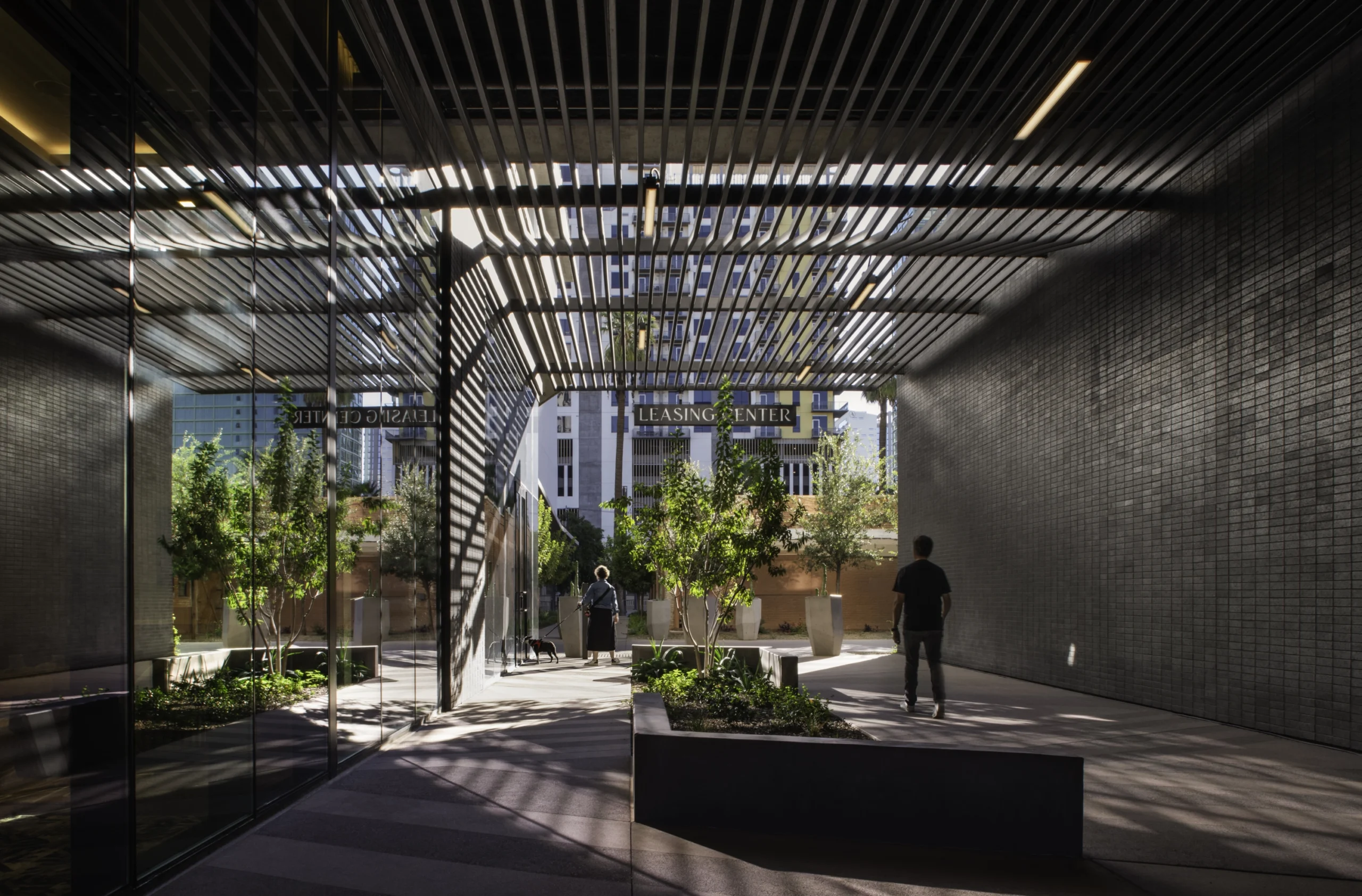
Saiya, Phoenix, AZ. Photo by Matt Winquist.
Human-scale and visual connections were the priority to surrounding streets. The paseo contributes to neighborhood well-being and reinforces the idea that large developments can still participate in public life.
Art, Identity, and the Arts District
Located within Phoenix’s Roosevelt Arts District, Saiya’s art program reinforces the areas creative identity and incorporates local artwork at multiple scales. The site includes Arizona’s largest exterior mural, a 23-story art piece, reflecting both the district’s creative identity and the community’s desire for meaningful public art.
Rather than treating art as an afterthought, it was recognized as a way to give back to the neighborhood and embed cultural expression into the architecture itself. Art is integrated throughout the building, responding to the city’s evolving visual landscape while demonstrating that this project is part of, not separate from, the arts community it inhabits.
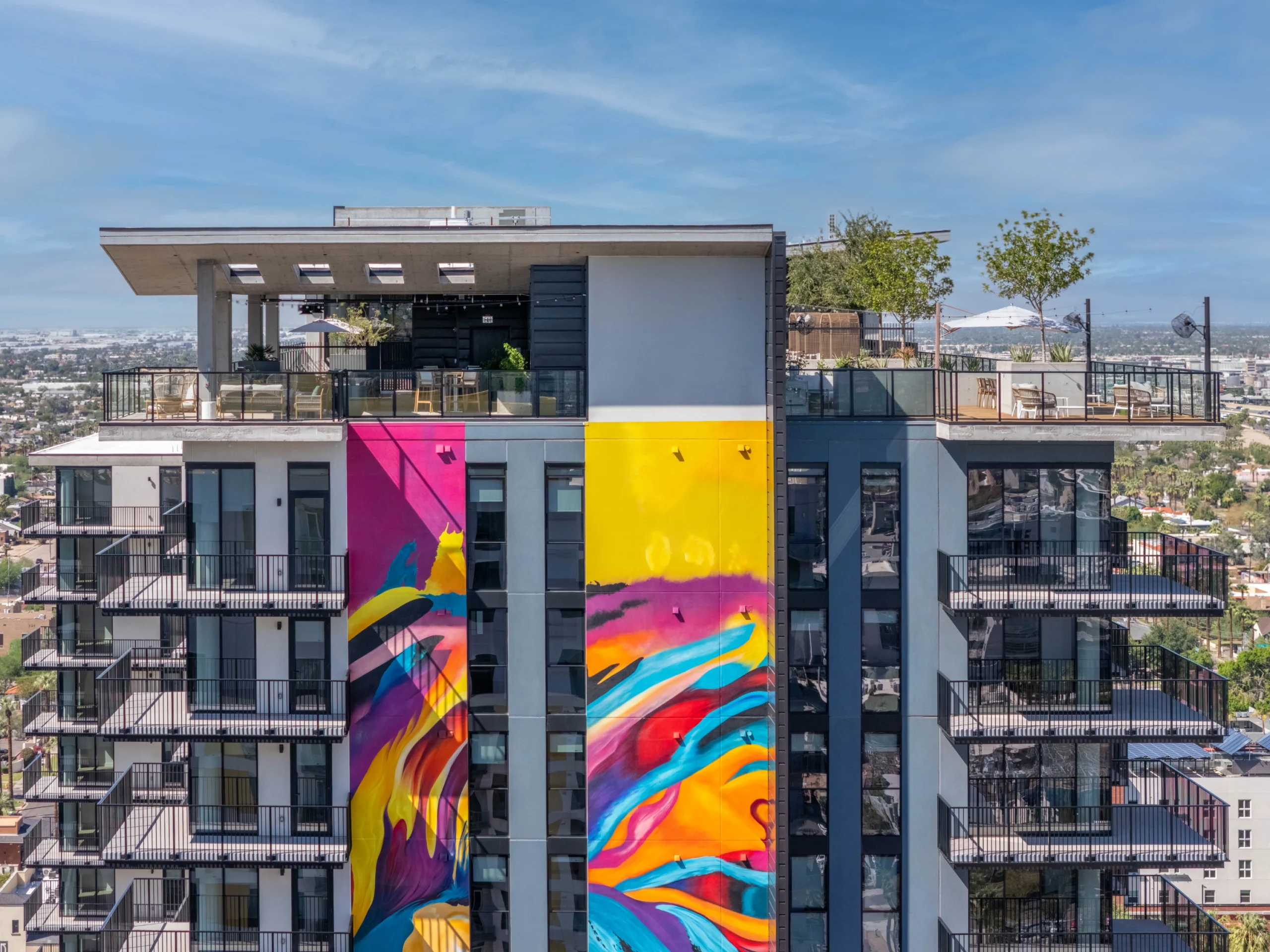
Saiya, Phoenix, AZ. Photo by Mitch Medeiros.
Omar Bailey, AIA, LEED AP, NOMA
Associate Principal
In 23 years of architectural practice, Omar Bailey has designed housing, adaptive reuse, education, and healthcare community projects in urban landscapes across the country.