


Four Lessons from Renovating at Lehigh University
By Bob Mohr, AIA, LEED AP
Some architecture projects are destined to challenge standard modes of historic preservation practice. Shepley Bulfinch’s recent work renovating Lehigh University’s Clayton University Center at Packer Hall is one of them.
As others have noted, the vocabulary of “preservation architecture” does not always serve us well. Terms like historic, historical, heritage, and conservation are often used interchangeably, as are categories such as renovation, rehabilitation, renewal, and restoration. The umbrella term preservation itself tends to imply stasis rather than evolution or transformation.
Read the full paper to understand Packer Hall’s architectural evolution, its constraints, and our team’s honest ways to extend its life.
Four Lessons from Renovating at Lehigh University
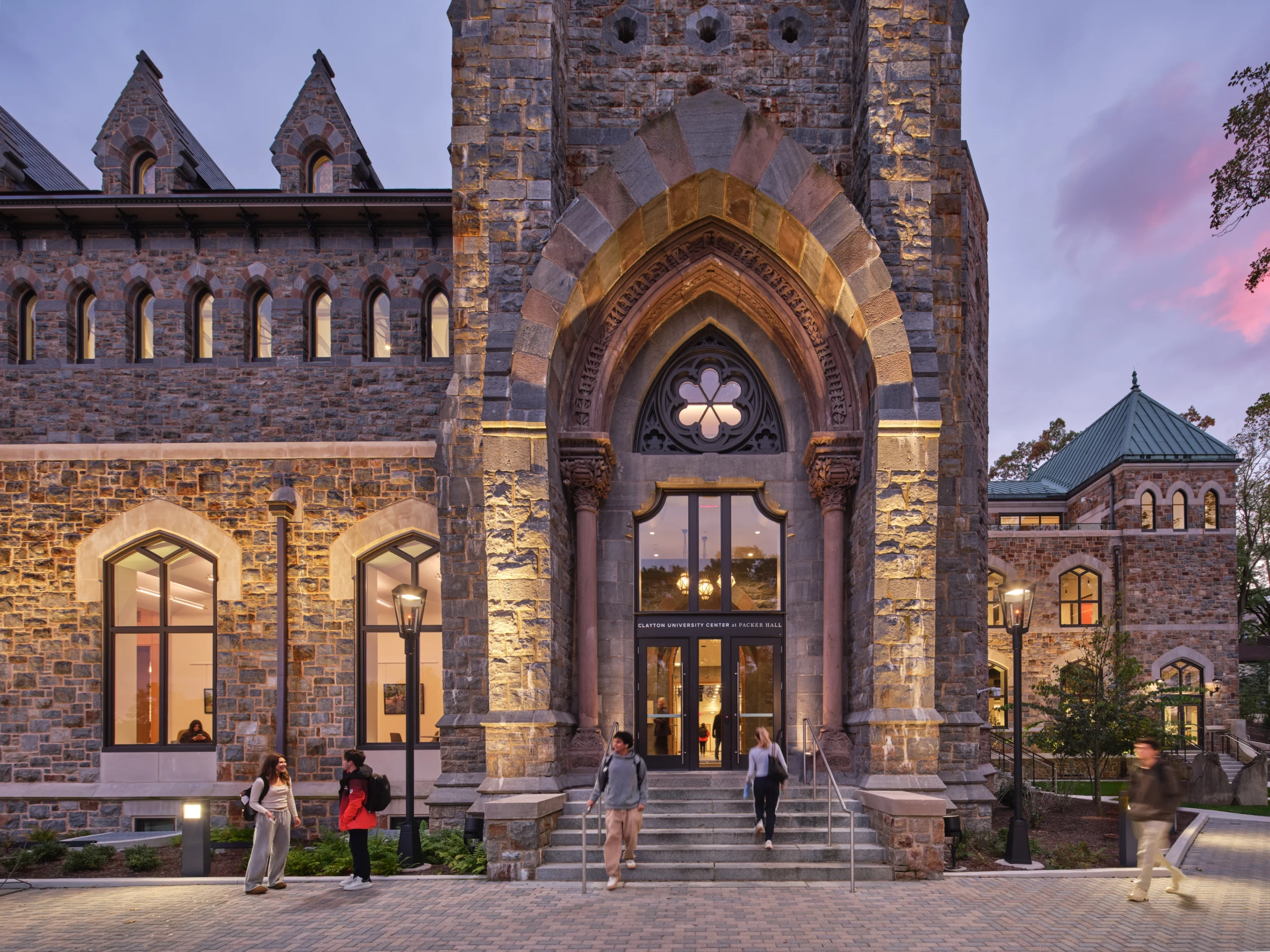
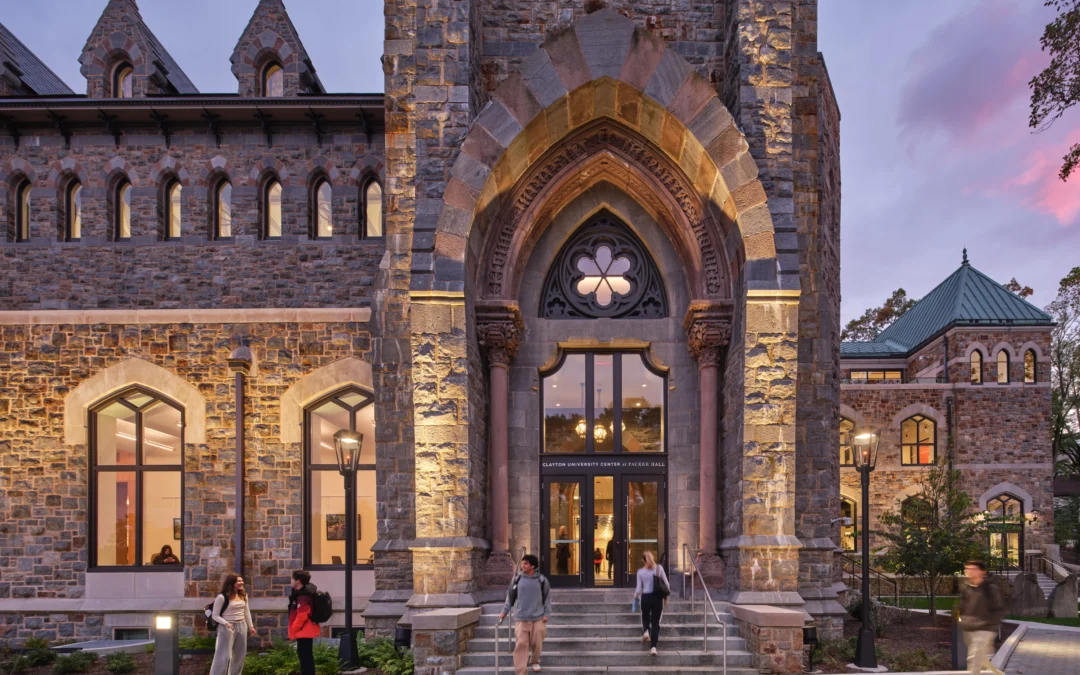
Lehigh Clayton University Center, Bethlehem, PA. Photo by Todd Mason | Halkin Mason.
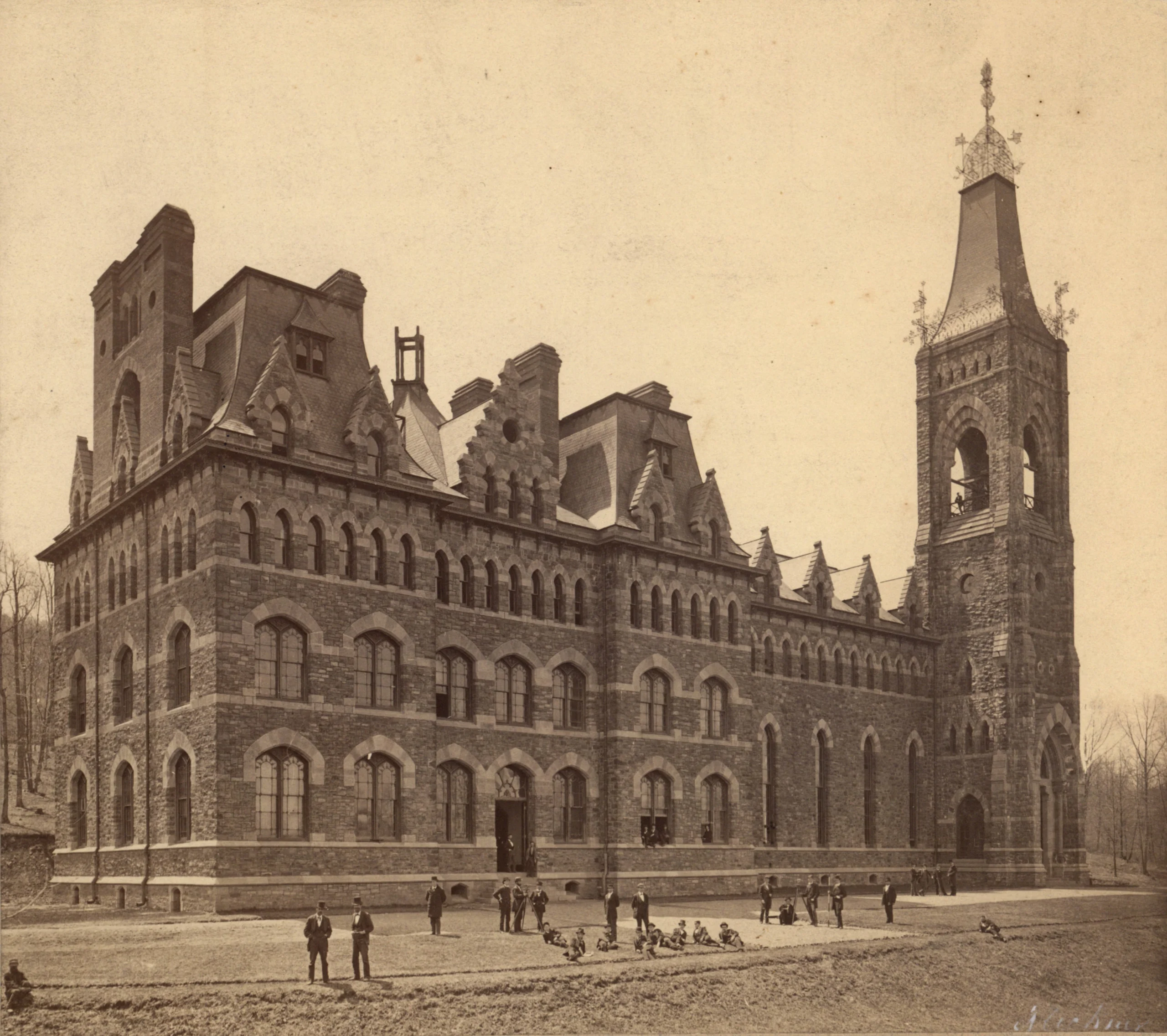
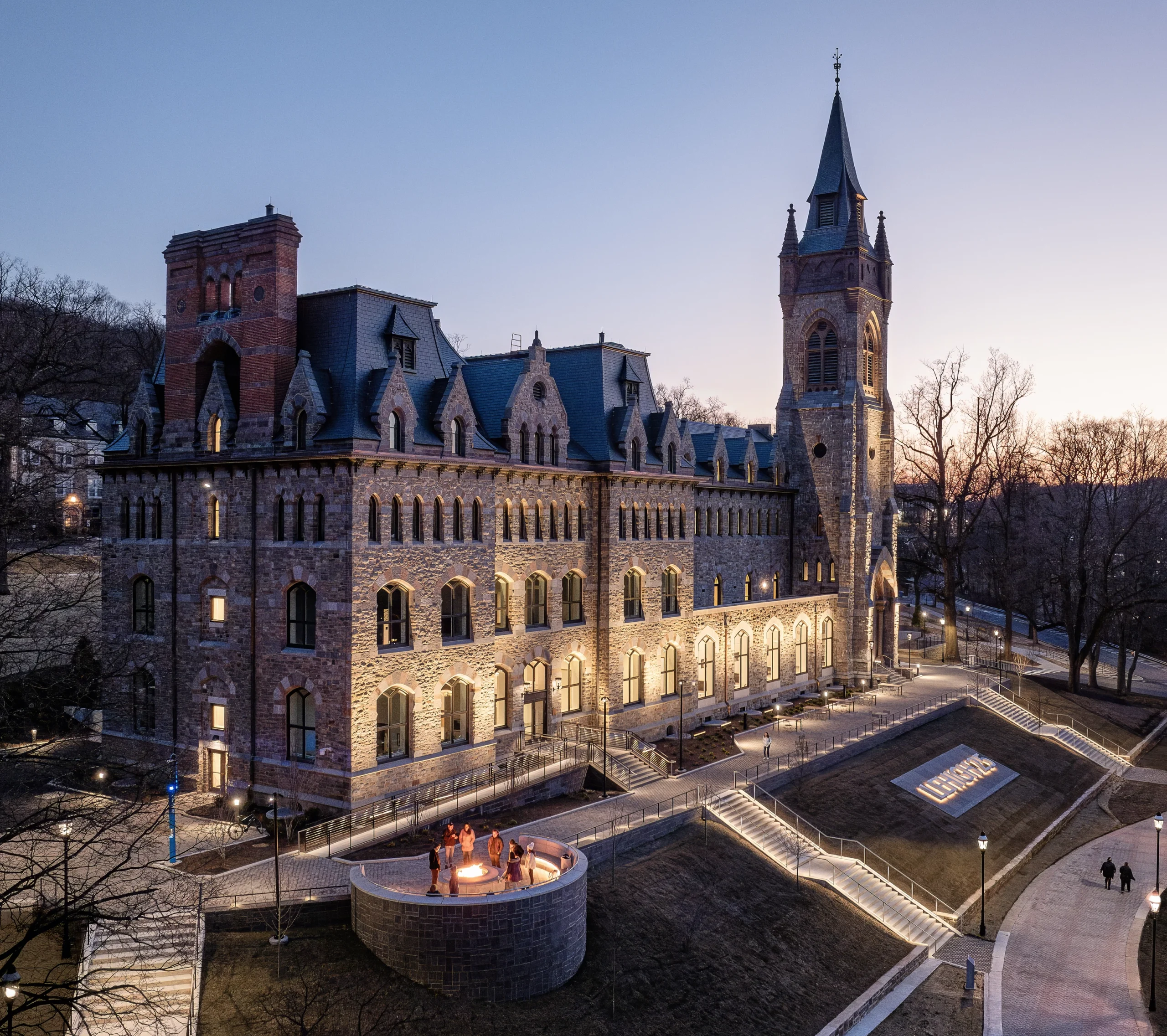
At Lehigh University, the oldest purpose-built academic building on campus has long been a crossroads. Built in 1868 as Packer Hall, the building sits nestled into a hillside overlooking the campus quad and the city of Bethlehem. Over time, many of Packer Hall’s original architectural details were lost, and the interiors were reimagined in an aesthetic aligned with the addition’s Collegiate Gothic sensibility rather than the building’s 19th-century origins.
This history produced an architectural mélange. While lacking strict historical authenticity, it nonetheless succeeded in expressing institutional continuity and lending gravitas to a growing university. For our design team, the challenge was not to undo this history, but to interrogate it: What is the most honest way to rehabilitate this building today?
The Clayton University Center offered many lessons. Below are four principles that shaped our approach to this legacy structure, principles that extend beyond this project and inform how we think about renovating historic buildings more broadly.
For buildings that matter—on campuses, in cities, in communities—this balance between respect and reinvention is not a compromise. It is the work.
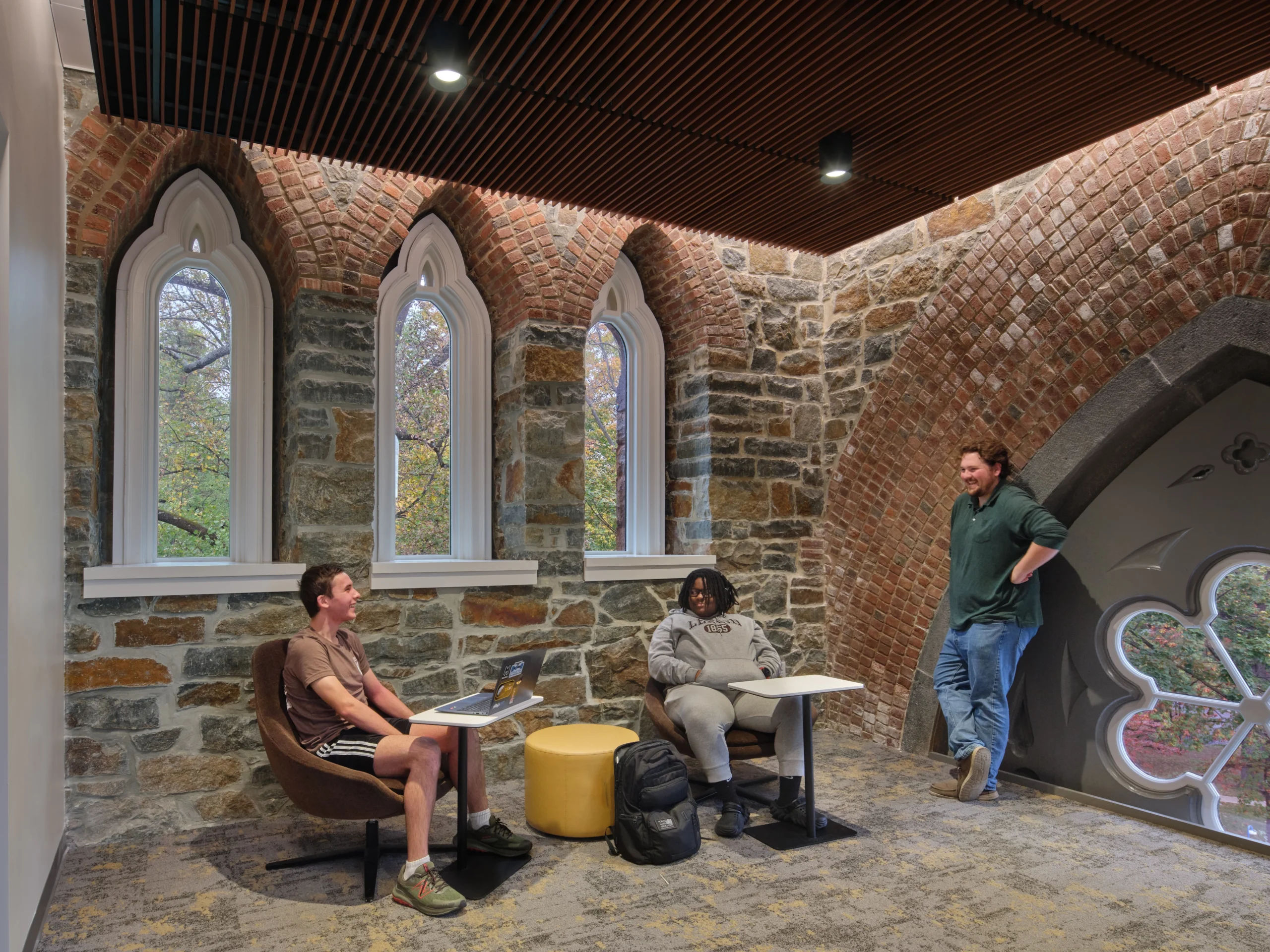
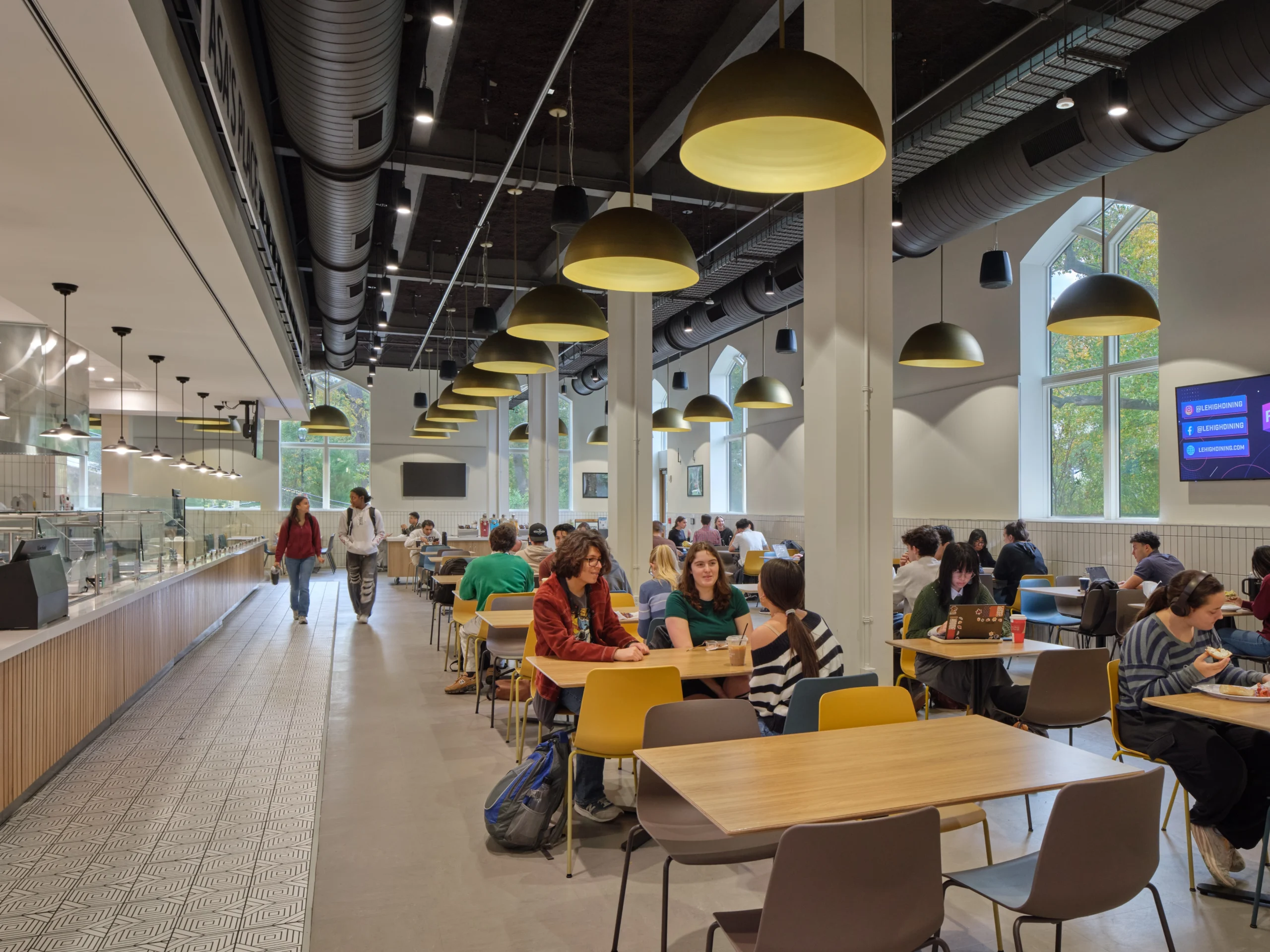
Lehigh Clayton University Center, Bethlehem, PA. Photos by Todd Mason | Halkin Mason.
1. Let the Building Speak
Every building has its own logic, and success begins with listening to the building.
Packer Hall is composed of two fundamentally different halves, each with its own spatial character. The original 19th-century wing is organized by load-bearing masonry walls, with thick walls and smaller rooms. In this wing, the architecture naturally supports quieter programs: offices, lounges, and smaller meeting spaces. Its larger rooms—former lobbies, dining halls, and chapels—needed to work as animated passageways rather than static destinations.
In contrast, the mid-20th-century addition is organized around a regular steel column grid which naturally allows for larger spans and more flexible, open spaces. This wing more easily accommodates dining, collaboration, and large gathering spaces.
2. Legacy in Stone
For all the changes Packer Hall has undergone, its exterior stonework has remained a powerful symbol of Lehigh’s identity.
Beginning with late-19th-century postcards, the building has always represented both the university and the aspirations of the Lehigh Valley region. In many ways, this stone became the building’s primary vessel of memory.
The renovation treated this legacy with care. All exterior stone was cleaned and repointed, and all windows were replaced. Research revealed that the existing windows dated to the 1950s renovation and differed significantly from earlier configurations in both color and mullion pattern. The new windows introduce insulated glazing and streamlined mullions that bring daylight deep into the interior.
The result is not a return to a specific moment in time, but a thoughtful recalibration that reinforces the building’s presence while supporting contemporary performance.
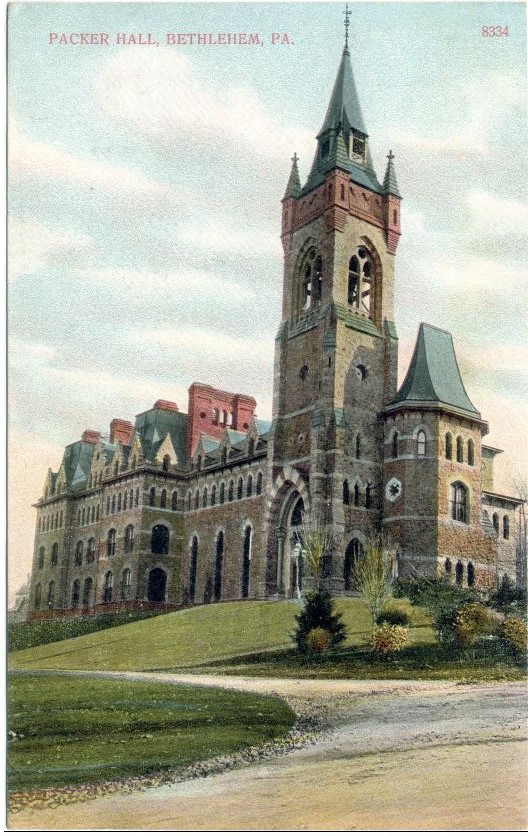
Historic Postcard of the Lehigh Clayton University Center, Bethlehem, PA.
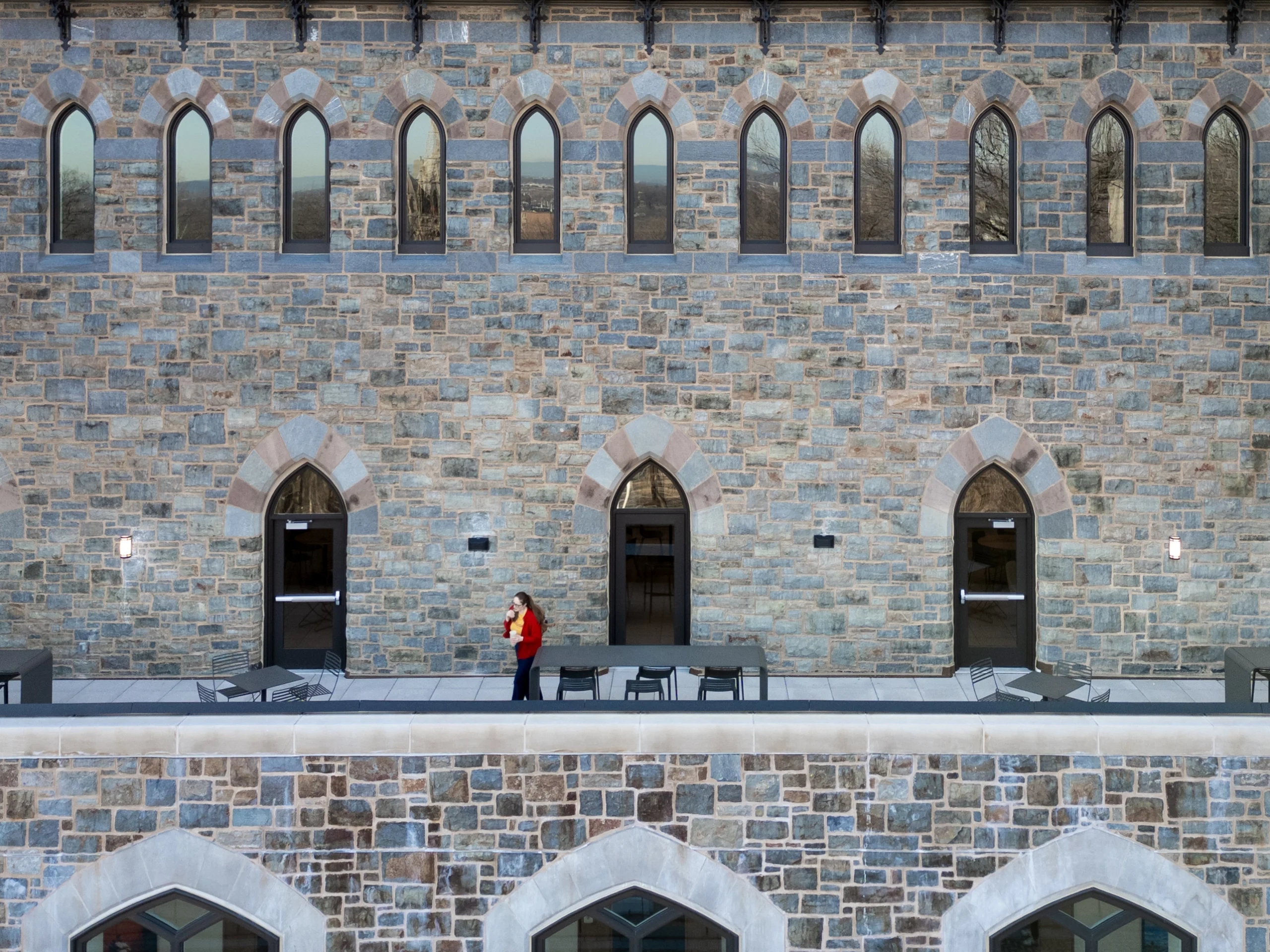
Lehigh Clayton University Center, Bethlehem, PA. Photo by Marjorie Becker/Accidentally Wes Anderson.
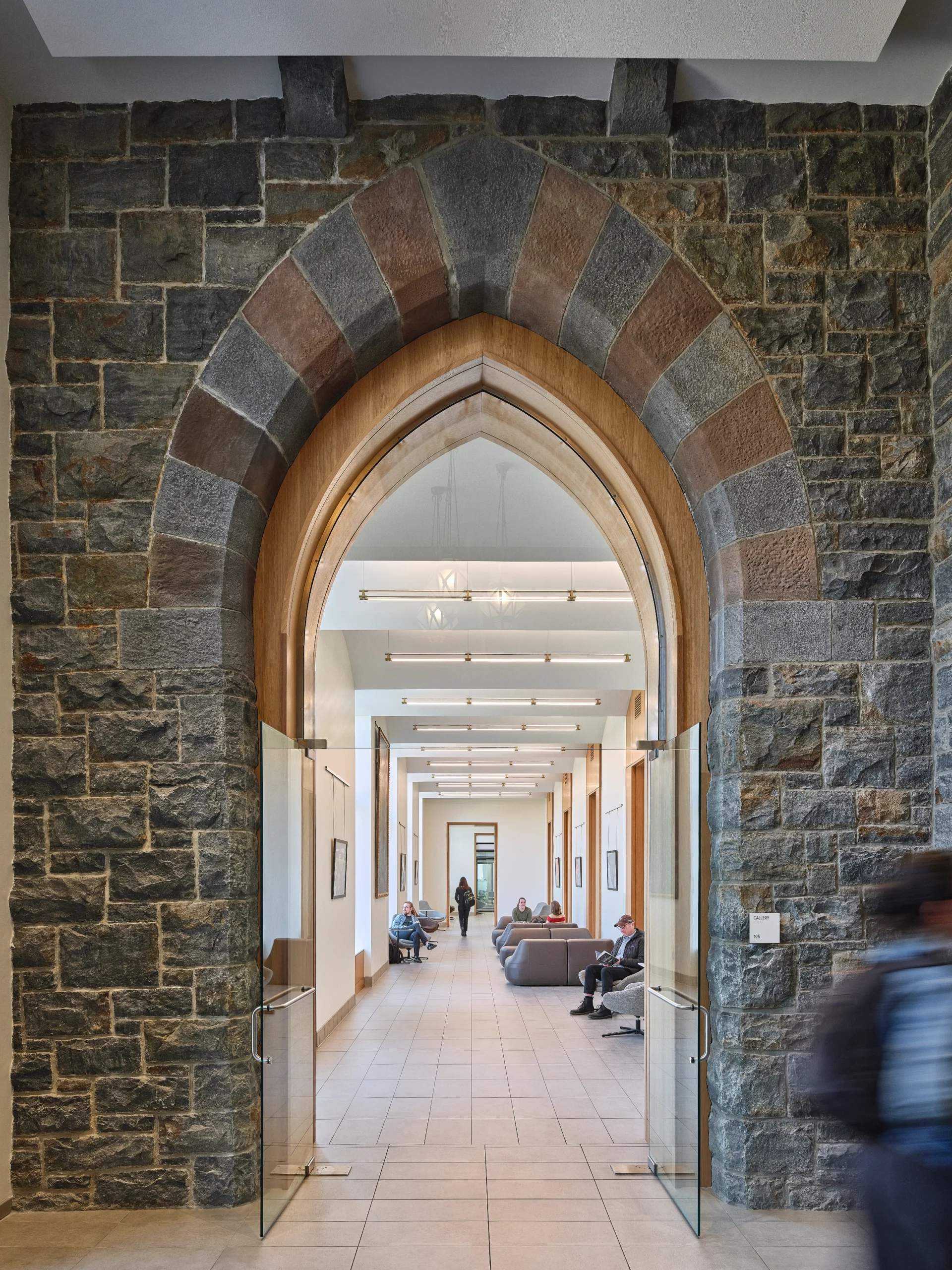
Lehigh Clayton University Center, Bethlehem, PA. Photo by Keith Isaacs.
3. Complement and Remix
When historic and contemporary elements are allowed to converse, richness emerges.
Because the 1950s renovation removed most of the original interior details, the Clayton University Center necessarily speaks in a contemporary architectural language. Rather than attempting to reconstruct a lost past, the design embraces a 21st-century vocabulary while finding moments where new work can engage meaningfully with what remains.
One of the most emblematic spaces is The Gallery, a circulation zone added in the 1950s to wrap around a dining hall. Previously, the space was fragmented and constrained. The renovation transforms the Gallery into a fluid connector overlooking the heart of campus. The arched profiles of the existing windows have been extruded into a vaulted ceiling form that links exterior and interior architecture. The result is an entirely new architectural language that is contemporary, yet deeply rooted in the building’s existing forms.
4. Embrace Discoveries
Historic renovations reward those that are willing and able to adapt.
With older buildings, there is always uncertainty about what lies beneath surfaces. Only after interiors were stripped back did long-buried architectural elements come to light.
On the building’s first floor, demolition revealed an interior wall featuring a trio of brick arches. With so few historic materials remaining inside the building, this discovery presented an opportunity. The design team reworked plans to preserve and highlight the arches, integrating lighting and collaborating with an artist to install a backlit mural within the arched voids.
Upstairs, a stone wall and arch, once part of the exterior façade, were found encased within a 1950s interior wall. The decision to expose and incorporate this element was straightforward. Cleaned and re-detailed, the stone now greets visitors entering from the refurbished south entrance, and is set in dialogue with a new and adjacent open stair.
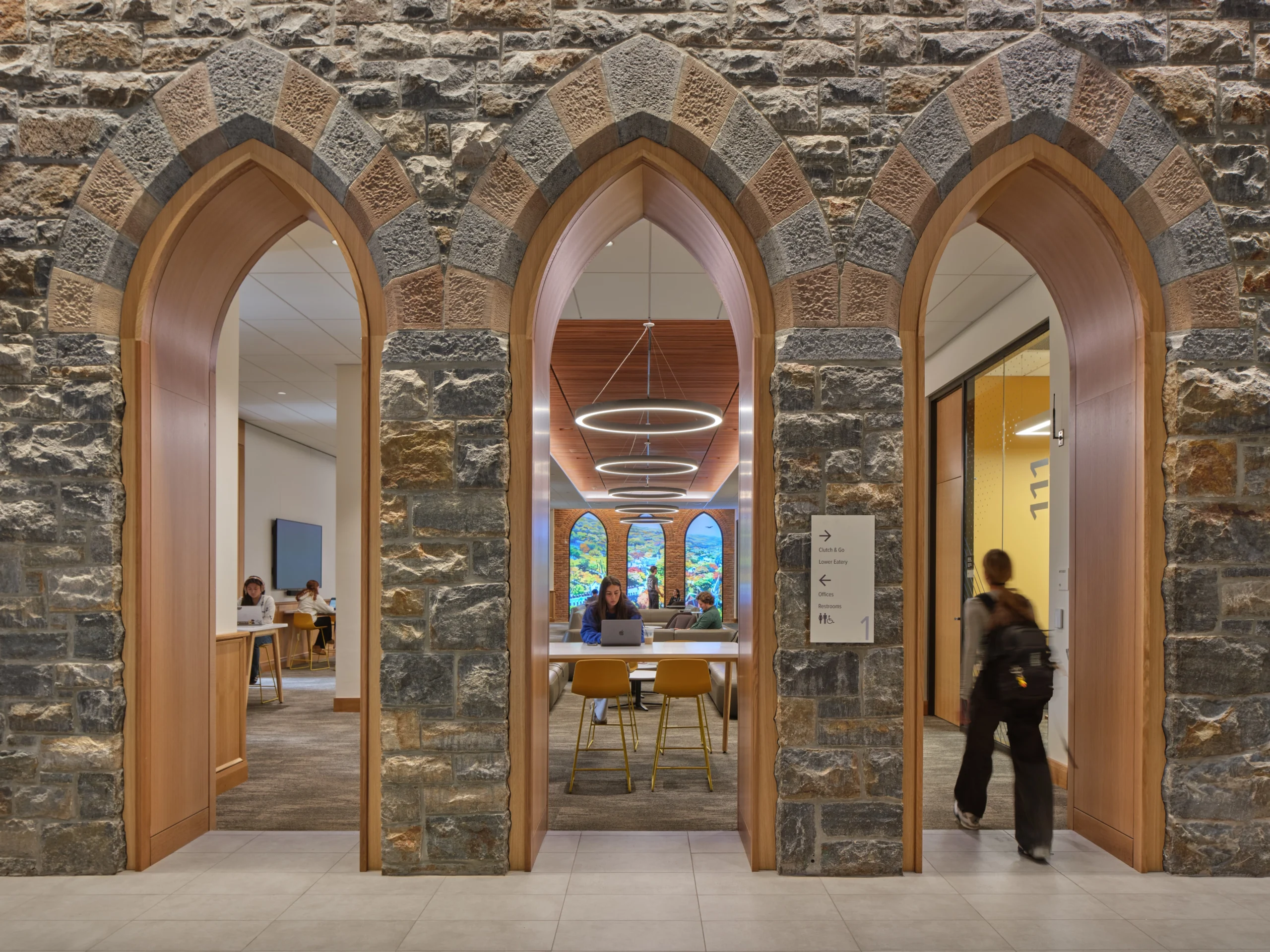
Lehigh Clayton University Center, Bethlehem, PA. Photo by Todd Mason | Halkin Mason.
Read the full paper to understand Packer Hall’s architectural evolution, its constraints, and our team’s honest ways to extend its life.
Four Lessons from Renovating at Lehigh University

Bob Mohr, AIA, LEED AP
Principal
Bob’s design practice over the past 20 years has spanned the United States and globally, including Europe, North Africa, and Asia. A committed generalist, Bob has broad experience working on a wide variety of project types and sizes ranging from the tiny to the territorial.