


Our Approach to Academic Nursing Design
Nursing is a unique and demanding profession—one that requires an equally distinctive approach to education. With ongoing nursing shortages, preparing the next generation for long-term success is more critical than ever. With students required to build both technical expertise and compassion, facilities must be intentionally designed for this distinctive educational journey.
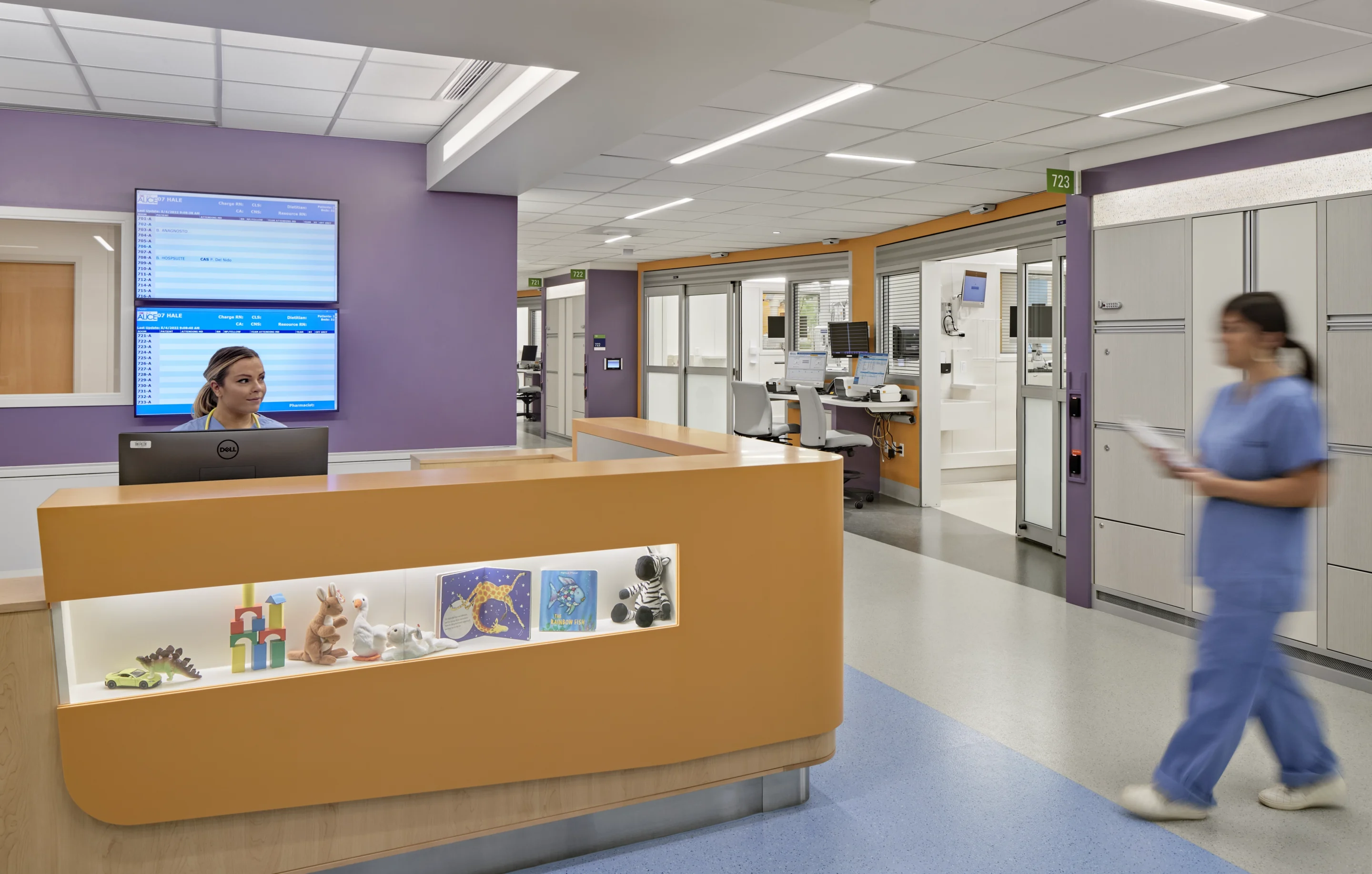
Hale Family Building, Boston Children’s Hospital, Boston, MA. Photo by Robert Benson.
Starting Off on the Right Foot
Nursing education is a moving target, shaped by advances in healthcare practice, technology, and accreditation requirements. Peer benchmarking grounded in nursing-specific curriculum and accreditation requirements provides valuable insights during programming. By understanding how similar institutions have approached space allocation, simulation fidelity, and support functions helps identify scope pinch points before they become cost or schedule risks.
Because the size of a nursing program’s undergraduate cohort and its skills lab square footage are closely linked, we are able to leverage this relationship to help institutions quickly estimate space and cost needs during early planning.
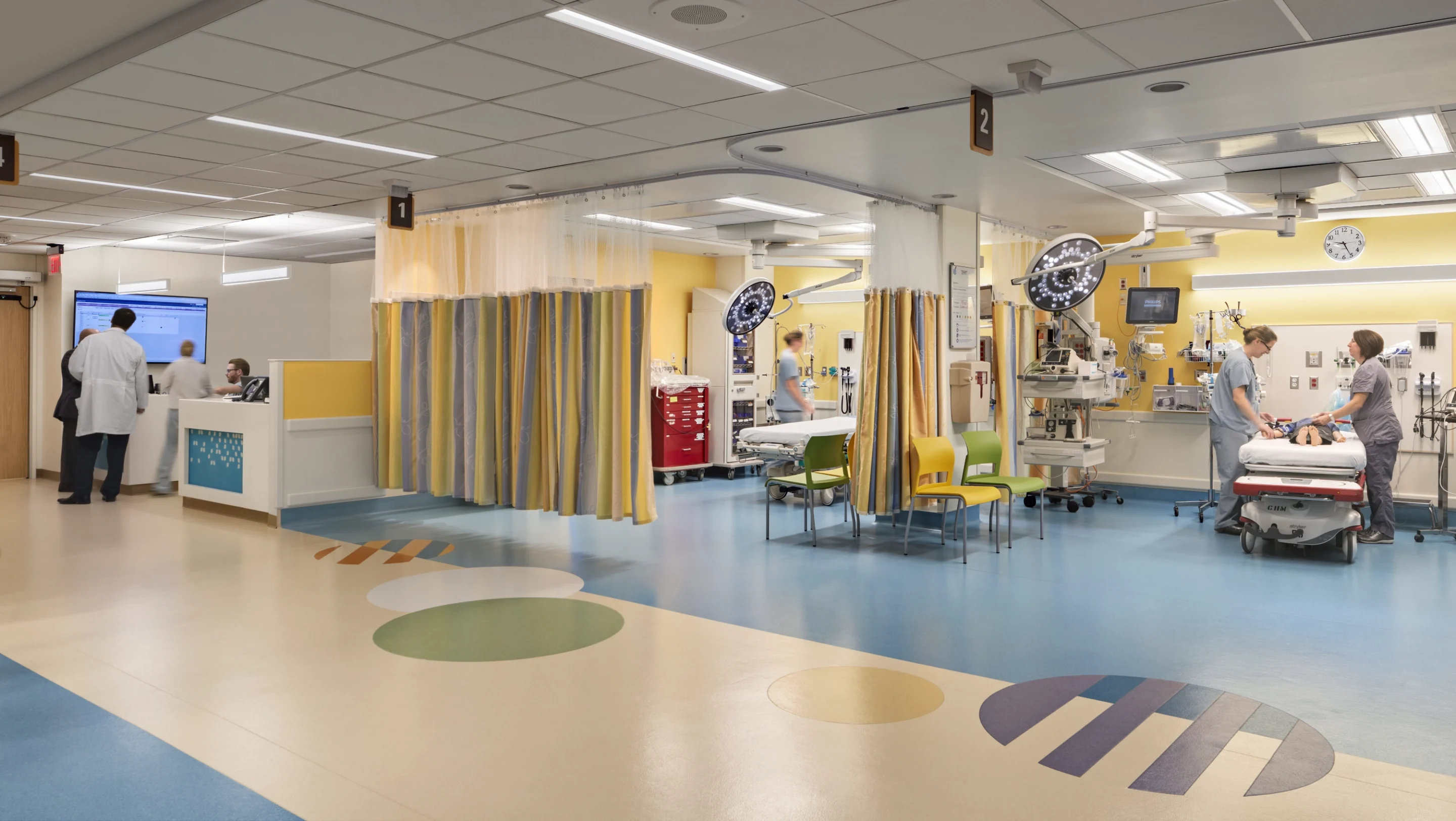
Critical Care Tower and Main Renovation, Children’s Hospital of Michigan, Detroit, MI. Photo by Robert Benson.
Specialized Budgets for a Specialized Program
Budgets for nursing facilities differ from typical academic buildings. They face costs associated with unique furniture, fixtures, equipment, simulation technology, and audiovisual capture systems. Early and accurate cost modeling for these elements is critical. Integrating FFE, simulation equipment, and technology planning early in the design process allows the team to balance performance and budget, avoid late-stage surprises, and support informed decision-making throughout delivery.
Human-Centered Design Choices
For both students and faculty, nursing education in action is active and experiential. The environment is simultaneously demanding, supportive, and based on an active learning mindset. Creating spaces to support this activity and culture should be front of mind for design teams.
For students, preparation for a career in nursing requires hands-on experiences that mirror professional realities. Exposure to the environments, technology, and professional realities can prepare them to act. Our design teams work hand-in-hand with academic leaders to create “a convincing place to start” and “a safe place to fail,” enabling students to stress-test and improve their skills and emotional maturity in an environment that is safe and supportive.
Despite this need, nursing skills and simulation labs are often chronically underutilized when operational realities are not fully understood during design. Placing ourselves in the role of those scheduling classes, managing lab turnover, and supporting clinical experiences has proven essential. Testing proposed spaces against class schedules, student cohorts, and faculty workflows helps identify inefficiencies early and informs layouts that improve throughput, ease of reset, visibility, and supervision. Facilities that succeed operationally are those designed with day-to-day use in mind, not just peak scenarios.
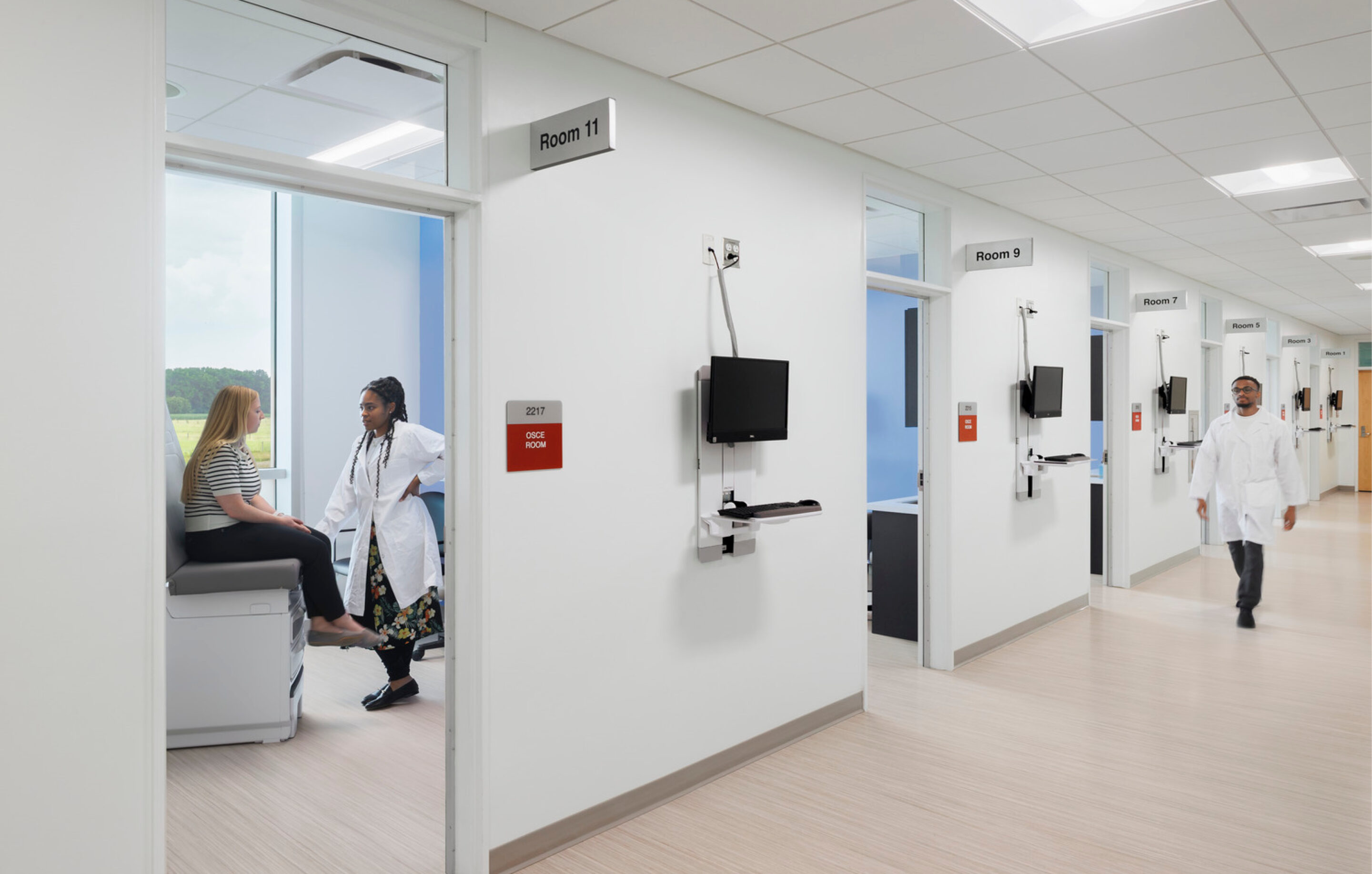
The University of Maryland Eastern Shore School of Pharmacy and Health Professions, Princess Anne, MD. Photo by Brad Feinknopf.
Rather than attempting to predict every future condition, the most effective projects create a framework that allows institutions to shape their own future. We’ve found that spaces that support experiential learning and effective operations lead to a successful design that empowers students. Our experience delivering nursing and health education facilities has reinforced several key lessons that reflect the evolving nature of nursing education and the importance of aligning space, curriculum, operations, and delivery methods from the earliest stages of design.

Jeremiah Fairbank
Associate Principal
Jeremiah is a senior architect specializing in the design of nursing schools, simulation labs, and academic spaces for healthcare professionals.