


Sustainability at the Heart of Campus Life: Carbon Reduction Strategies
By Matthew Gifford, AIA, LEED AP, and Carrie Leneweaver, AIA, WELL AP, LEED GA
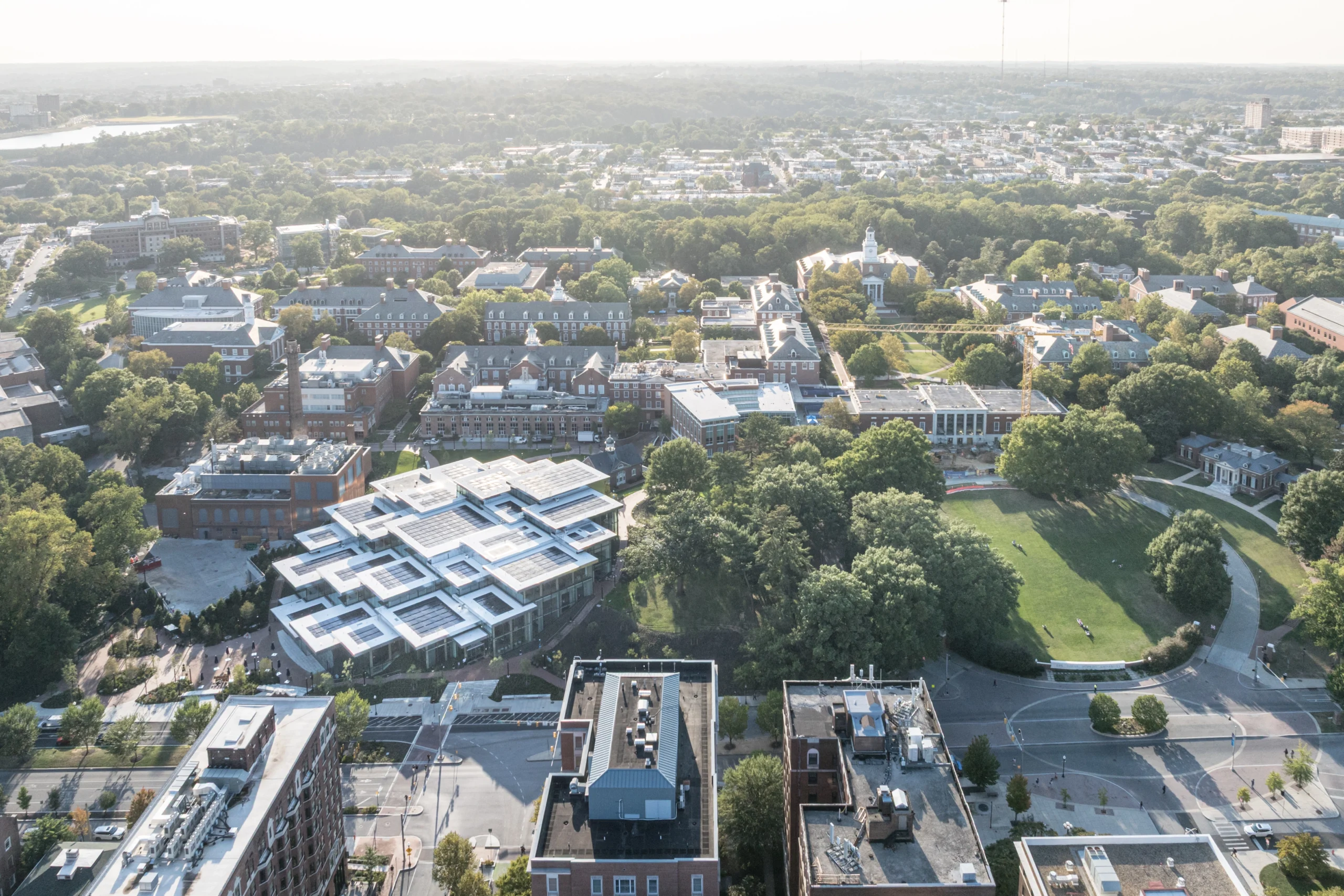
Bloomberg Student Center, Johns Hopkins University, Baltimore, MD. Photo by Laurian Ghinitoiu.
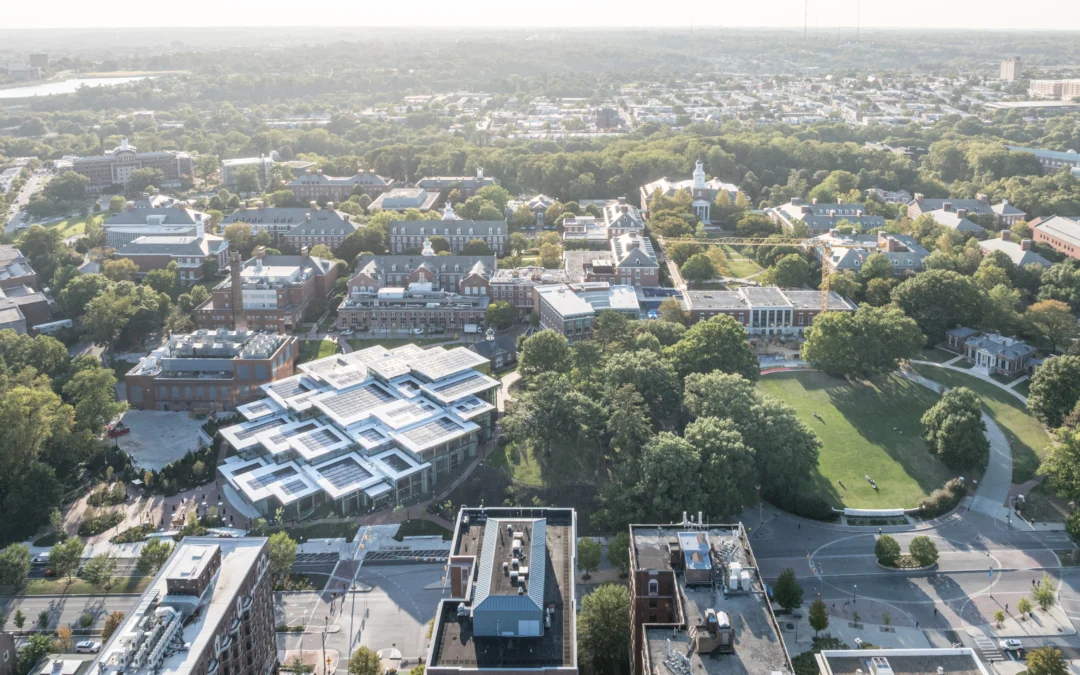
At Johns Hopkins University, sustainability isn’t an afterthought; it’s built into the very structure of campus life. The Bloomberg Student Center has become a powerful example of this ethos put into practice. Building on our work with the university on the Brody Learning Commons and the robust, stakeholder-driven, collaborative planning study which led to the design of the student center, we partnered with the university to create a sustainable vision for their future. From its timber roof structure to its energy systems and landscape strategies, the Student Center tells a comprehensive sustainability story from its inception, rooted in performance, longevity, and wellness.
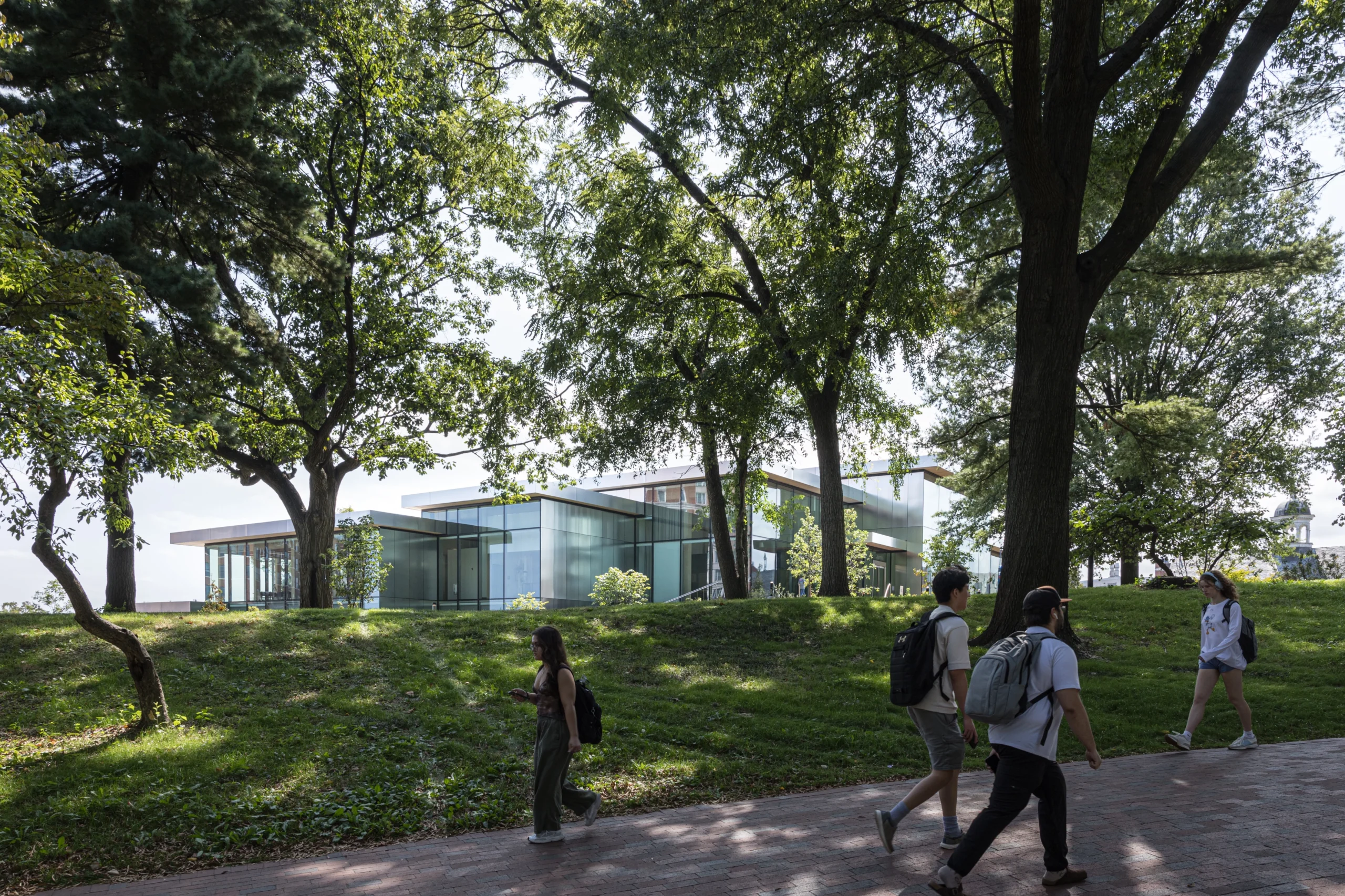
Bloomberg Student Center, Johns Hopkins University, Baltimore, MD. Photo by Laurian Ghinitoiu.
A Building Designed to Work as a Whole
Rather than focusing on a single sustainability feature, the Bloomberg Student Center was designed around cumulative environmental impact. Every major design decision was evaluated for its contribution to energy efficiency, carbon reduction, occupant health, and local stewardship.
The result is a building where systems work together over time—because real sustainability isn’t about checking a single box or chasing one certification. It’s about how everything adds up.
Reducing Carbon Through Structure and Materials
One of the most significant sustainability moves in the project is its hybrid concrete and mass timber structural system. Above a concrete base, the building transitions to mass timber framing and roof decking. This approach delivers multiple environmental benefits: lower embodied carbon than a traditional all‑steel structure, long‑term carbon storage in the wood itself, and smarter use of materials: wood where it shines, concrete where it is needed most.
A life‑cycle analysis compared the design to a baseline steel and concrete building with equivalent load‑bearing capacity. The results showed a 28% reduction in global warming potential, along with meaningful improvements across other environmental metrics. By designing with timber, the project shows how structural choices can significantly reduce a building’s carbon footprint.

Bloomberg Student Center, Johns Hopkins University, Baltimore, MD. Photo by Nic Lehoux.
Smarter Concrete with CarbonCure Technology
Concrete is often one of the biggest sources of embodied carbon in construction. Because it plays an important role in the student center’s building structure, the team worked to make it as low‑impact as possible. The concrete mix incorporates CarbonCure technology, which injects captured CO₂ during mixing. That carbon is converted into a mineral and permanently locked into the concrete, improving strength while reducing the amount of cement required.
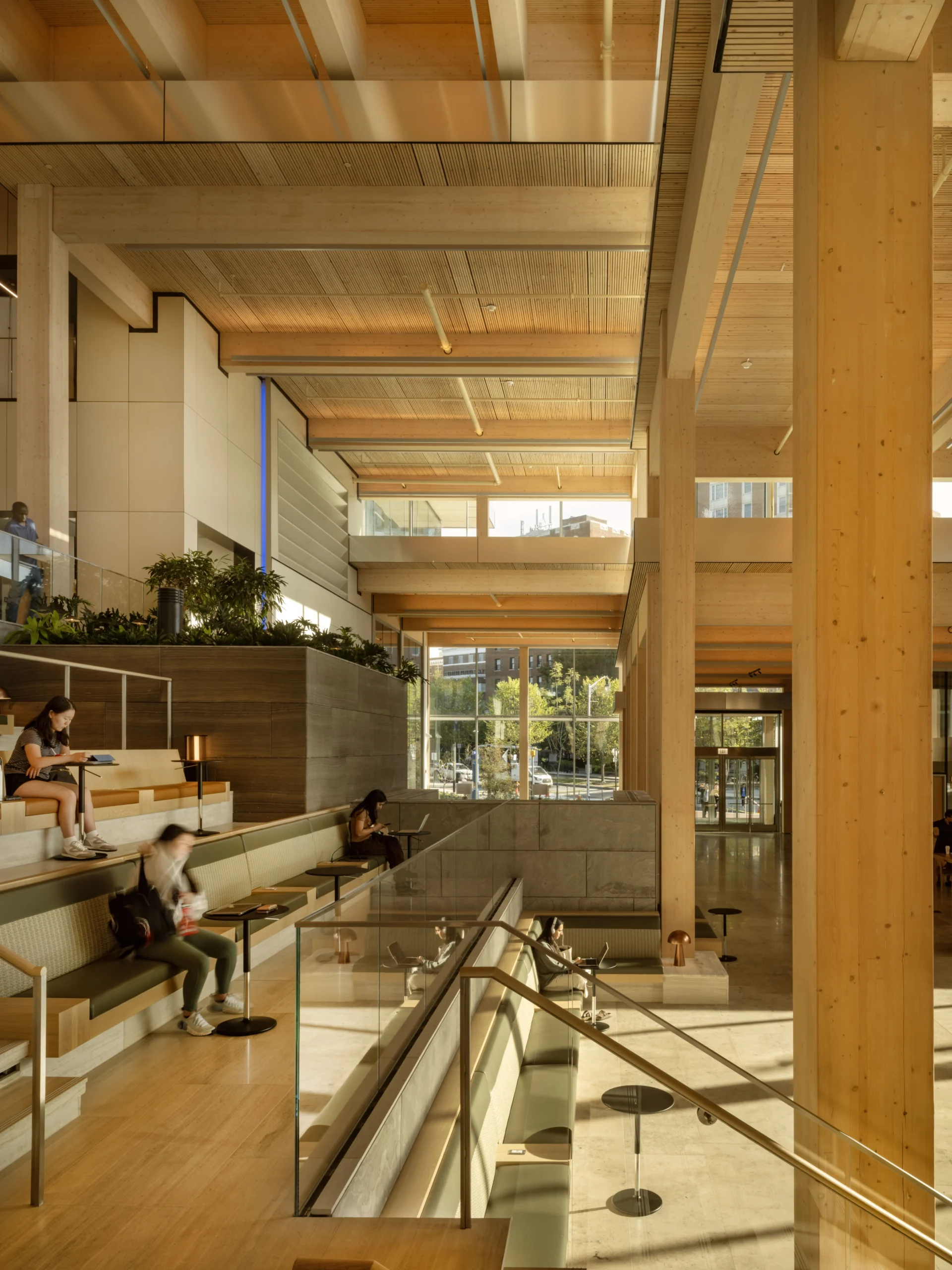
Bloomberg Student Center, Johns Hopkins University, Baltimore, MD. Photo by Nic Lehoux.
A Natural Connection
Mass timber plays a central role in the experience, structure, and sustainability of the Bloomberg Student Center. Exposed Spruce-Pine-Fir (SPF) Glulam columns and beams support the roof structure and create an interior forest, celebrating the natural materials used and enhancing the building’s biophilic design. The team chose to use dowel‑laminated timber (DLT) for the structure of all 29 roofs. DLT offered the structural performance needed for long spans as well as the unique ability to mill acoustical flutes directly into the decking. This improves acoustics in large, active gathering spaces and allowed the team to leave as much of the structure exposed to view as possible. Just as importantly, DLT aligned with the project’s environmental goals—using solid wood panels connected without adhesives, reducing embodied carbon, and supporting a warm, natural interior that reinforces both wellness and sustainability through material honesty.
This is part one of a two part series exploring the sustainble vision behind the design of Johns Hopkins University’s Bloomberg Student Center. Subscribe to our newsletter to receive the follow-up, where we explore renewable energy and water stewardship, earmarks of the high‑performance, energy strategy for campus life at the university.

Matthew Gifford, AIA, LEED AP
Principal
Matt’s collaborative approach to the design process has created highly sustainable, highly functional academic, library, and student life facilities. He is committed to developing solutions that are unique to each client’s culture and goals.

Carrie Leneweaver, AIA, WELL AP, LEED GA
Senior Architect, Associate
Carrie approaches each project as an opportunity to craft spaces that are not only beautiful, but functional and sensitive to the surrounding environment.