


Sustainability Through Adaptive Reuse
by Janette Blackburn, FAIA, NCARB, LEED AP
Imagine delivering a bold vision for an all-inclusive, campus wide gathering place within the realities of existing building fabric. Add in fiscal responsibilities and stewardship of campus resources, and you’ll have Lehigh University’s Clayton University Center.

Clayton University Center, Lehigh University, Bethlehem, PA. Photo by Todd Mason.
Finding the Way: Aligning Project Goals with University Trajectories
One of the original buildings on campus, Lehigh’s iconic Packer Hall was constructed in 1868 to house administration, classrooms, dormitories, and a chapel. This structure was completely overhauled to infuse new life into the outdated facility. The heart of the historic campus is transformed into multi-use destinations for gathering, dining, and working together. Renovated through the process of adaptive reuse, the 150-year-old Clayton University Center ensures its relevance for another century.
Building a Wishlist
This transformation had to be taken one step at a time, through an iterative planning process spanning campus leadership. The initial phase included extensive programming and benchmarking against peer institutions’ dining and student life facilities, along with surveys of Lehigh’s specific needs. This process yielded an extensive programmatic “wish list” that would have required a 40% increase in the building’s footprint.
However, several factors emerged to shape the project’s final direction:
- Strategic Alignment: During the early planning phases, Lehigh’s strategic focus shifted from enrollment growth to strengthening their research programs, reducing the need for expanded dining services.
- Fiscal Realities: High inflation between project conception and design completion eroded the purchasing power of a budget set nearly a decade earlier.
- Unforeseen Repairs: Progress on existing building analysis revealed the need for significant remedial repairs to the building’s structure, systems, and envelope.
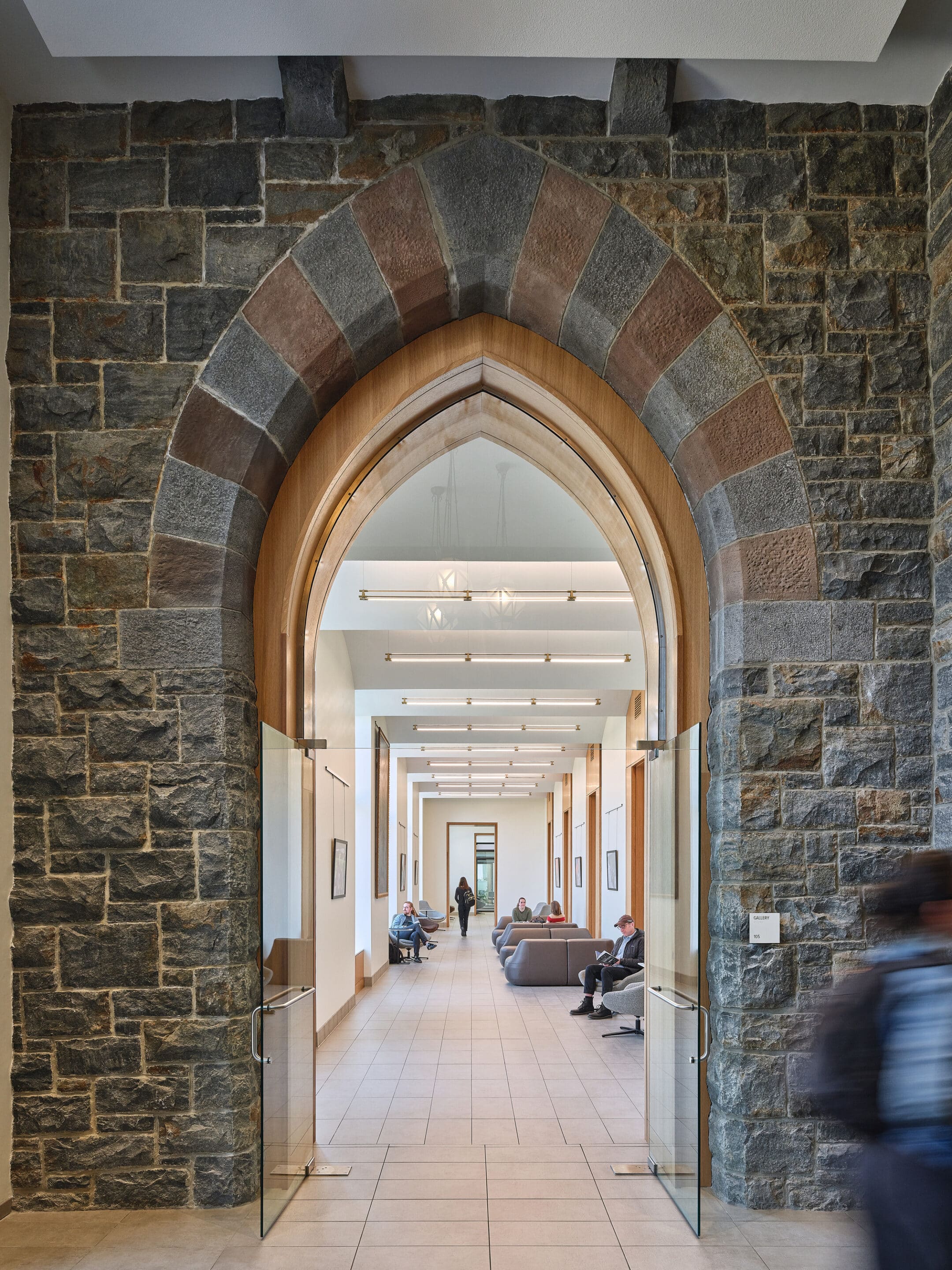
Clayton University Center, Lehigh University, Bethlehem, PA. Photo by Keith Isaacs.
In response, Lehigh reconsidered the concept of a new addition, instead pivoting to a comprehensive renewal of the Clayton University Center. This decision aligned with Lehigh’s strategic priorities and a broader trend in campus planning that prioritizes renewal over expansion.

Clayton University Center, Lehigh University, Bethlehem, PA. Photo by Keith Isaacs.
Advancing Climate Action Through Renewal
By choosing renewal over expansion, Lehigh advanced its Climate Action Strategy, avoiding the upfront embodied carbon emissions associated with new construction. Dual design strategies were central to this benefit:
- Maximizing Existing Space: The interior transformation created flexible spaces that can be adapted for multiple programs, maximizing the use of existing space and eliminating the need for—and the embodied carbon of—expansion.
- Component Reuse: The building’s stone façade, roof, and structure were retained and repaired. Where possible, existing interior masonry walls were exposed and restored, preserving character while reducing new materials and embodied carbon.
More with Less: The Power of Convertible Space
With an ideal program of 140,000 sf and a building capacity of 99,000 sf, the design team worked with Lehigh to define strategies that would allow the University to forgo building expansion without sacrificing program accommodation. Dining payment models were a significant driver in configuring University Center spaces. Moving away from an all-you-care-to-eat model, which requires dedicated dining areas, set the stage for more multi-use spaces. We analyzed patterns of use and defined flexible spaces that could accommodate overlapping uses: dining, socializing, meetings, or just hanging out, depending on time of day.
The Clayton University Center is open 16-18 hours a day, 7 days a week during the academic year. Space usage fluctuates throughout the day:

Lunchtime Surge: With meal sales averaging 750 per hour, 75% consumed on site, dining areas expand into lounges designed as multi-use spaces that accommodate 200 additional seats beyond the 350 near the dining serveries.
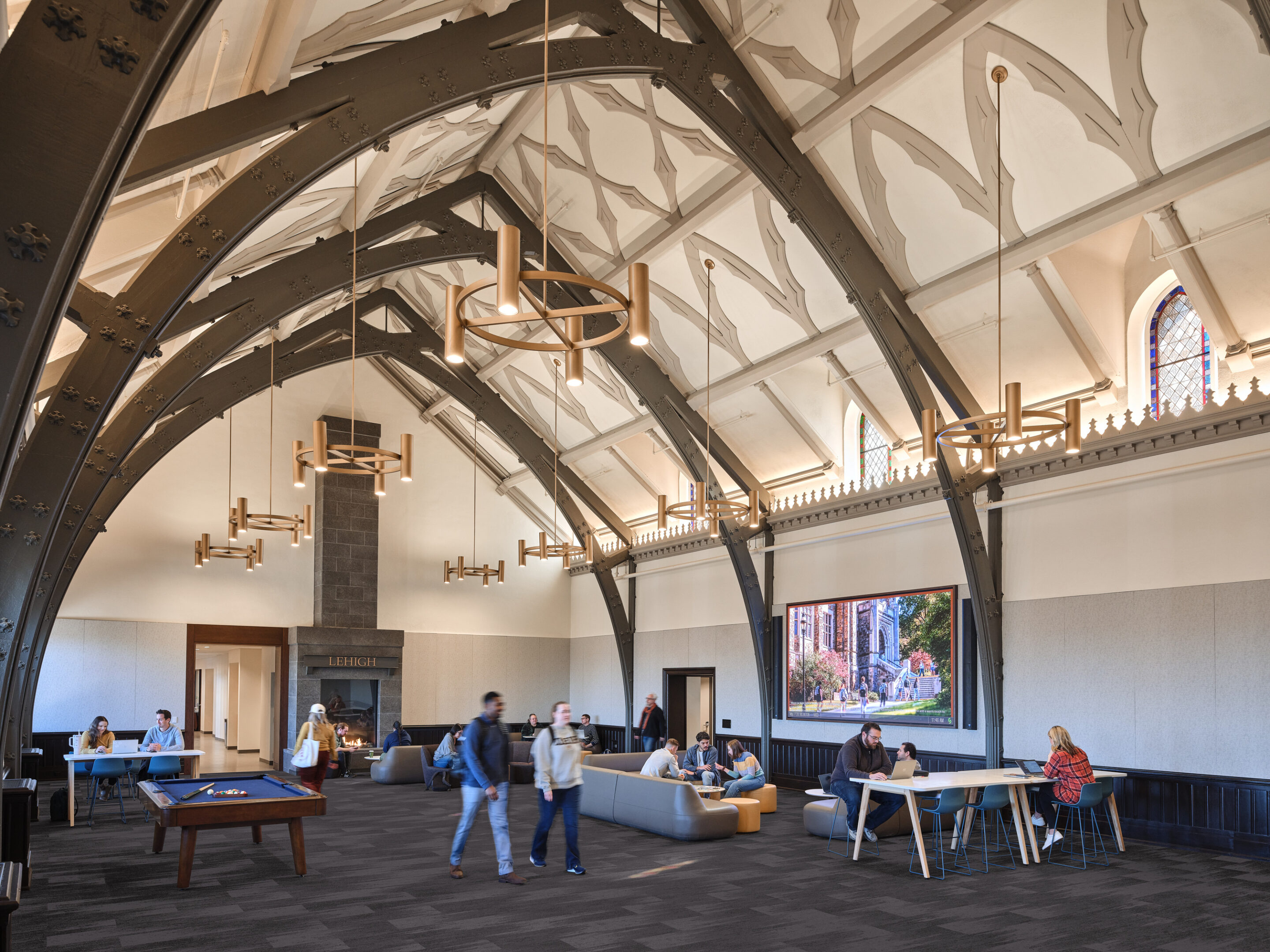
Evening Social Spot: At night, dining areas double as study and collaboration zones. The Great Room, which seats 50-60 during lunch, transforms into a party space for up to 150.

Mid-day Resource: Mid-morning and mid-afternoon, demand for dining and events dips. These quieter hours open valuable meeting spaces for use campus wide and provide places for students to study or take breaks between classes.
To achieve this flexibility, the design focused on creating a resilient and adaptable building framework. This included intuitive wayfinding and clear navigation systems, attention to acoustics and lighting, access to daylight, and design strategies that support thermal comfort and occupant well-being.
To further support adaptability, detailed attention was given to infrastructure for equipment storage and food staging areas to accommodate a wide range of events. Ample power and data connections allow for flexible room set ups while multiple lighting scenes make it easy to shift the mood of a space depending on the occasion.
Capturing Embodied Carbon Through Reuse
The adaptive reuse of the Clayton University Center provided a significant opportunity for Lehigh to advance their climate action strategy. The design reuses the CUC’s exterior masonry shell interior masonry walls, structure, roof and a portion of the original windows. This reuse resulted in a substantial savings in embodied carbon when compared to what would have been expended to add a 40,000-sf addition to the building.

Clayton University Center, Lehigh University, Bethlehem, PA. Photo by Keith Isaacs.
The building industry generates almost 40% of global annual CO2 emissions. Embodied carbon, the greenhouse gas emissions associated with construction materials and processes, account for 11% of these annual emissions, with a building’s structure being one of the largest contributors to embodied carbon.
Operational carbon: emissions resulting from building operations, or the facility’s use over its lifetime. Operational carbon can be reduced over time with energy efficient renovations and the use of renewable energy.
While reductions in operational carbon accumulate over time, reductions in embodied carbon are immediate—with a corresponding immediate climate benefit. In fact, preservationists have long argued that “the greenest building is…one that is already built.” …it can take from 10 to 80 years to pay back the carbon debt that is incurred when an existing building is replaced with a new structure, even if the new building is highly energy efficient.
A Holistic Sustainability Strategy
In addition to reduction of embodied carbon through reuse, the renovation furthered Lehigh’s sustainability goals by incorporating improvements to reduce operational carbon- energy consumed once the building is in use. These included:
- New, thermally efficient windows
- Energy saving mechanical systems and kitchen
- LED lighting with occupancy sensors
- Water Sense certified fixtures with 35% water reduction
- On-site rainwater collection and storage
- Electrical distribution sized for future conversion to all electric systems.
- Energy performance tracking through metering at building, sub-building and individual equipment levels.
- Avoidance of red-list construction materials
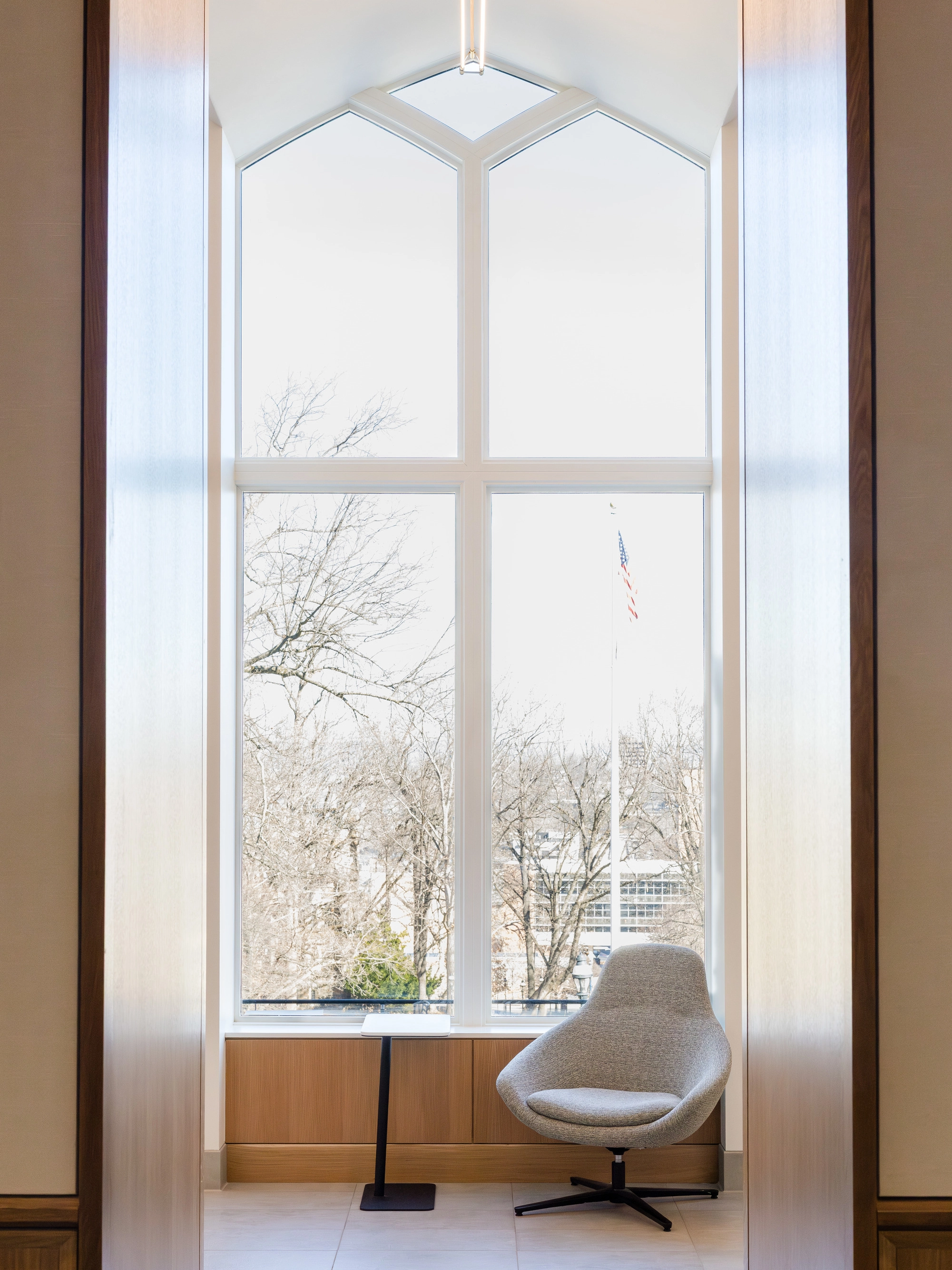
Clayton University Center, Lehigh University, Bethlehem, PA. Photo by Keith Isaacs.
The choice to renovate rather than expand wasn’t an instant one; it was the result of careful planning, alignment with university priorities, creative design, and detailing with flexibility in mind. Ultimately, the renovation of the Clayton University Center not only celebrates and renews a campus landmark but represents an accomplishment in embodied carbon reduction and a contribution to a healthier planet.

Janette S. Blackburn, FAIA, NCARB, LEED AP
Principal
Janette is a Principal and leader in Shepley Bulfinch’s education practice. Her award-winning higher education work is informed by a deep understanding of campus life and learning environments.