


Designing for People and Planet
We see human health, ecological health, and the places we create as deeply interconnected. Our work brings these relationships into every design decision.
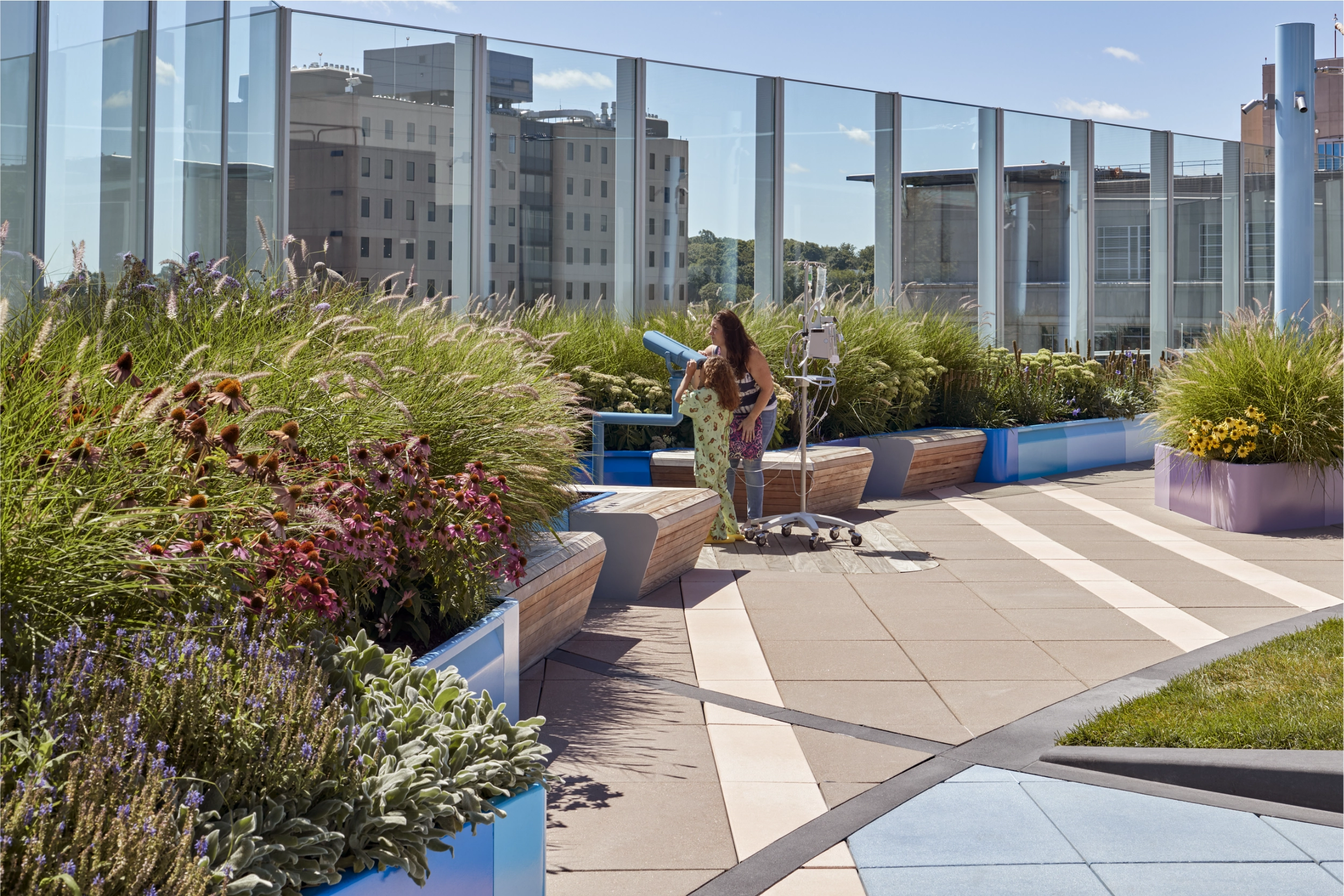
Hale Family Building, Boston Children’s Hospital, Boston, MA. | Landscape Architect: MikyoungKim. Photo by Robert Benson.
In Our Work
We approach sustainability holistically, evaluating the broad range of elements that the term “sustainability” encompasses and pursuing those most relevant to the project and place. At the onset of any project, we work closely with our clients to deeply understand their values and outline the various ways in which a building’s design could impact its users and the broader planet.
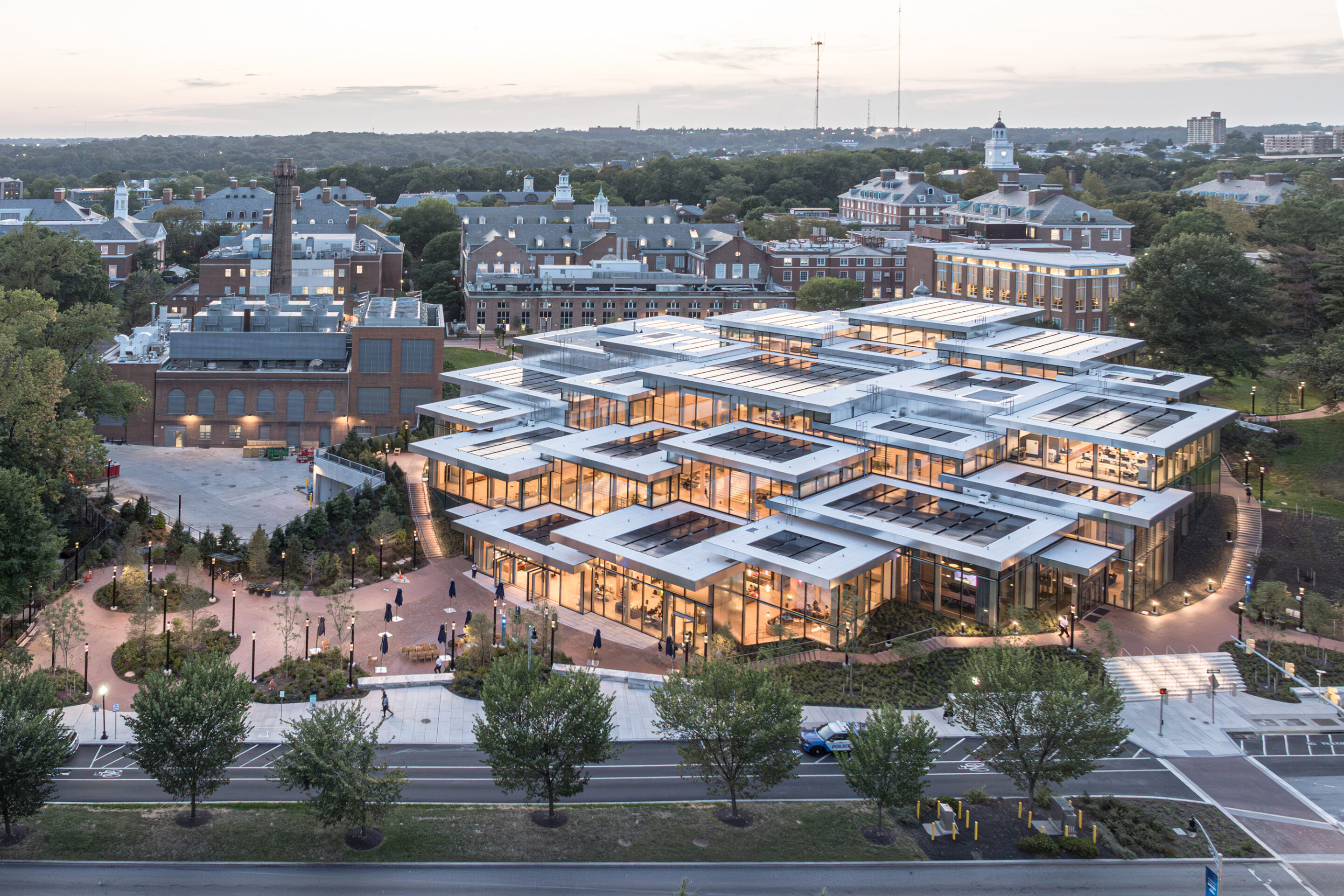
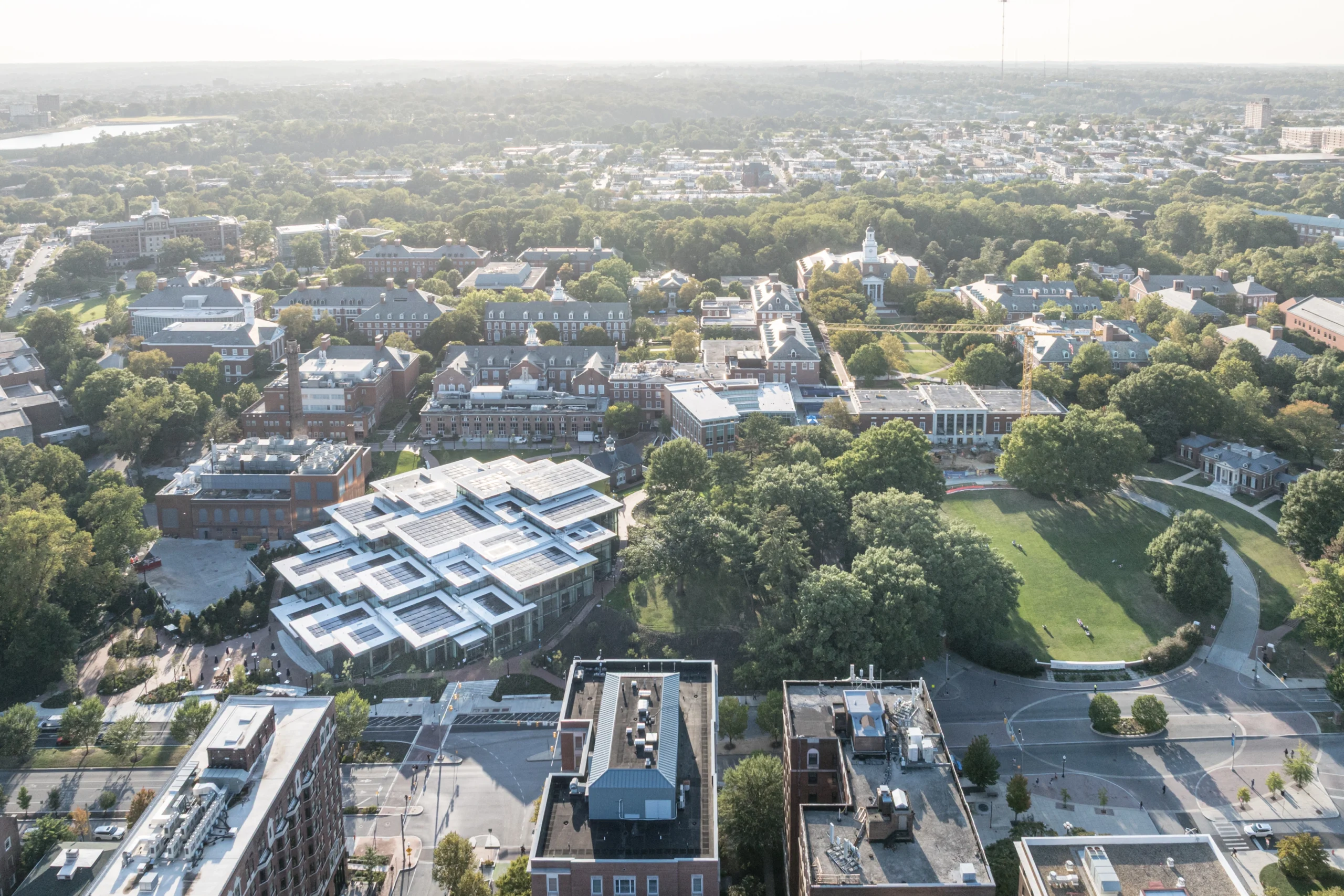
Project Spotlight: Bloomberg Student Center
Johns Hopkins University
Baltimore, MD
At Johns Hopkins University, sustainability isn’t an afterthought; it’s built into the very structure of campus life. The Bloomberg Student Center has become a powerful example of this ethos put into practice. From its timber roof structure to its energy systems and landscape strategies, the Student Center tells a comprehensive sustainability story from its inception, rooted in performance, longevity, and wellness.
In Our Industry
Sustainability at Shepley Bulfinch extends beyond individual projects. We advance sustainable design through research, advocacy, professional leadership, and measurable performance goals that help move the industry forward.
Through our firm commitments and beyond, we actively contribute to efforts to reduce carbon emissions and improve the environmental performance of the built environment. Our designers share knowledge and shape industry conversations through leadership roles and engagement with organizations including AIA, IIDA, ILFI, NOMA, and USGBC.
Our commitment is reflected in award-winning work and measurable outcomes. From high-performance academic, civic, and healthcare environments to nationally recognized projects such as Austin Central Library, we continue to demonstrate how design excellence and environmental responsibility can work together to create lasting value for communities.
Firm Commitments at a Glance
AIA 2030 Commitment
Signatory
Mindful Materials Lighting Adovacy Letter
Signatory
Leadership in Energy and Environmental Design
Accredited Professionals
Over 60% of staff is LEED AP certified


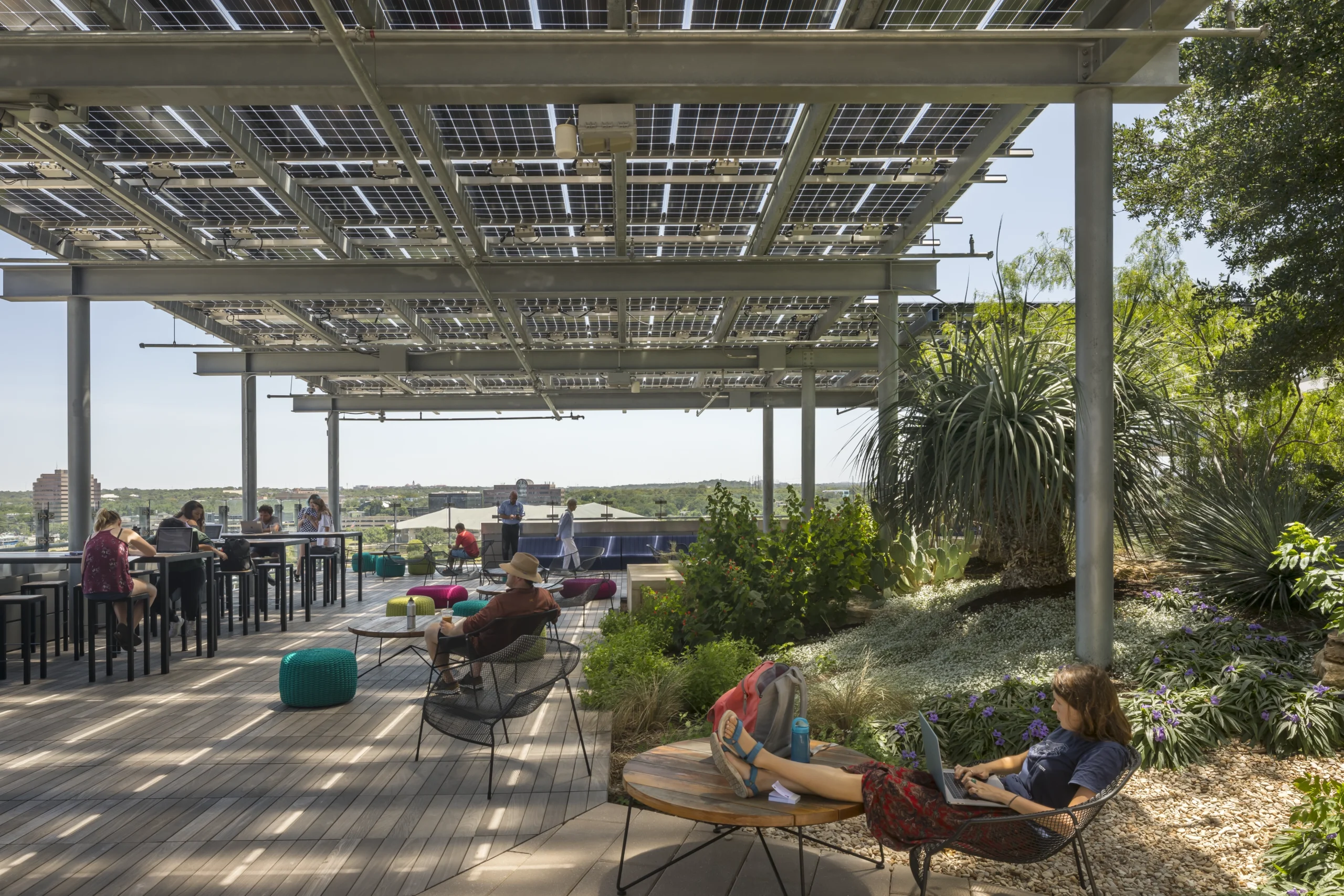
Project Spotlight: Austin Central Library
City of Austin
Austin, TX
At the Austin Central Library, we embraced the city’s commitment to the environment by incorporating rainwater harvesting, an in-ground cistern, and a vegetated roof, each of which work together to reduce water usage. On the rooftop garden, a photovoltaic cell generates 13% of the building’s power and shades visitors. The Library uses 40% less energy than a building of comparable size.
In Our Culture
Our work is rooted in sustainability. Healthy People, Healthy Planet (HPHP) is Shepley Bulfinch’s holistic, regenerative design framework for creating places where people, communities, and the planet can thrive together. Grounded in systems thinking, HPHP recognizes that human health and ecological health are deeply interconnected—and that design has the power to strengthen both.
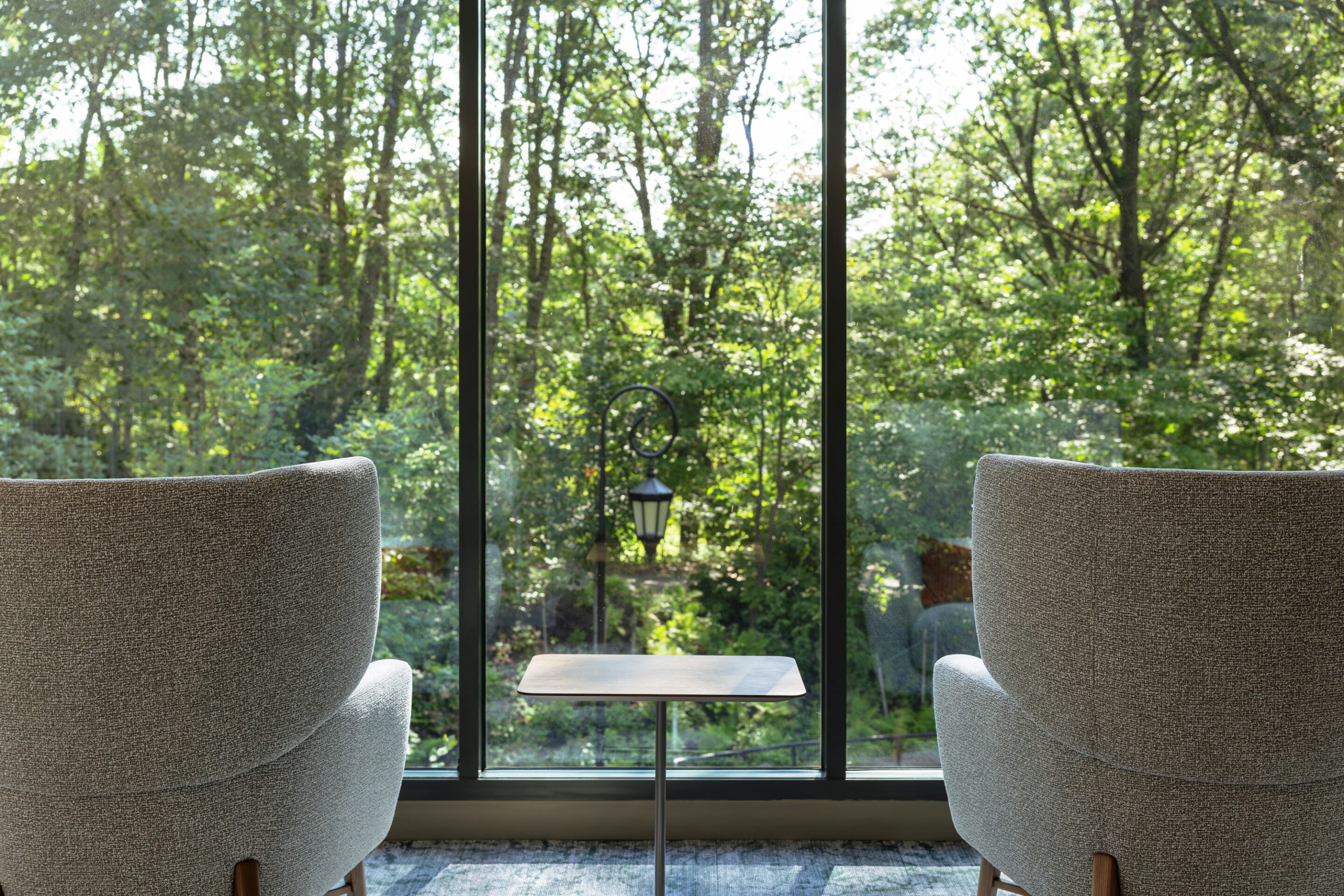
Drawing from LEED, WELL, the AIA Framework for Design Excellence, and the Living Building Challenge, HPHP translates leading principles into a project-specific roadmap rooted in what makes an organization unique. We explore your mission, values, culture, people, and aspirations alongside the history, ecology, identity, and inherent qualities of place. Together, these insights reveal opportunities for design to express purpose, deepen connection, and create meaningful impact.
Organized around four interconnected Elements—Resources, Comfort, Context, and Wellness—and 12 Focus Areas—Energy, Water, Materials, Air, Sound, Light, Place, Inclusiveness, Resilience, Beauty, Health, and Discovery—the program provides a flexible lens for seeing connections, setting priorities, and transforming aspirations into action. The outcome: shared purpose, actionable strategies, and measurable opportunities for regenerative impact. Through this roadmap, your project becomes a place that actively contributes to the health and vitality of people, communities, and the planet.