


Holistic Renewal for the Next Generation of Learners
For over a century, Wellesley College’s Clapp Library has been a cornerstone of academic life—a place where students gather to study, explore, and connect. When our team partnered with the college to reimagine this beloved building, the goal extended far beyond updating aging systems. The renovation became an opportunity to design for wellness in its fullest sense: physical, cognitive, social, and environmental. The result is a library that not only supports scholarship but actively nurtures the well-being of every member of the Wellesley community.
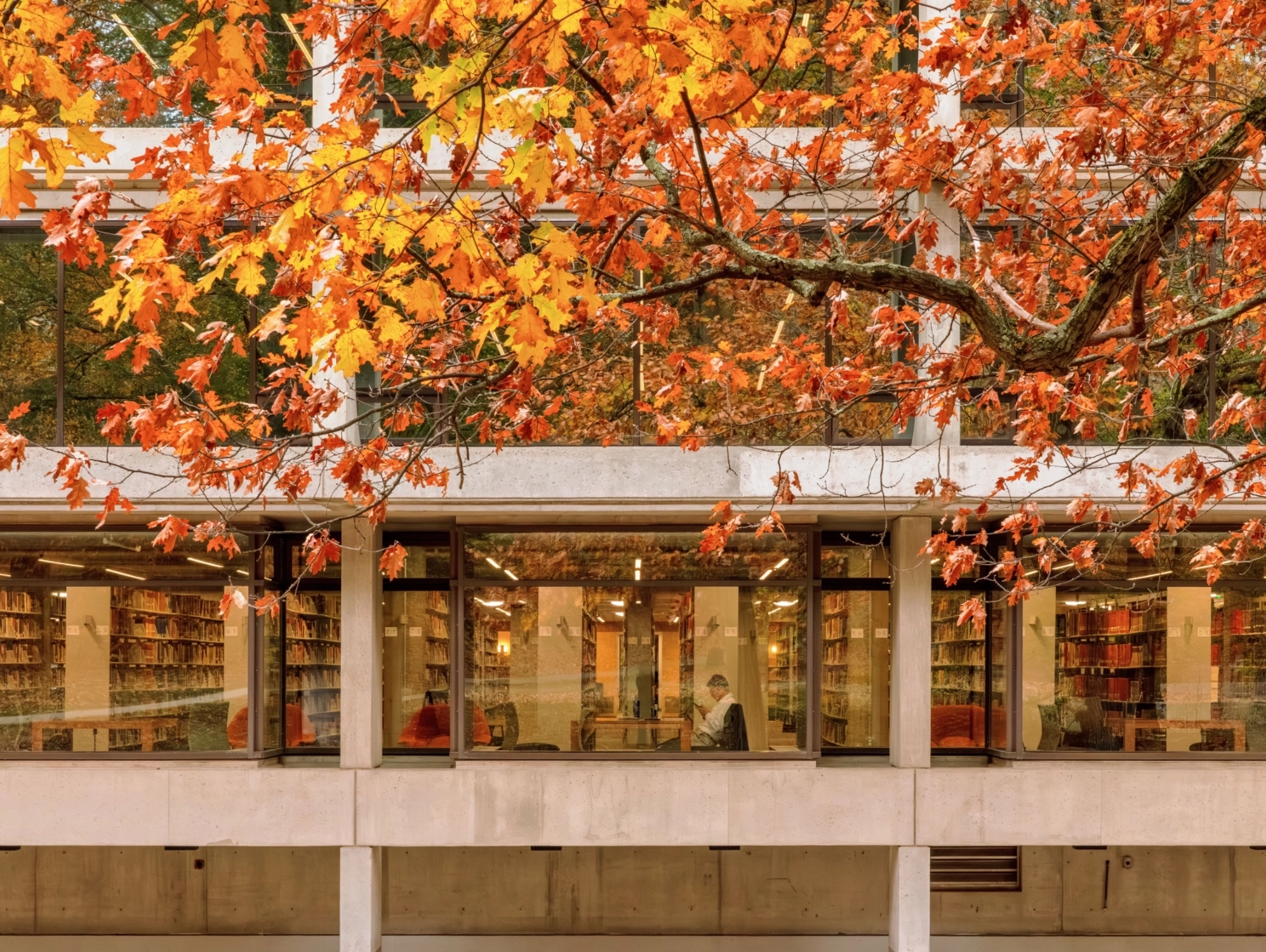
Clapp Library, Wellesley, MA. Photo by Marjorie Becker/Accidentally Wes Anderson.
A Building That Welcomes Everyone
Wellness begins with belonging. From the earliest planning stages, the design team focused on creating a library that is accessible, intuitive, and welcoming to all. The project introduces a new exterior ramp and fully accessible entrances, reconfigures stacks and bathrooms, and replaces elevators, furniture, and casework to support universal access. Inside, the refreshed lobby sets the tone: the warm, light-filled space is easily navigable, with approachable service kiosks that invite visitors to seek help without hesitation.
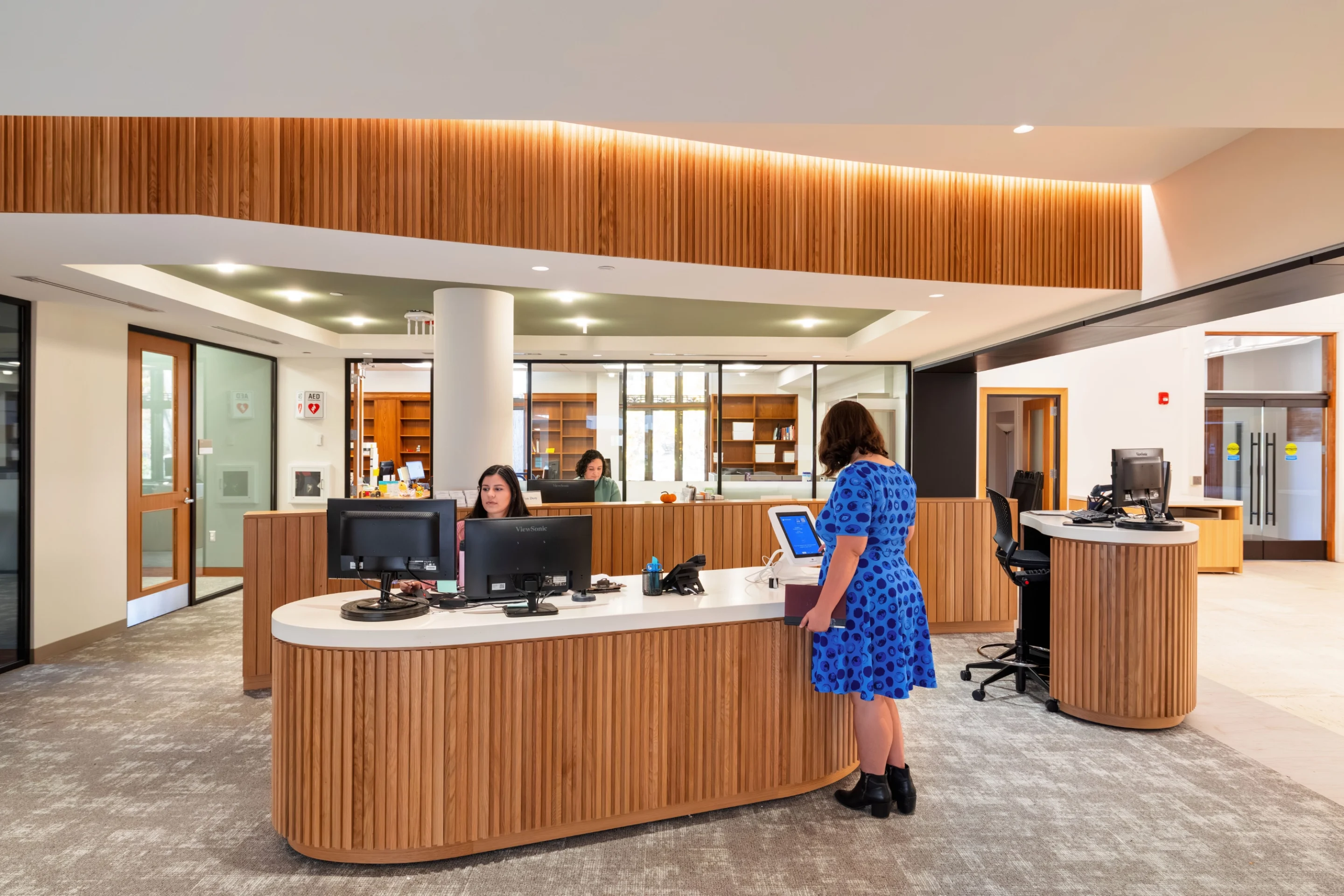
Clapp Library, Wellesley, MA. Photo by Marjorie Becker/Accidentally Wes Anderson.
Academic support services—including Research and Instruction, the Learning & Teaching Center, Accessibility and Disability Resources, the Writing Center, and Ready Reference—are now co-located near the main entrance. This strategic move increases visibility, reduces stigma, and ensures that students can access the resources they need.
Spaces That Support Neurodiversity and Choice
Clapp’s redesign embraces the understanding that students learn in different ways and that environments can either support or hinder their ability to thrive. Throughout the building, spaces were planned to offer choice, flexibility, and sensory variety. Ergonomic furniture, quiet zones, collaborative areas, and technology-rich classrooms allow students to select the environment that best suits their needs at any given moment.
Enhanced environmental controls, improved acoustics, and access to daylight and views further support neurodiverse learners. These features help reduce cognitive load, improve comfort, and create a sense of calm—critical components of academic wellness.
Daylight, Nature, and the Power of Place
One of the most transformative aspects of the renovation is the way it reconnects the library to its natural surroundings. The design opens new view corridors to the campus landscape and Lake Waban, while reconfiguring spaces to take advantage of the building’s existing atriums. These connections to nature support mental restoration, reduce stress, and improve wayfinding in a building that had become fragmented over decades of ad hoc renovations.
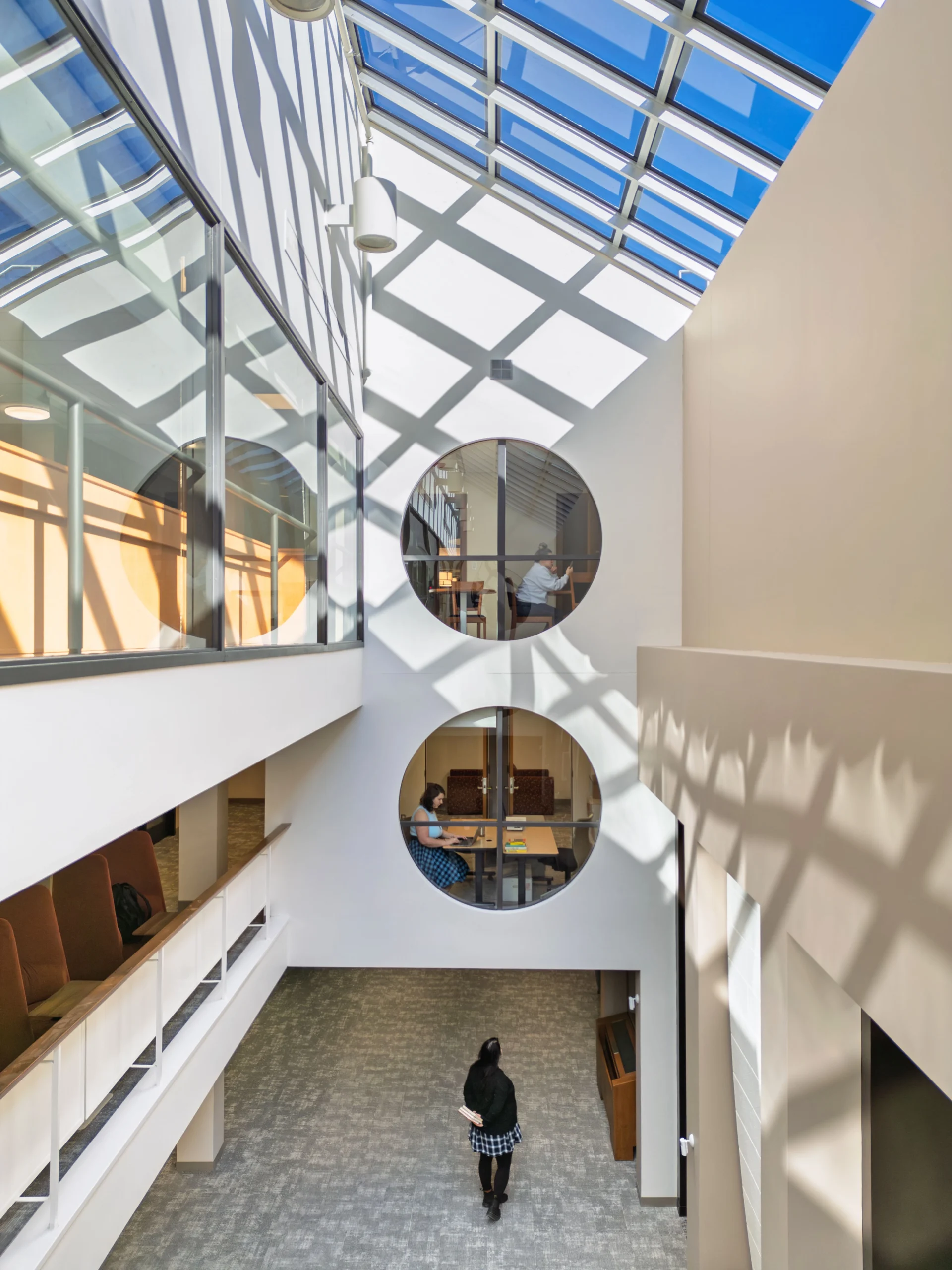
Clapp Library, Wellesley, MA. Photo by Marjorie Becker/Accidentally Wes Anderson.
The wayfinding system reflects the natural environment that permeates Wellesley College. The colors showcase:

The blue waters of Lake Waban.
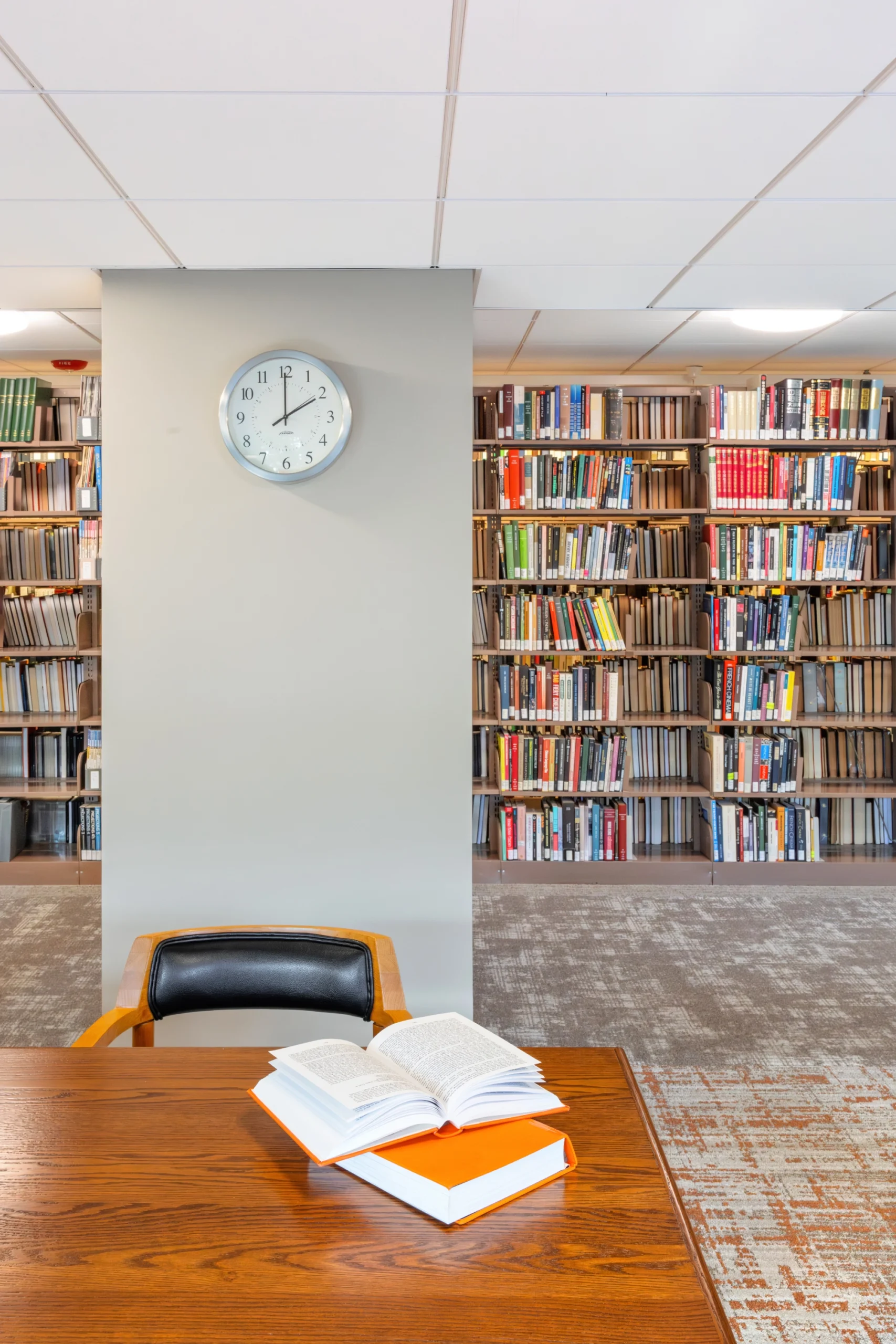
The rich earth of the campus’s scenic hills.
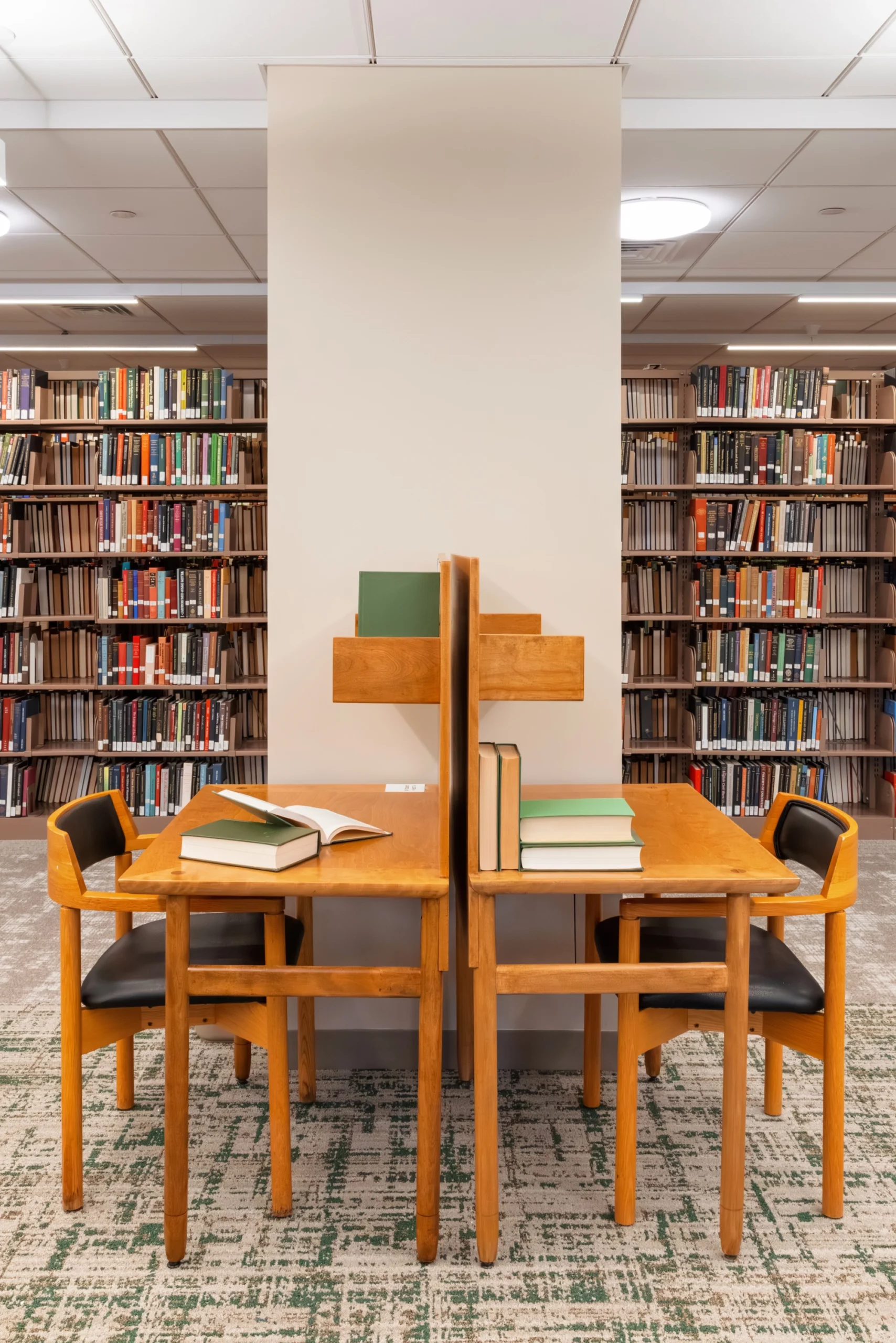
The green understory of the trees—a feature the campus is well known for.

The yellow of the sunlit canopy.
Clapp Library, Wellesley, MA. Photos by Marjorie Becker/Accidentally Wes Anderson.
A new biophilic-inspired wayfinding system reinforces this connection, with each floor drawing from the colors and imagery of the surrounding woodland ecosystem. Outside, a native plant palette improves microclimate, restores previously paved areas, and enhances biodiversity, while a rain garden manages stormwater responsibly and beautifully.
Healthy Materials and a Light Touch
Material health is a foundational element of wellness. Throughout Clapp Library, the design team specified red-list-free, low-VOC materials that support indoor air quality and occupant well-being. Sustainably harvested white oak millwork, slatted wood soffits, and warm, tactile finishes create a sense of comfort and craft.
At the same time, the renovation takes a “light touch” approach—preserving and restoring existing stone, plaster, concrete, and wood elements wherever possible. This strategy not only reduces embodied carbon but also maintains the building’s historic character, grounding students in a sense of continuity and place.
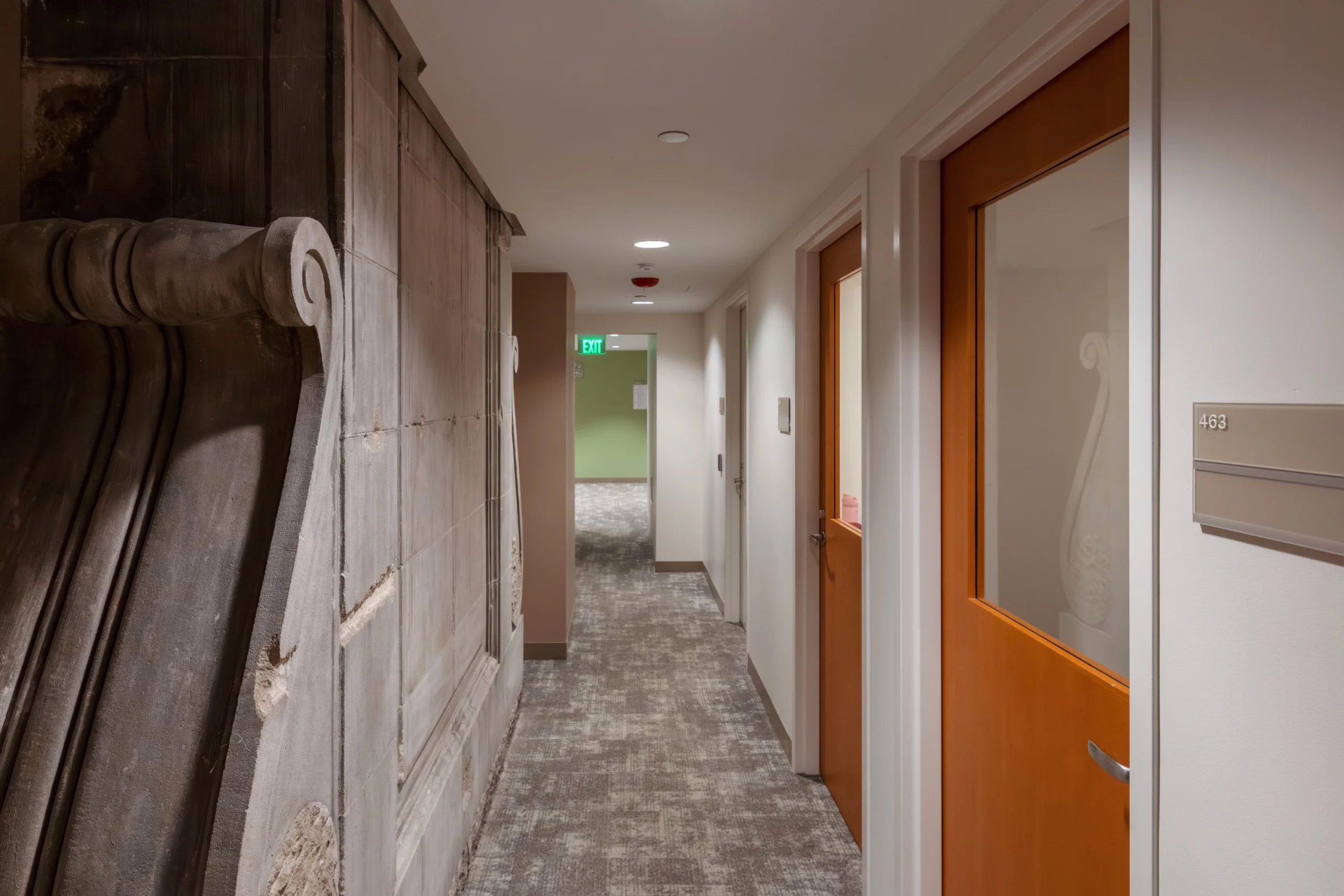
Clapp Library, Wellesley, MA. Photo by Marjorie Becker/Accidentally Wes Anderson.
A Flexible Framework for the Future
Wellness is not static. As student needs evolve, so must the spaces that support them. Clapp’s building systems were designed with adaptability in mind, allowing the College to adjust programs, increase occupancy, or incorporate new technologies without major renovation. This flexibility proved invaluable when a transformative gift allowed Wellesley to redesign an entire wing mid-construction— bringing student support services to the main entrance floor, and seamlessly integrating new programs, like a much needed café space, without disrupting the building’s core infrastructure.
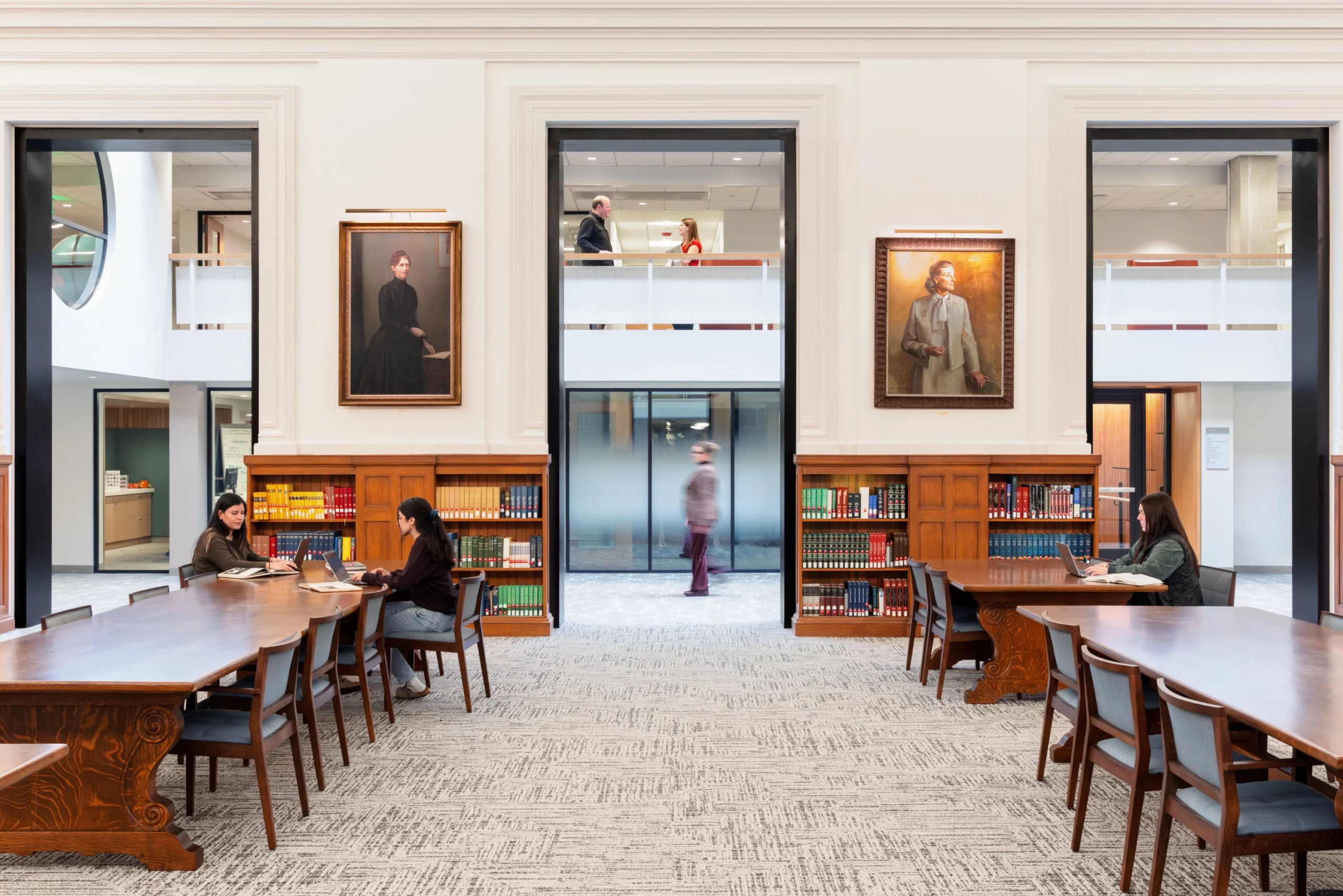
Clapp Library, Wellesley, MA. Photo by Marjorie Becker/Accidentally Wes Anderson.
A Library That Inspires
At the heart of the building, the restored Portrait Reading Room serves as a “jewel box”—a double-height space with an arched ornamental plaster ceiling that celebrates the library’s heritage. New sightlines and circulation paths highlight this historic centerpiece, creating a sense of discovery and delight as visitors move through the building.
This interplay of old and new reflects the century-long relationship between Shepley Bulfinch and Wellesley College. Together, we have developed a library that honors its past while embracing the future, creating a place where students can learn, rest, collaborate, and grow.

Amanda Vigneau, IIDA, NCIDQ
Associate Principal
As an experienced Interior Designer, Amanda’s work spans multiple sectors, with a focus on educational, student life, and workplace environments.