


A Library for the Community: Designing Equity into the Montrose Library
By Alyssa Hitt, IIDA, NCIDQ, LFA
In the heart of Houston’s Montrose neighborhood, one of the city’s most vibrant, diverse, and expressive communities, the Freed‑Montrose Neighborhood Library redefines what an equitable public space can be. As the first Houston Public Library branch not housed in a stand‑alone building, the project presented a unique opportunity: embed a civic resource within a bustling mixed‑use development while ensure it remains welcoming, intuitive, and accessible to all.
Houston Freed-Montrose Public Library, Houston, TX. Photos in this article by Chris Bacarella.
The result is a library that reflects the inclusive spirit of Montrose through color, art, and community‑centered design. The vision was to create an inclusive environment that could serve all members of the community.
Designing for Access in a Vertical Urban Environment
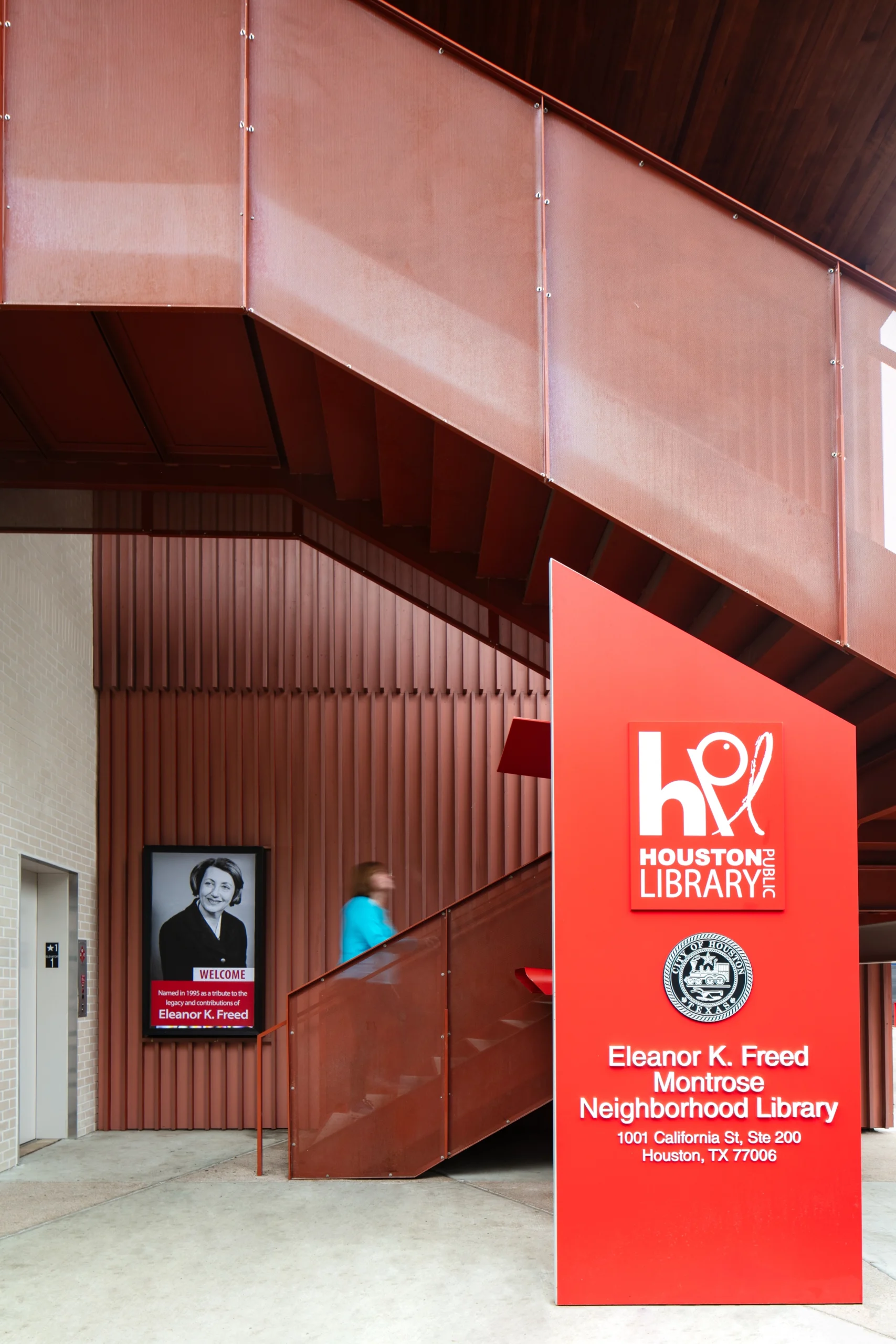
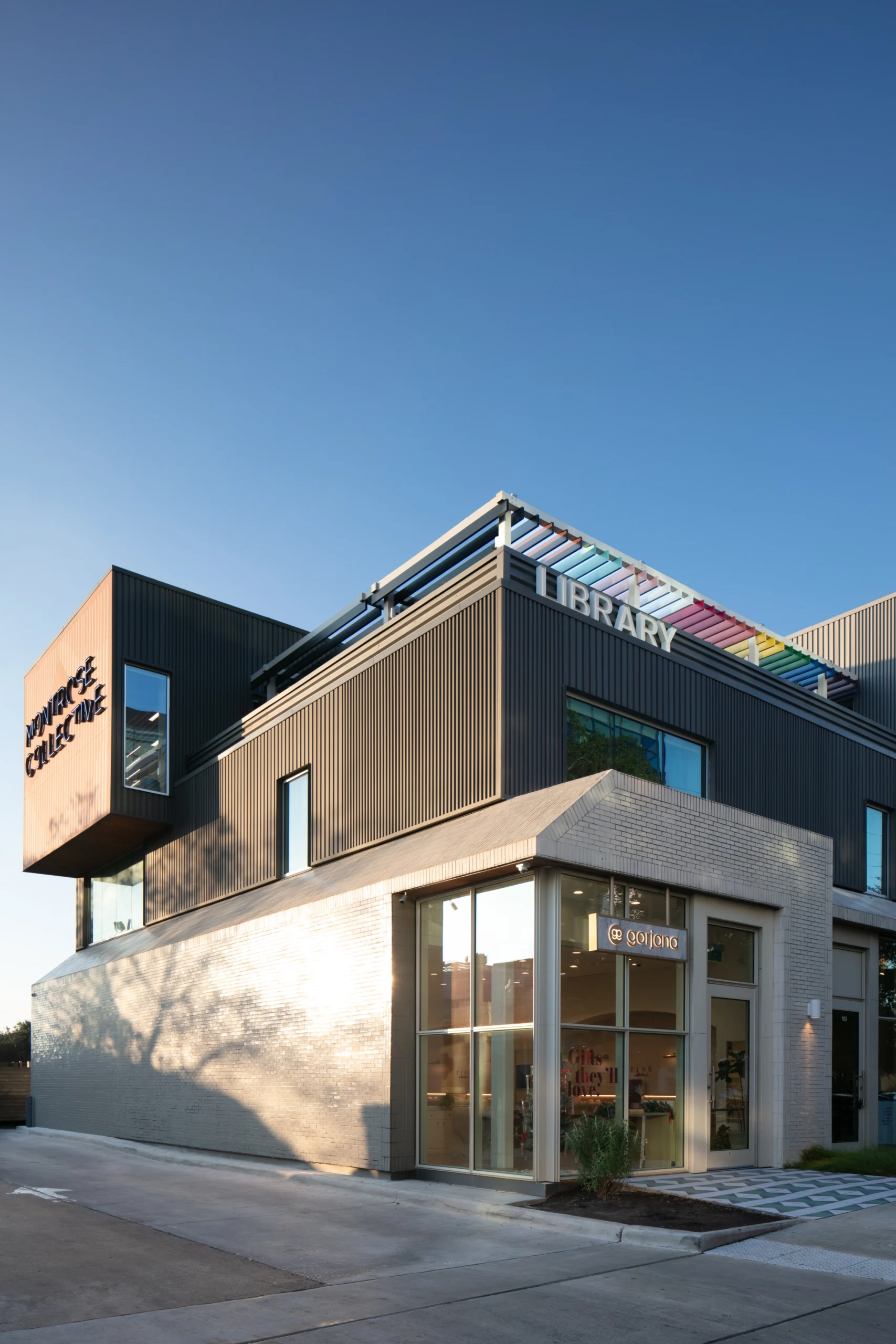
Locating a public library on the second and third floors of a private development required rethinking how people discover and enter the space. Attracting people to a second-floor library meant addressing urban design concerns. The design introduces bold, red-highlighted signage and visual cues that guide visitors from street level upward. These elements do more than direct, they welcome. They signal that the library is a public asset, open to everyone, regardless of the surrounding retail environment.
Color as a Tool for Equity and Wayfinding
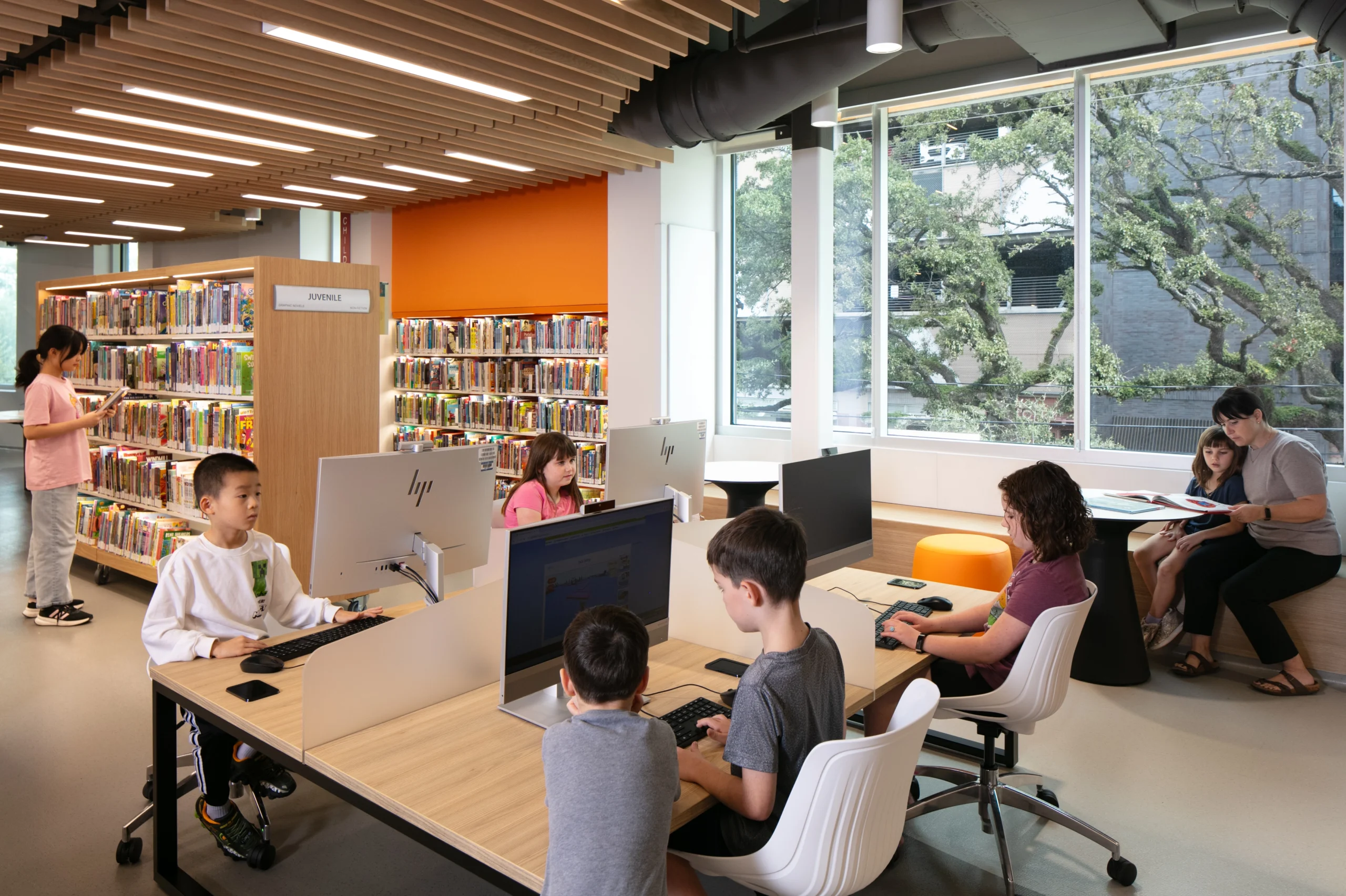
Inside, the design uses a prismatic color palette inspired by the full spectrum of the rainbow. Distinct zones within the open floorplan guide visitors through the library and signal activities. This strategy does more than enliven the space, it creates intuitive, equitable navigation for visitors of all ages and abilities.
Warm tones define the second floor:
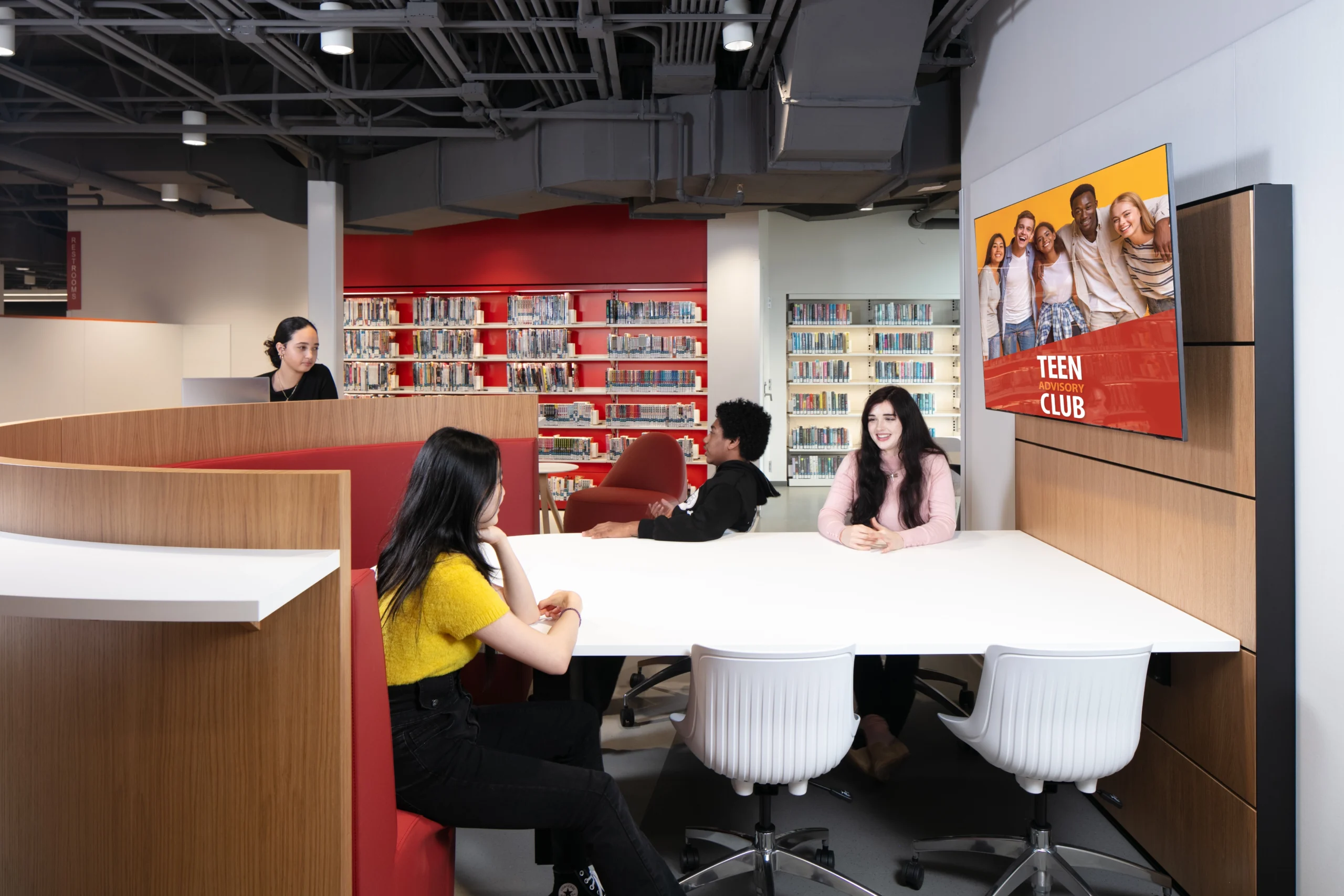

Cooler tones shape the third floor:

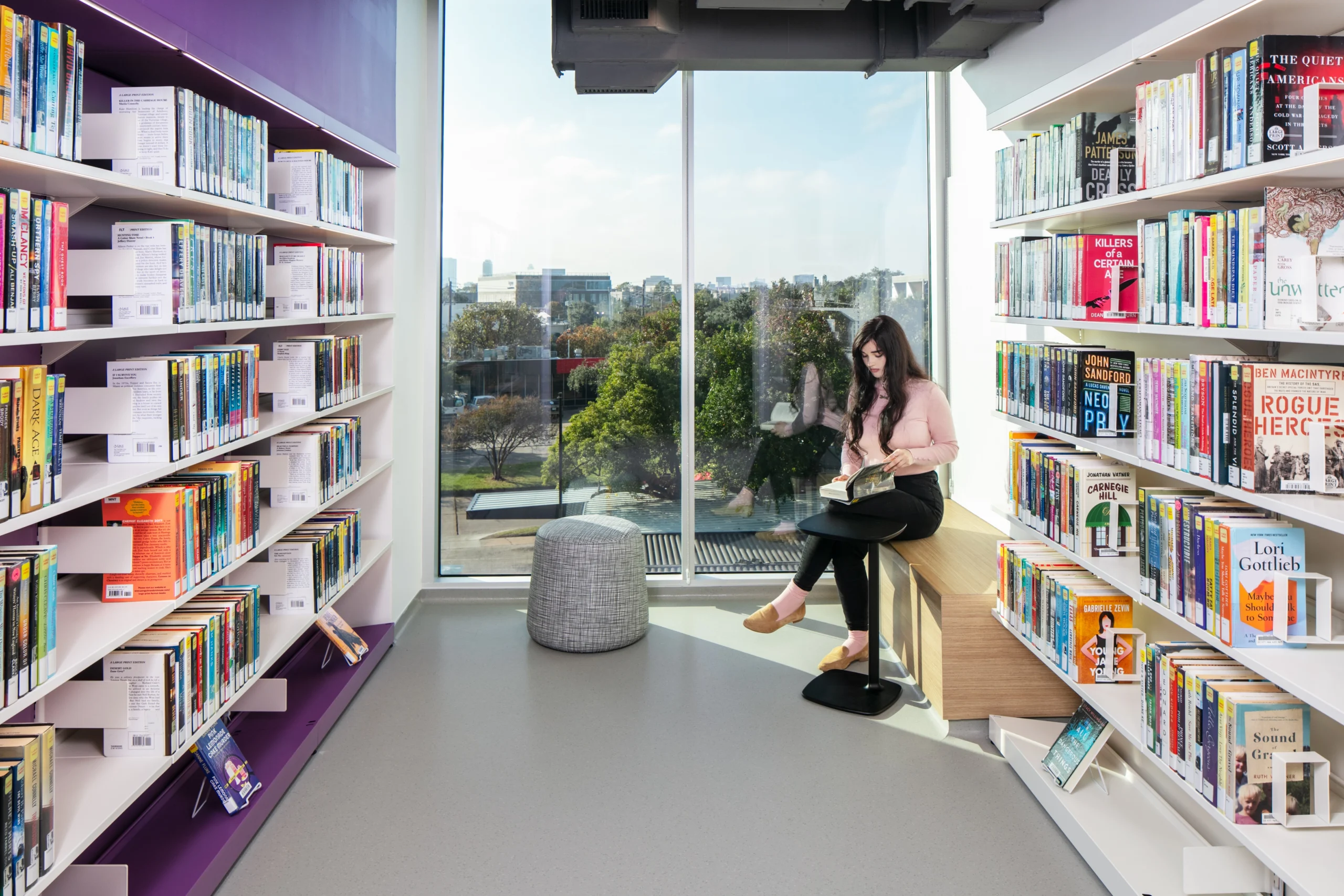
Even the shelving is color‑matched to its zone, reinforcing wayfinding for young readers, neurodiverse users, and anyone who benefits from visual clarity.
Creating Spaces That Welcome Everyone
Equity in this project is also spatial. Low shelving along the perimeter maintains open sightlines, ensuring safety, visibility, and comfort, especially important in a library serving toddlers, teens, and adults in close proximity. Playful niches and book‑lined benches invite lingering and exploration.

The design also maximizes natural light despite inherited structural constraints. With low floor‑to‑floor heights and stair orientations that blocked daylight, the team adopted an open ceiling and reimagined the stair as a sculptural, light‑enhancing element wrapped in warm wood and perforated metal. These moves create a sense of openness and dignity in spaces that could have felt compressed.
Art as a Bridge to Community Identity
Montrose is known for its murals, galleries, and the nearby Menil Collection. Integrating local art was essential to ensuring the library felt authentically rooted in its neighborhood.
A two‑story bas relief mural by Houston artist Kill Joy visually connects the two floors, serving as a cultural anchor. Art serves as a unifying force across the space, enhancing the community connection and adding to the overall warmth and welcoming feel.
This collaboration with local artists reinforces representation and belonging, key components of equitable design.
An Outdoor Room for Everyone
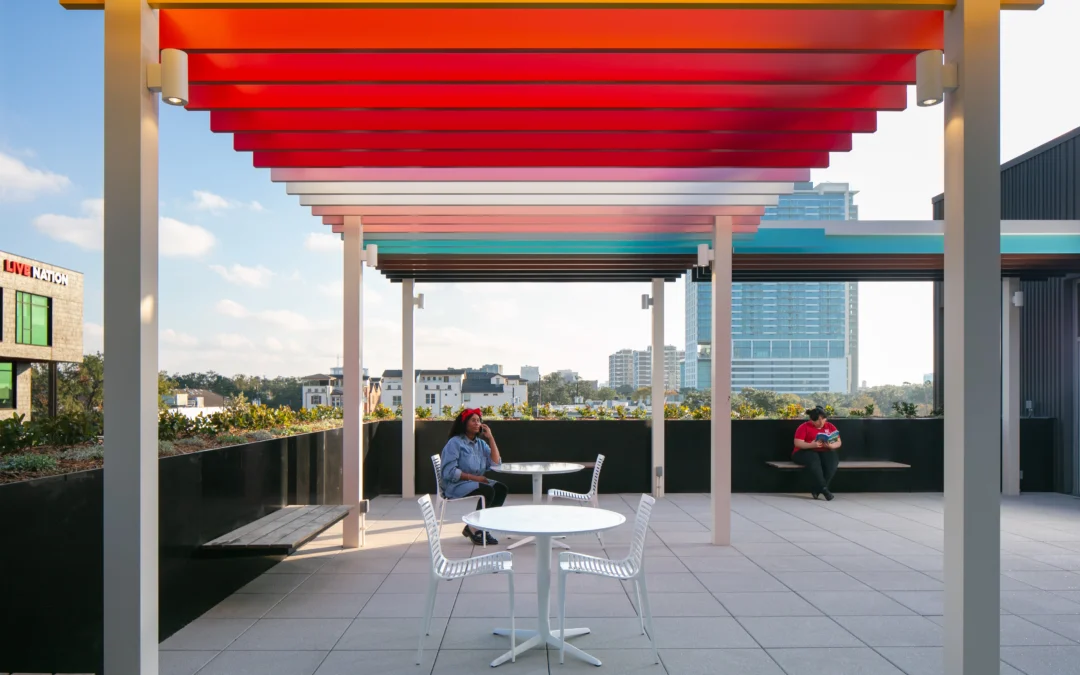
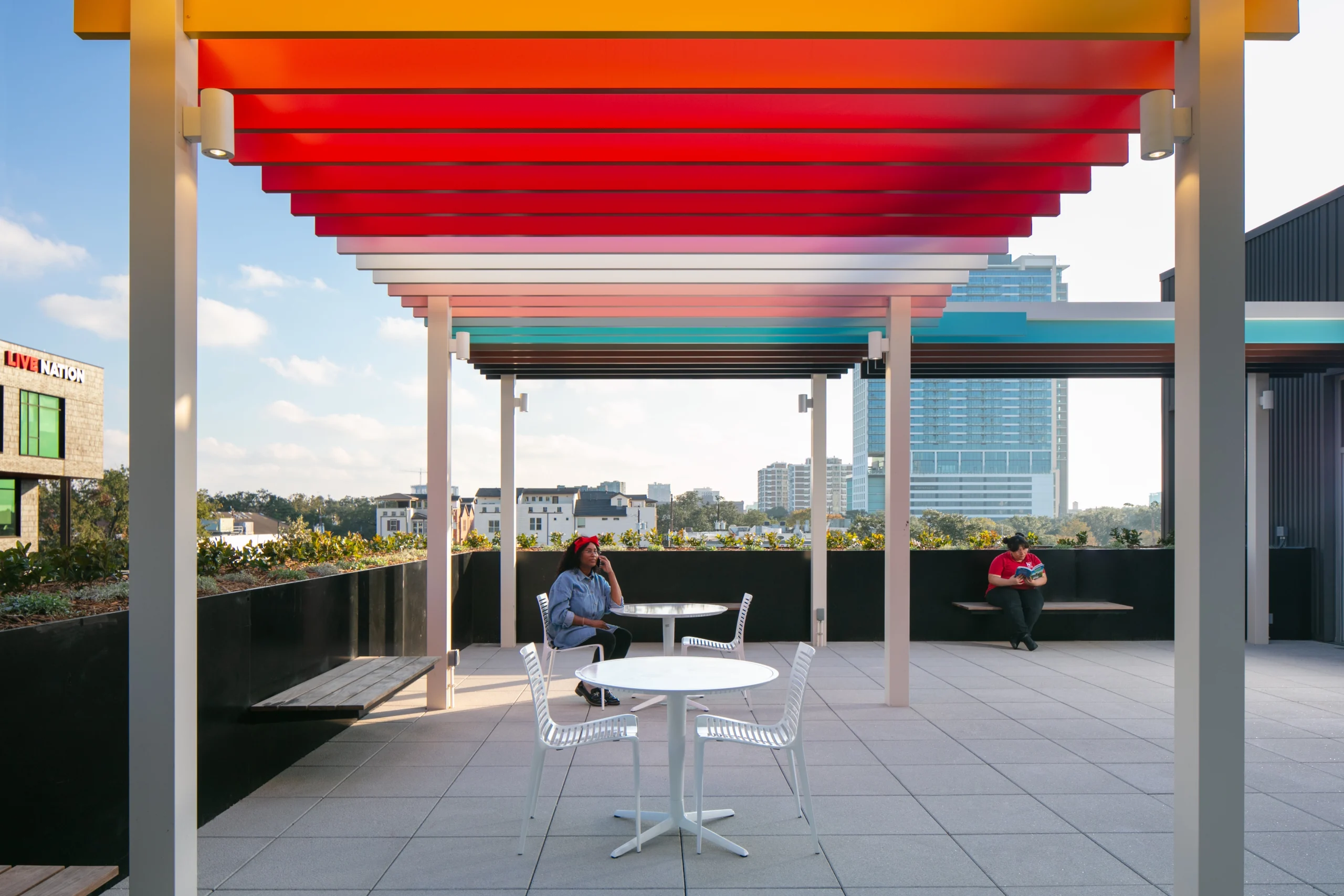
The library’s outdoor patio extends the experience beyond the building envelope. A rainbow‑hued trellis shades the space from the southern sun, creating a comfortable, elevated urban patio inspired by Houston’s outdoor culture. The trellis also becomes a landmark, visually connecting the third level to the street and reflecting Montrose’s diverse and inclusive spirit. This gesture brings the library’s identity outward, signaling openness and community pride.
A Model for Equitable Urban Libraries
The Montrose Library demonstrates how civic spaces can thrive within private developments when equity is a guiding principle. Through color, art, spatial clarity, and community‑centered design, the library becomes more than a place to borrow books—it becomes a place to belong.

Alyssa Hitt, IIDA, NCIDQ, LFA
Senior Interior Designer, Associate
Alyssa strives to redefine the human experience within the built environment. From tenant improvements to new build projects, she examines the impact that space can have on the way humans explore their surroundings.