


Designing for Inclusion: It Starts Within the Team
by Katherine Chappelle, IIDA, EDAC
In healthcare design, we invest deeply in creating environments that support dignity, well-being, and connection. We think intentionally about inclusion—who we’re designing for, what they need, and how our decisions shape their emotional, cultural, and physical experience.
Over time, one truth has become increasingly clear:
inclusive environments can only emerge from inclusive teams.
The design process itself—how we collaborate, communicate, and create space for diverse perspectives—shapes outcomes as profoundly as any floor plan or finish palette.

Vivian A. Kao ’04 Health and Counseling Center, Wellesley College, Wellesley, MA. Photo by Marjorie Becker/Accidentally Wes Anderson.
Inclusion Isn’t Role-Based — It’s Relational
One of the challenges we sometimes encounter in our industry is the way responsibilities have historically been divided. Even though every discipline is deeply committed to human experience, we can still find ourselves working on parallel tracks rather than as an integrated whole.
Architects, interior designers, medical planners, engineers, landscape architects, equipment planners—we all share the same goals, but we often arrive at them differently. At times, differences in communication styles, sequencing, and perceived hierarchy can limit collaboration. Not from a lack of care, but from the systems and timelines that shape project delivery.

When our processes separate instead of bringing our strengths together, we lose the richness that emerges when multiple perspectives overlap. Every team—and every client—benefits when disciplines are engaged early, not added at the end. Inclusion means giving each voice space before decisions calcify. It’s about shaping the story together rather than trying to revise it later.
Inclusion isn’t role-based.
Inclusion is relational.
It’s the intentional weaving of perspectives that makes our work more resilient, more inventive, and more human.
The Collaboration Challenge Across Disciplines
Even with strong intentions, healthcare design is inherently complex. Each discipline views the project through a different lens—shaped by experience, priorities, and expertise.
These dynamics extend far beyond the familiar architect/interior designer relationship. I’ve seen misalignment—and opportunity—arise across almost every pairing:
architect ↔ landscape architect
designer ↔ medical planner
designer ↔ equipment planner
designer ↔ MEP engineer
designer ↔ wayfinding/ EGD consultant
designer ↔ art consultant
designer ↔ clinical and facilities staff
These aren’t signs of dysfunction. They reflect a system where disciplines often enter the process at different times with different information. When voices arrive late, even small decisions can ripple into larger compromises.
The solution isn’t to eliminate differences, it’s to synchronize strengths.
Inclusive teams create opportunities to connect early, ensuring critical insights aren’t missed. In that way, inclusion becomes more than a value—it becomes a strategy for better outcomes.
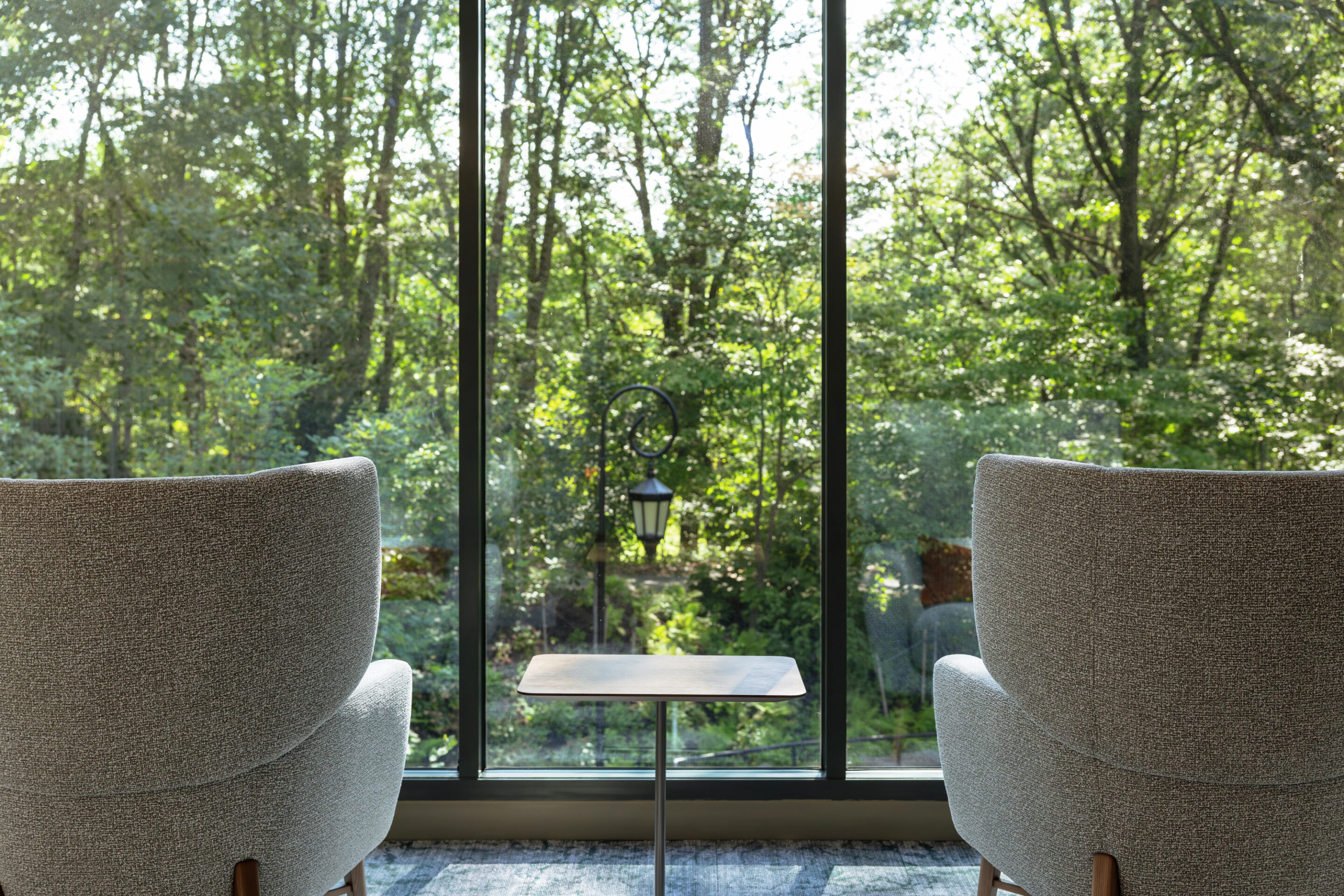
Vivian A. Kao ’04 Health and Counseling Center, Wellesley College, Wellesley, MA. Photo by Marjorie Becker/Accidentally Wes Anderson.
Understanding the Full Spectrum of Design Expertise
Inclusive collaboration requires a clear understanding of what each discipline truly contributes. Most breakdowns aren’t driven by disagreement; they’re driven by misunderstanding.
Interior designers, for example, do far more than select finishes and furnishings. We interpret behavior. We design for emotional and sensory experience. We understand light, acoustics, comfort, code compliance, ergonomics, infection prevention, trauma-informed design, workflow, and safety. We bring culture, identity, and narrative into environments in ways that shape how spaces feel and function.
And every discipline offers its own depth:
- Medical planners bring clinical insight and safety logic.
- MEP engineers influence comfort, lighting, acoustics, and environmental health.
- Landscape architects create arrival experiences and connection to nature.
- Equipment planners ensure functionality, flexibility, and operational integrity.
- Wayfinding consultants reduce cognitive burden and support clarity.
- Art consultants bring emotional resonance and cultural meaning.
When these capabilities aren’t fully understood or valued, collaboration becomes one-dimensional—and the work suffers.
The remedy isn’t frustration.
The remedy is education.
Sharing our process, our evidence base, and our reasoning builds trust and strengthens the collective outcome. When we understand one another’s expertise, we engage from a place of curiosity rather than assumption. Education itself becomes an act of inclusion.
A Personal Moment
Several years ago, during a major healthcare renovation, one of our junior designers sat quietly in a workshop filled with architects, MEP engineers, medical planners, IT, facilities, and interiors. We were circling around workflow challenges without landing on a clear solution.
Halfway through the meeting, she slid a sketch toward me—a reconfigured circulation concept that addressed three core concerns: visibility, safety, and congestion.
When I asked if she would share it, she hesitated—then stood and explained her idea in less than two minutes.
The room fell silent. Then everyone leaned in.
Her idea unlocked the issue immediately. The client approved it on the spot.
That moment reinforced something essential:
Inclusion isn’t a policy—it’s an invitation.
Sometimes all it takes is creating a safe space for someone to contribute.
It reminded me of sports—the most successful teams don’t win because one player dominates. They win because every role is understood, every strength is leveraged, and every player is trusted. Great design teams, like great athletic teams, rely on timing, trust, and shared leadership.
Inclusion isn’t a policy—it’s an invitation.
Sometimes all it takes is creating a safe space for someone to contribute.

John M. O’Quinn Law Building, University of Houston, Houston, TX. Photo by Dror Baldinger.
Inclusion in Practice: How It Shows Up Daily
Inclusion isn’t only a design principle—it’s a daily practice. It grows through transparency, humility, and the belief that every voice strengthens the outcome. When we design inclusively as teams, we design better spaces for others.
Inclusive practices include:
- rotating facilitation to shift power dynamics
- building multidisciplinary concept sessions
- inviting emerging designers to contribute ideas
- co-authoring presentations and narratives
- engaging nontraditional voices—EVS, IT, security, patient advisors
- designing for cultural, sensory, cognitive, and mobility differences
- cultivating psychological safety: the foundation of high-performing teams
When practiced consistently, inclusion leads to more innovative, resilient, and responsive work. Client trust grows. Collaboration strengthens. Solutions improve.
And the impact extends well beyond the project.

Inclusive collaboration transforms culture—building morale, strengthening loyalty, and deepening people’s connection to the work. When employees feel heard and supported, they grow, contribute, and stay. They know their perspective matters.
Evidence-based design tells us that diverse perspectives enhance problem-solving—the same principle that drives positive health outcomes. Inclusion fuels creativity, strengthens relationships, and enriches the environments we shape.
The more we practice inclusion within our teams, the more authentically we extend the same empathy to the communities, patients, families, and caregivers we serve.
Misconceptions About Inclusion and Cost
If you’re still with me—I’m grateful.
And if you’re thinking, “This all sounds great, Katherine… but inclusive collaboration must be expensive,” you’re not alone. That assumption comes up often—but it’s one of the biggest misconceptions, and it simply doesn’t hold up.
When teams understand the vision early…
When insights surface before decisions are fixed…
When rework decreases and alignment strengthens…
we save time, reduce waste, and elevate quality.
Inclusion isn’t inefficiency.
Inclusion is alignment.
Gratitude, Growth, and the Work Ahead
Inclusion isn’t a checklist—it’s a mindset. It’s a commitment to designing with people, not merely for them. When we widen the circle within our teams, we widen the impact of our work. The spaces we create become more intuitive, more equitable, and more deeply connected to the communities they serve.
Because in the end, inclusion is more than a process.
It’s a culture—one that starts within and radiates outward into the world we design.
My hope is that we keep asking meaningful questions, keep inviting new perspectives, and keep practicing inclusion not just in how we design healthcare environments, but in how we show up for one another every day. When our teams thrive, our projects thrive—and the people who experience our work benefit most of all.

Houston Freed-Montrose Public Library, Houston, TX. Photo by Chris Bacarella.
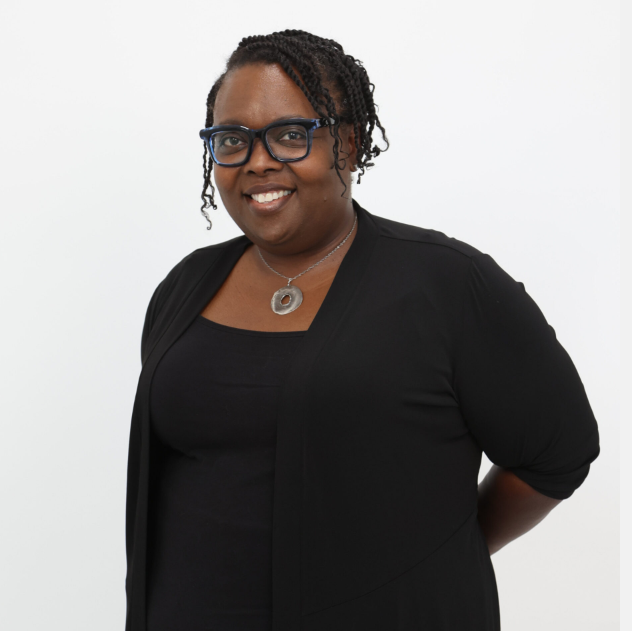
Katherine Chappelle, IIDA, EDAC
Director
Katherine Chappelle is passionate about the way design can shape human experience. With more than two decades in healthcare interiors, she believes every project is an opportunity to listen deeply, connect ideas, and create spaces that feel both restorative and inspiring.