


Evolving Student-Centered Design at Johns Hopkins: Key Programming Steps
By Matthew Gifford, AIA, LEED AP, and Kalyn Pavlinic, NCIDQ, LEED AP, IIDA
This is part two of a two part series exploring the decade of planning behind the design of Johns Hopkins University’s Bloomberg Student Center. Read part one, where we set the stage and begin the vision behind the university’s first student center.
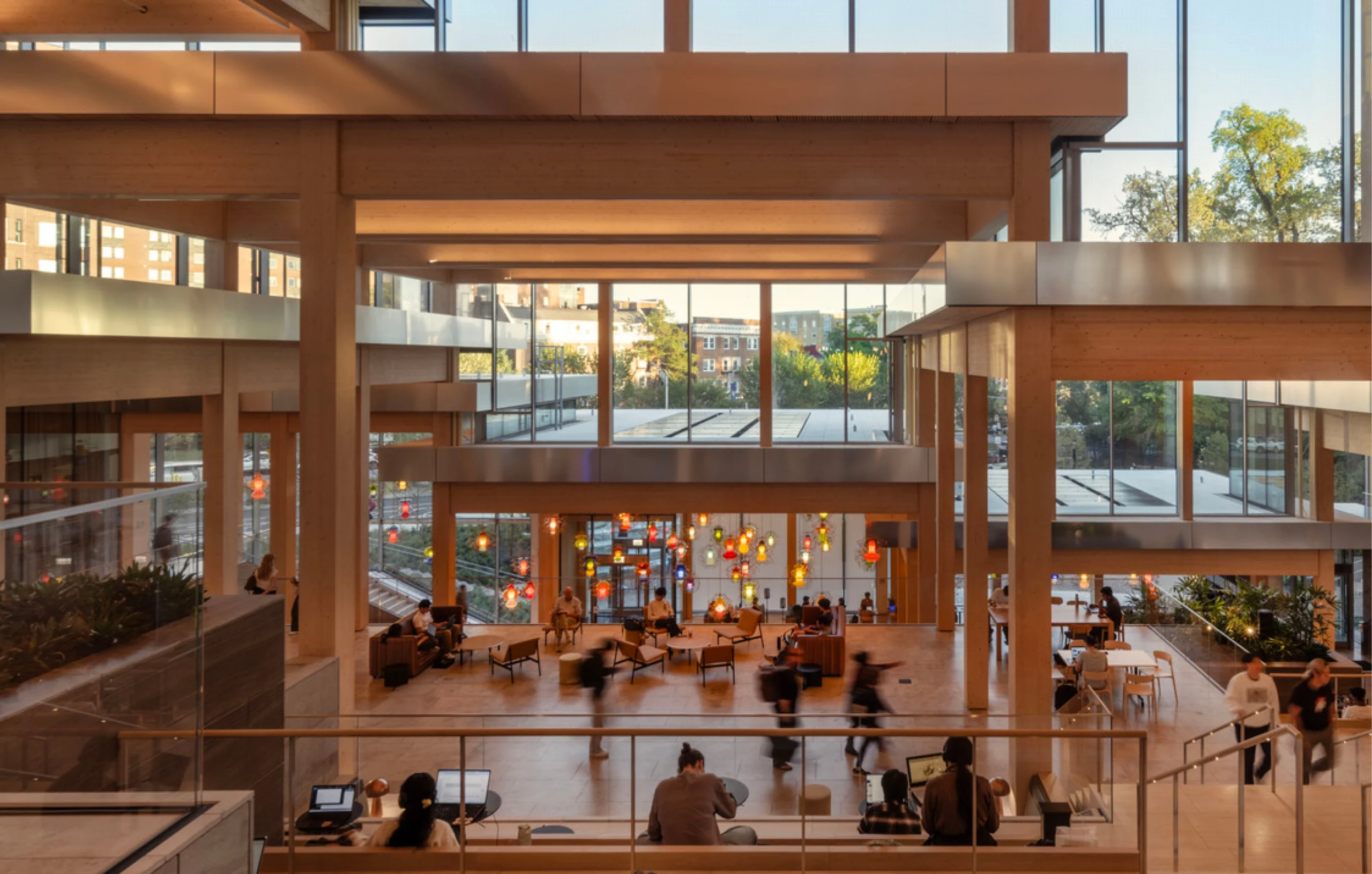
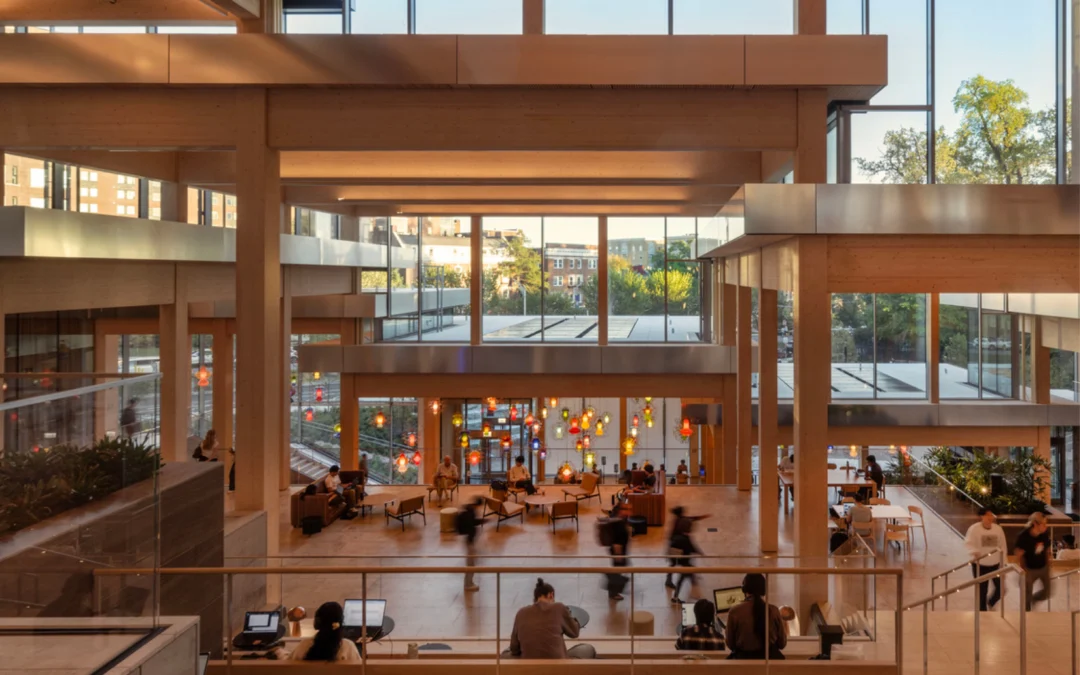
Bloomberg Student Center, Johns Hopkins University, Baltimore, MD. Photo by Nic Lehoux.
Key Themes in Programming
Several themes emerged as central to the Bloomberg Student Center’s programming:
Bloomberg Student Center, Johns Hopkins University, Baltimore, MD. Photo by Nic Lehoux.
1. Wellness and Cultural Shift
The center was designed as a relief valve for academic pressure, supporting student wellness and encouraging healthy breaks from study. This represented a cultural awakening at Hopkins, moving away from the expectation that students should be working at all hours and toward a more balanced approach to student life.
2. Arts and Extracurricular Activities
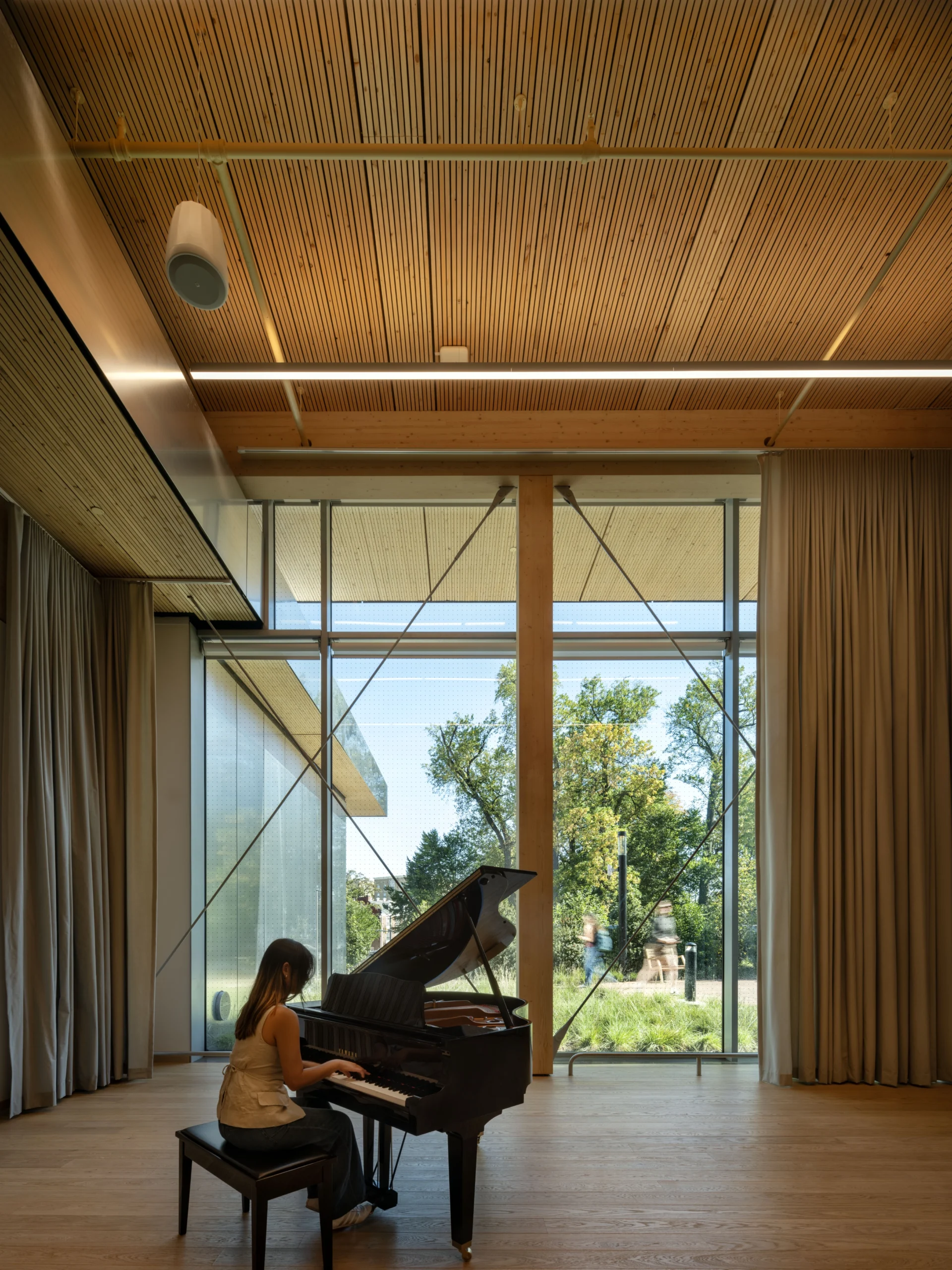
With the new student center replacing the former arts building, and more than 400 student clubs on campus—a significant number centered on music and visual or performing arts—the programming process recognized that many students sought social connection and balance through these creative outlets. As a result, the design prioritized multipurpose spaces that could flexibly support rehearsal, performance, and a wide range of artistic and co-curricular activities, expanding opportunities for expression and engagement across the student community.
3. Inclusivity and Intersectionality
The administration was adamant that the center should be a place for all students, resisting the creation of dedicated spaces for specific affinity groups. Instead, the programming aimed to foster intersectionality, ensuring that the center would be welcoming and accessible to everyone.

4. Data-Driven Decision Making
Metrics played a crucial role in shaping the center’s spaces. The team analyzed utilization rates, requests, and reservations to “right-size” facilities, balancing the needs of large performance groups with those of smaller clubs, and creating accessible spaces during key hours. This approach helped avoid overbuilding and ensured that resources were allocated where they were most needed.
5. First-Generation Student Support
During the planning process, Hopkins saw a dramatic increase in first-generation college students. The center was envisioned as a key resource for helping these students acclimate to university life, providing guidance, community, and connections to resources and services across the university.
6. Dining and Community Integration
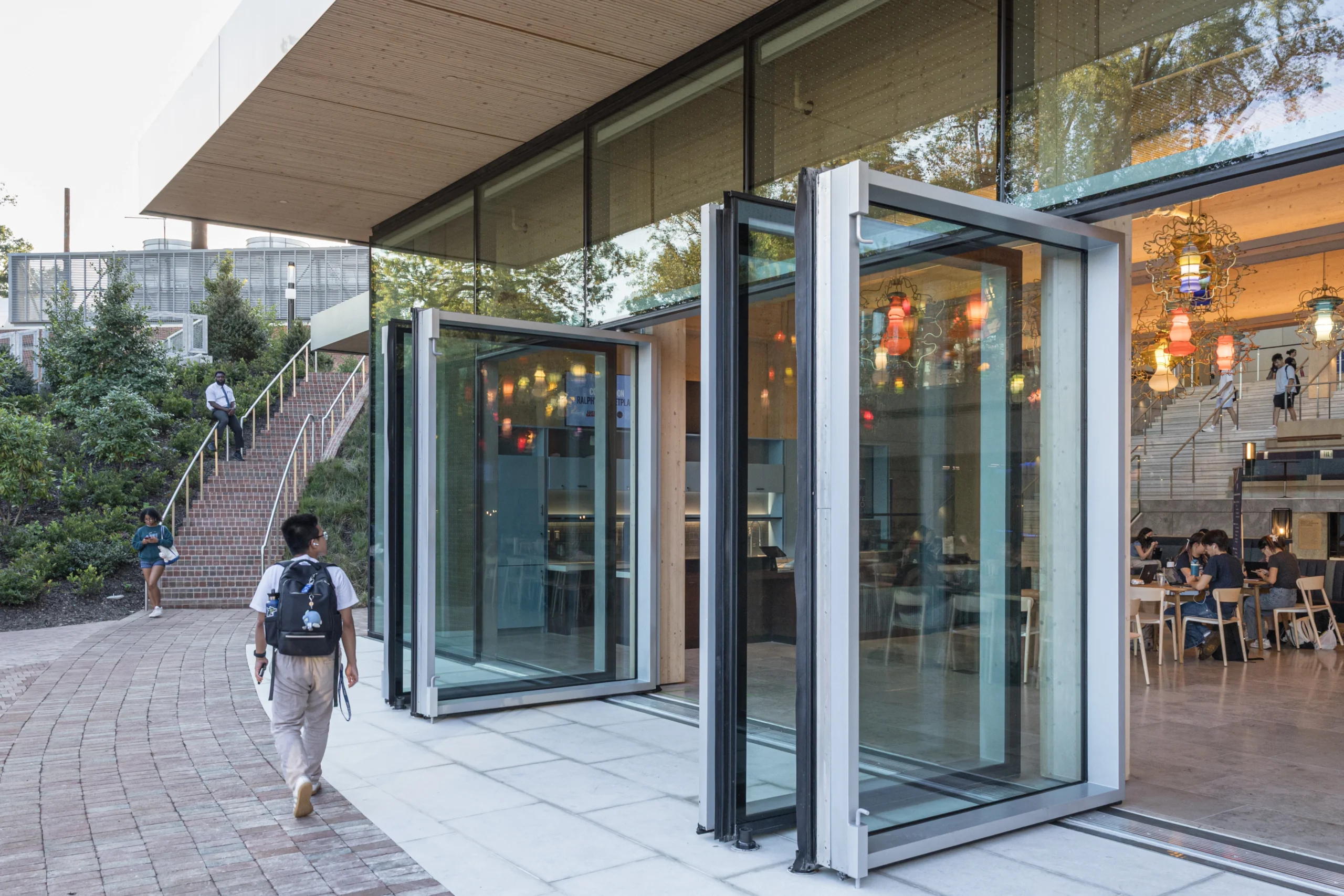
Dining was a complex challenge, with multiple platforms and local vendors brought in to serve the community. The programming allowed students who bring outside food to join those buying meals at the center, and brought flexibility in payment options for those purchasing from food vendors. Adaptability for cost and vendor sustainability was a critical element in both the program and design of the student center.
Bloomberg Student Center, Johns Hopkins University, Baltimore, MD. Photo by Laurian Ghinitoiu.
Continual Learning and Adaptation
As the Bloomberg Student Center opened, the team recognized that the journey was just beginning. For the immediate future, new planning was undertaken to expand and educate the student life staff on operating and maintaining a student center. As a new facility type for the campus, staff needed to understand the unique needs of the space compared to academic or housing buildings.
The building’s use and atmosphere can—and will—continue to evolve over time, shaped by student feedback and changing needs. The experience at Brody Learning Commons provided valuable parallels for the Bloomberg Student Center. Both projects underscored the importance of flexible, adaptable spaces and the need for ongoing engagement with users.
The planning process behind the Bloomberg Student Center at Johns Hopkins University exemplifies the power of collaborative, data-driven design. By building on lessons from the Brody Learning Commons and embracing new priorities—wellness, inclusivity, and community—the firm has helped shape a space that will support generations of students. As the center continues to evolve, its story offers insights and inspiration for institutions seeking to create environments that truly serve the whole student.

Matthew Gifford, AIA, LEED AP
Principal
Matt’s collaborative approach to the design process has created highly sustainable, highly functional academic, library, and student life facilities. He is committed to developing solutions that are unique to each client’s culture and goals.

Kalyn Pavlinic, NCIDQ, LEED AP, IIDA
Principal
With a background as an artist and biologist, Kalyn brings a unique perspective, weaving together an understanding of user needs and institutional goals with a strong design aesthetic rooted in human behavior and spatial experience.