


Healing, Connecting, Comforting, and Restoring: Designing for Holistic Wellness
By Amanda Vigneau, IIDA, NCIDQ
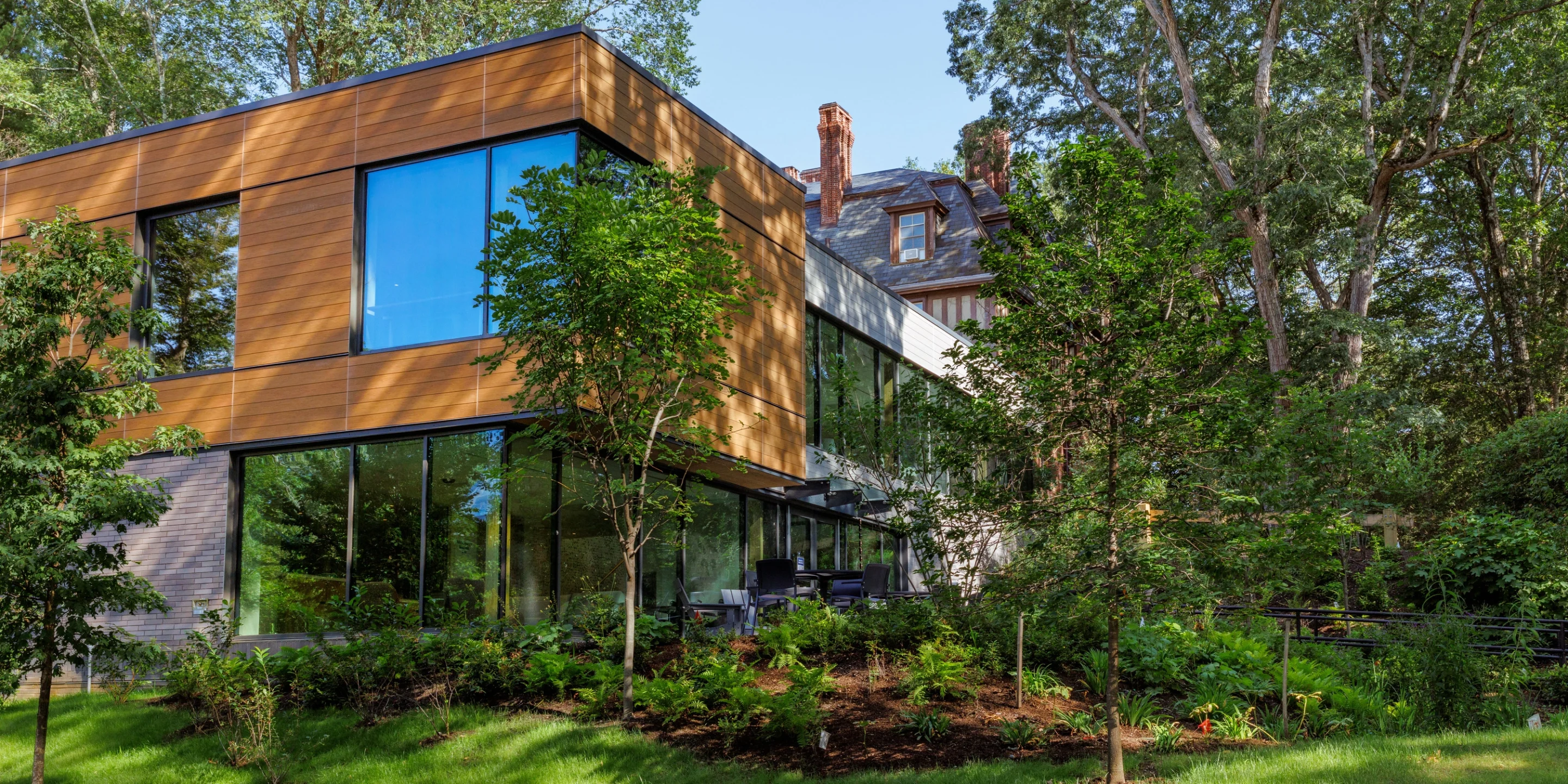
Vivian A. Kao ’04 Health and Counseling Center, Wellesley, MA. Photo by Marjorie Becker/Accidentally Wes Anderson.
At Wellesley College, wellness is considered foundational to student success. For decades, campus health services have occupied a quiet, wooded corner of campus. With the opening of the new Vivian A. Kao ’04 Health and Counseling Center, Wellesley partnered with our team to reimagine what a campus wellness environment can be: restorative, sustainable, and deeply connected to place.
The new two‑story, 11,000‑sf facility replaces the Simpson Infirmary with a modern, biophilic inspired, and highly sustainable building that brings health and counseling services together under one roof. This co-location supports a holistic model of care, one that reduces stigma, improves access, and empowers students to bring their whole selves to campus life.
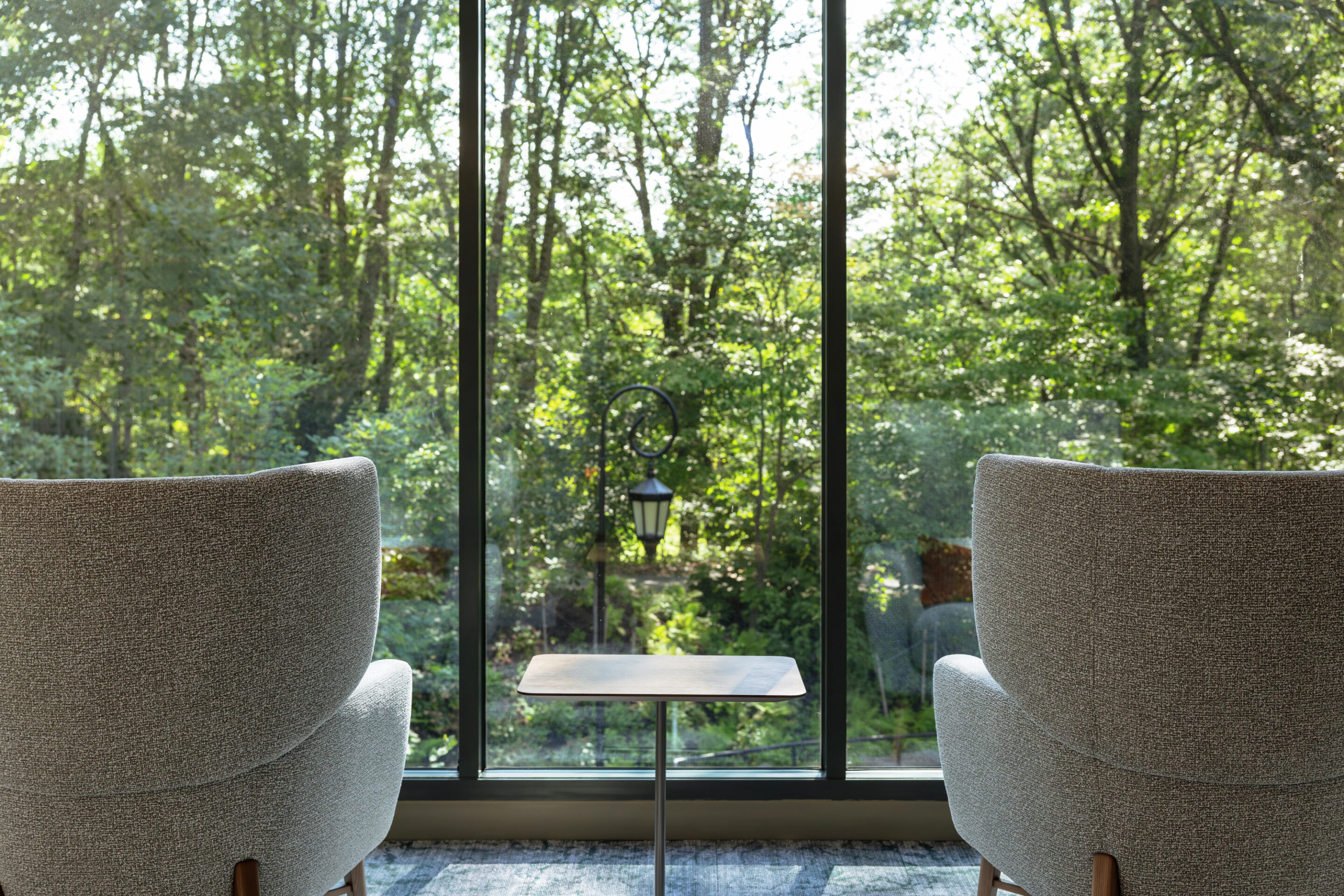


Vivian A. Kao ’04 Health and Counseling Center, Wellesley, MA. Photos by Marjorie Becker/Accidentally Wes Anderson and James Ewing.
A Building Rooted in Nature
Nestled among mature trees and linked to meandering pedestrian paths, the Health and Counseling Center is conceived as a pavilion in the woods. The design team embraced the site’s natural beauty, using the building’s L‑shaped plan and extensive glazing to maximize daylight, views, and a sense of refuge. The lobby space was purposefully designed to link inside to outside so that visitors feel connected and confident in where they were going to get the services they need. The design offers both open, light-filled commons, and private, sheltered counseling and retreat spaces, giving students choice, control, and a sense of safety, critical elements in supporting mental health and comfort.
Biophilic design principles guided every interior decision. Carpets echo the textures of dappled forest floors and shifting lakeshore sands. Wall treatments evoke tree canopies. Stone-look tile blurs the threshold between indoors and out. Natural materials, including wood millwork, warm finishes, and landscape-inspired accent colors, create a calming, cognitively supportive environment for students seeking care. Beyond the materials, the building treats the landscape as part of the care model providing spaces upon arrival and within to be amongst the trees.
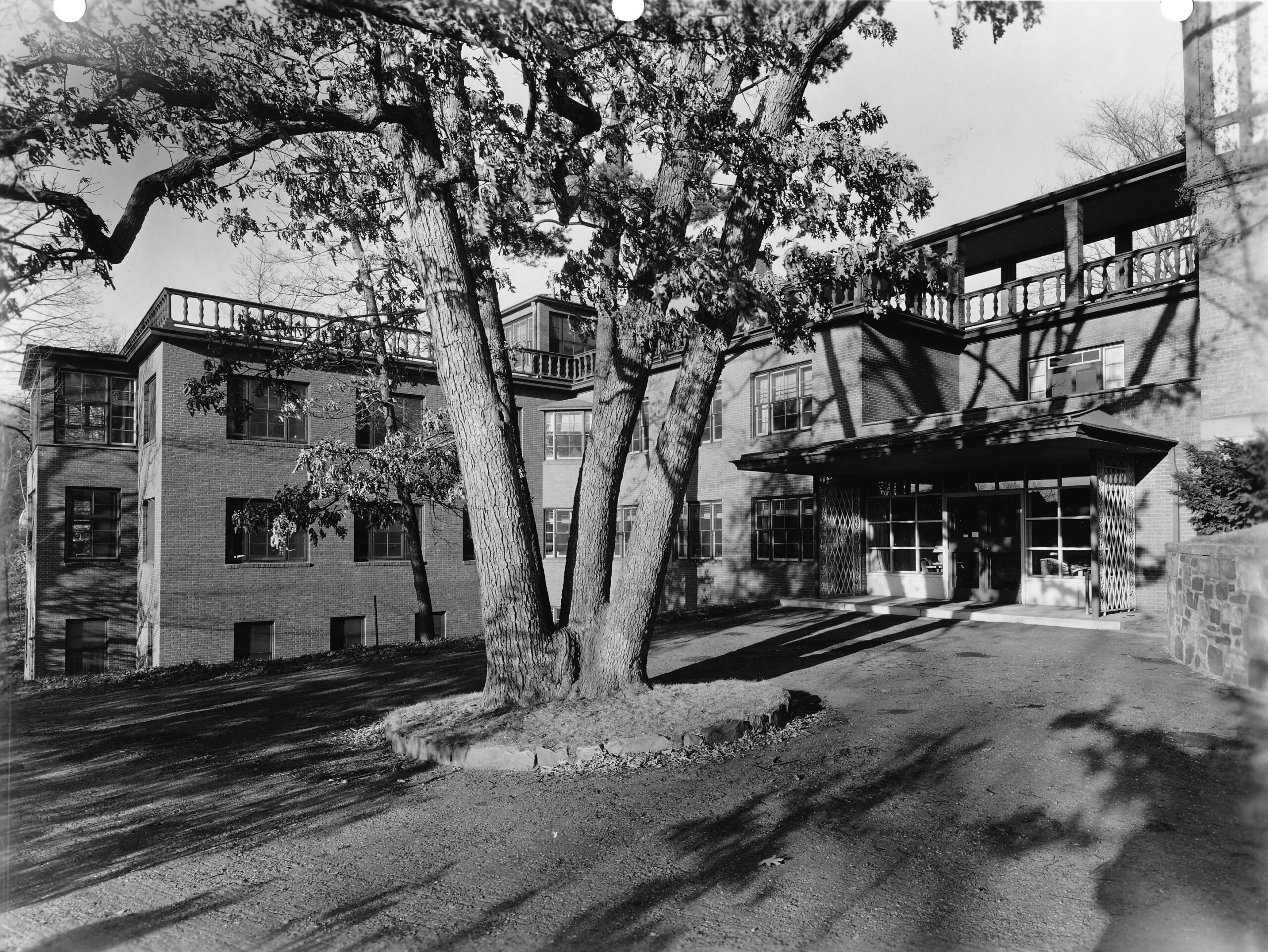

The Vivian A. Kao ’04 Health and Counseling Center, occupies the same space as the Simpson Infirmary, shown in 1943.
Sustainability as a Foundation for Wellness
Wellesley’s commitment to sustainability is woven into the buiilding’s structure, systems, and material choices. The project reuses the existing foundation and first-floor slab of the Simpson Infirmary, designed by Coolidge Shepley Bulfinch and Abbot in the 1940s, to significantly reduce embodied carbon. A prefabricated mass timber structural system further lowers carbon intensity while enabling a faster, more efficient construction process and aligning the approach with the College’s carbon plan for 2025.
The result is a net‑zero‑ready facility with LEED Gold certification that not only supports student health but also models responsible environmental stewardship.
A Holistic Approach to Student Well‑Being
Inside, the building is organized to foster both connection and privacy. The first floor houses clinic spaces, exam rooms, and small labs, while the second floor provides counseling offices, a flexible meeting room, and wellness spaces bathed in natural light. These environments are intentionally layered, with some being open, closed, or semi‑open, to support a range of emotional and physical needs.
Our programming process emphasized four lenses: Healing, Connecting, Comforting, and Restoring. These principles shaped everything from circulation patterns to material choices, ensuring that students feel safe, supported, and empowered throughout their visit.
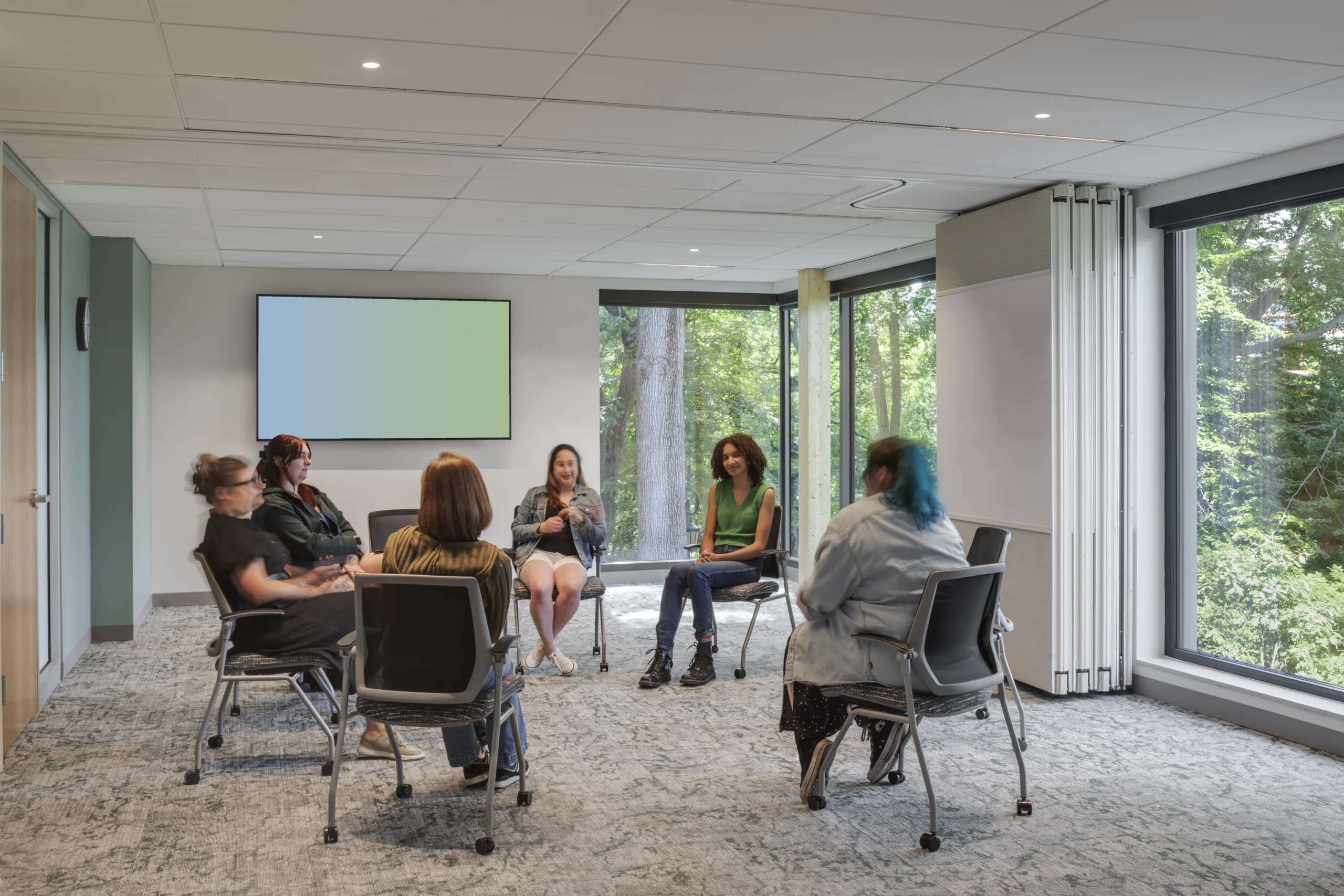
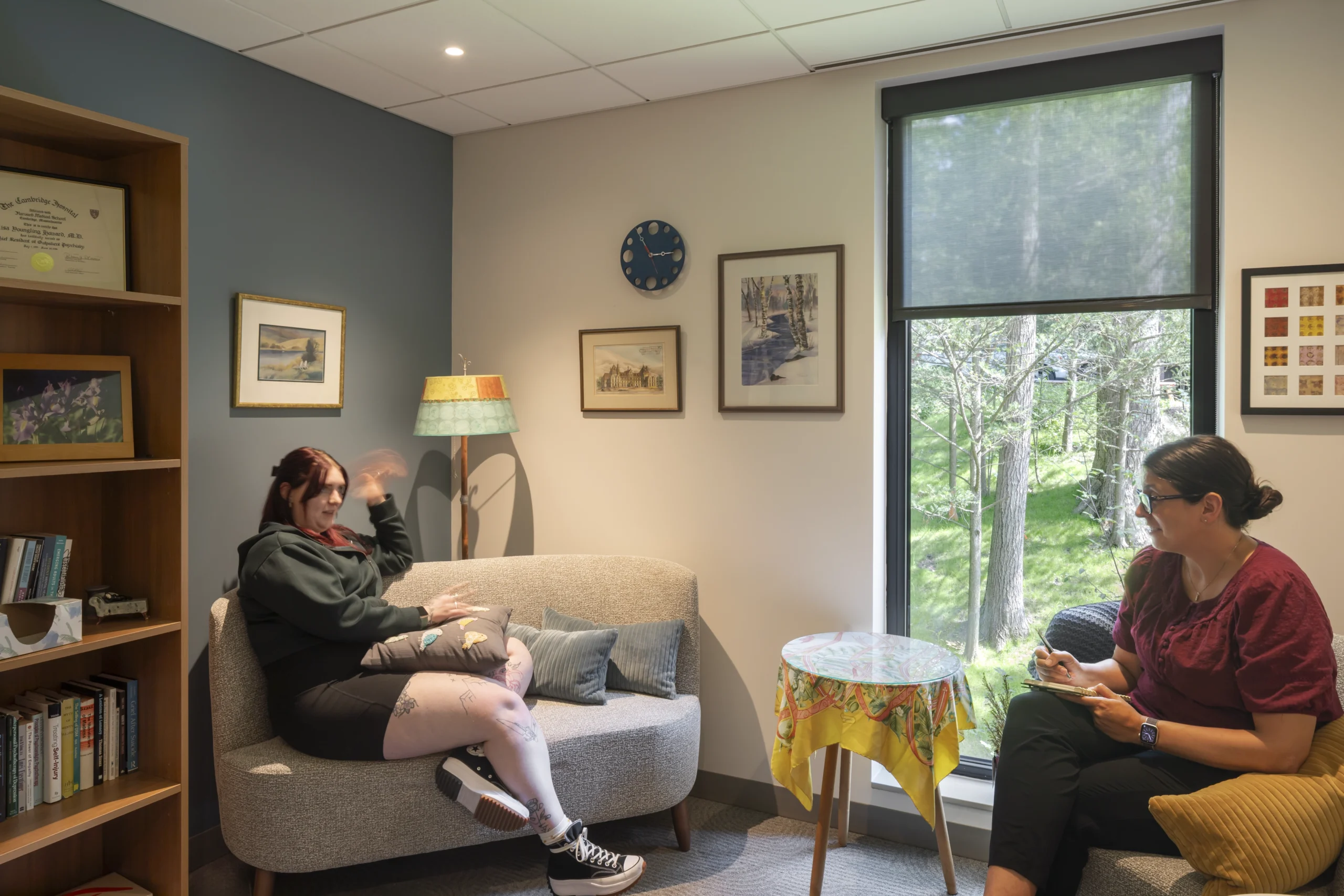
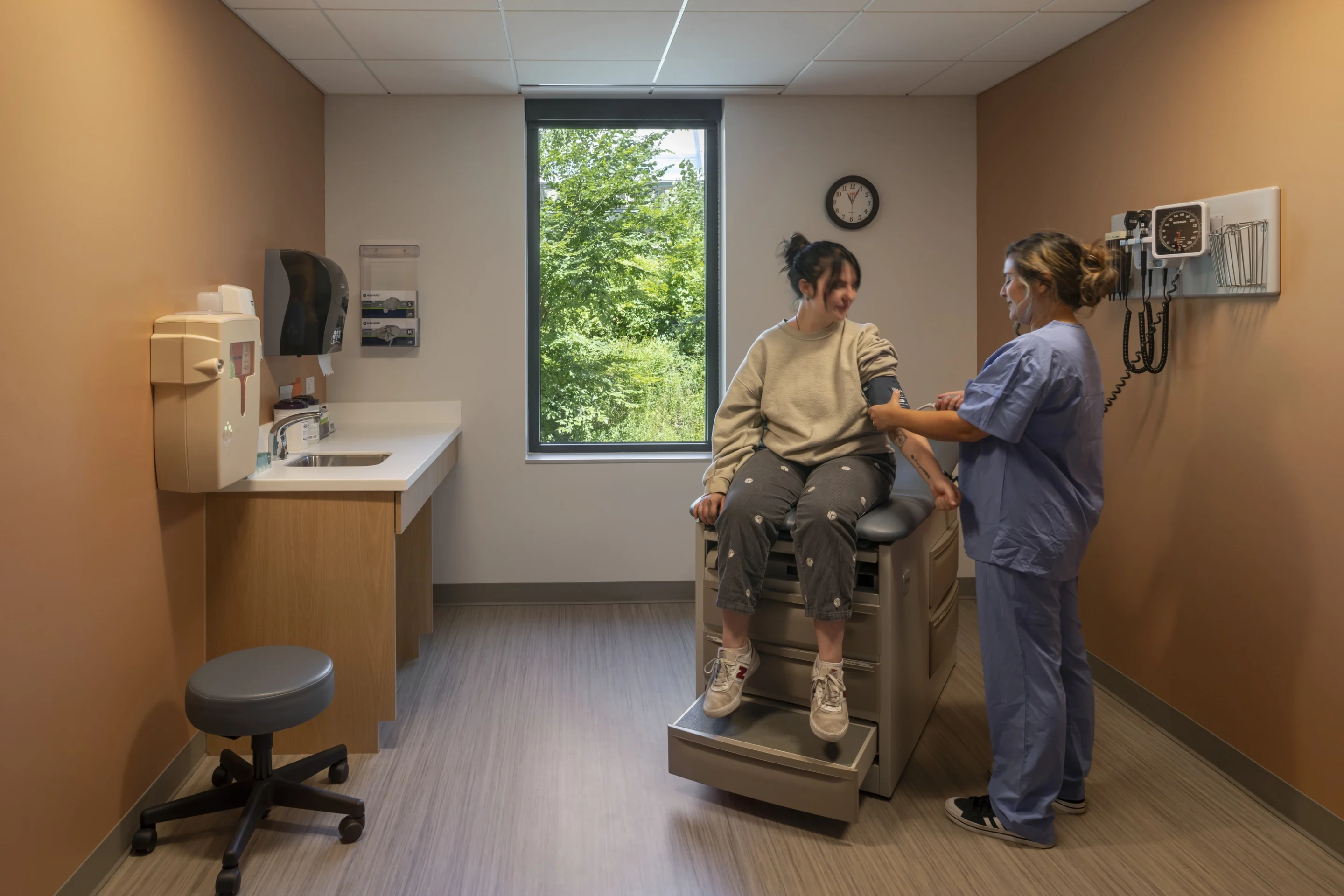
Vivian A. Kao ’04 Health and Counseling Center, Wellesley, MA. Photos by James Ewing.
By drawing on Wellesley’s landscape, ecology, and campus identity, the building strengthens students’ sense of belonging and reinforces the idea that wellness is integrated into the broader campus experience. Colocation health and counseling services in one biophilic inspired environment, the building reduces stigma, improves access to care, and encourages students to engage more proactively with their physical and mental health.
A Model for the Future of Campus Wellness
The Wellesley College Health and Counseling Center represents a new paradigm for student wellness facilities. By integrating sustainable design, biophilic principles, and holistic care into a cohesive, inspiring whole, the project sets a new standard for how campuses can support their communities. More than a building, it is an environment where students can pause, breathe, and find the care they need to thrive.

Amanda Vigneau, IIDA, NCIDQ
Associate Principal
Amanda’s approach centers on the belief that design shapes how people experience the world. She is committed to uncovering the unique look and feel of each project, ensuring that design solutions not only address functional needs but also inspire.