A New Chapter on the Charles
Mugar Memorial Library
Boston University
Boston, MA
The renewal of Mugar Library represents a measured approach to creatively and respectfully stewarding historic architecture into the contemporary moment, aligning building improvements with the evolving needs of research, scholarship, and BU’s broader academic mission.
Designed by architect and urban planner Josep Lluís Sert, Mugar Memorial Library has served generations of students, faculty, and researchers since its completion in 1966. But the structure faces the same dilemma as many other mid-century libraries: the need to convert a static home for books into a living institution.
Boston University has selected Shepley Bulfinch to lead a comprehensive renewal of the library, transforming it into a vibrant, future-ready destination while honoring its architectural and cultural significance. The design process began with a deep investigation of Mugar’s history and role in advancing the university’s academic mission to support contemporary research. Working closely with Boston University stakeholders, the team has studied the library’s physical fabric, historic intent, and the abilities of current environments to support modern scholarship. This research has informed a design strategy that preserves the building’s defining architectural features while supporting new modes of academic inquiry and community,
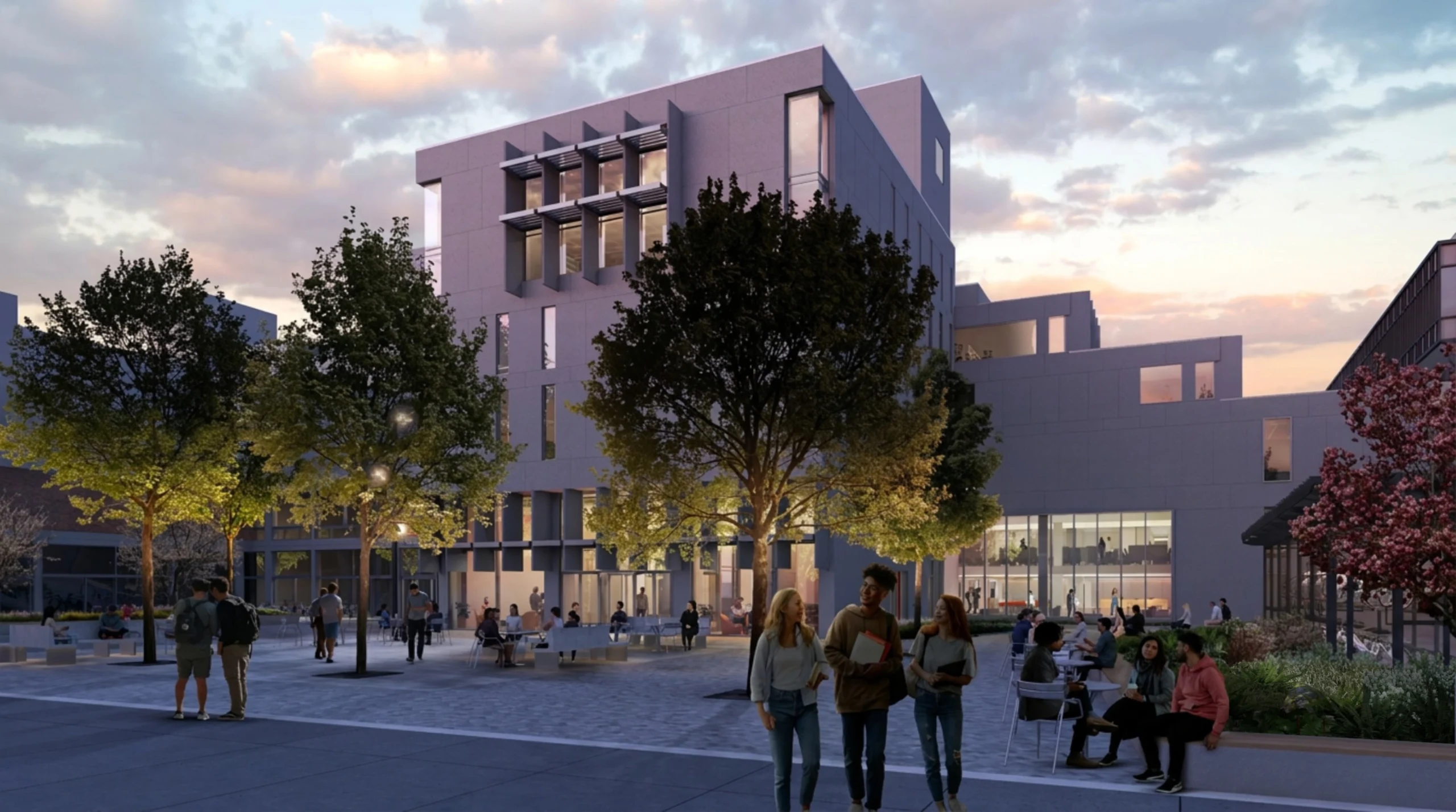
As a flagship urban campus library, Mugar serves as a gateway between the academic community and the world beyond. At the campus scale, the project strengthens Mugar’s connection to its surroundings and reinforces its role within Sert’s interconnected composition of buildings and open spaces. The renovation proposal reconsiders arrival and circulation, creating a more intuitive and visible entrance experience while improving connections between the library, adjacent academic buildings, and outdoor gathering spaces. Facing the main campus thoroughfare, Commonwealth Avenue, the new entry experience is designed to form an important nexus between the academic and local community. By enhancing physical and visual links across the campus, the design supports a more inclusive and accessible experience for all users.
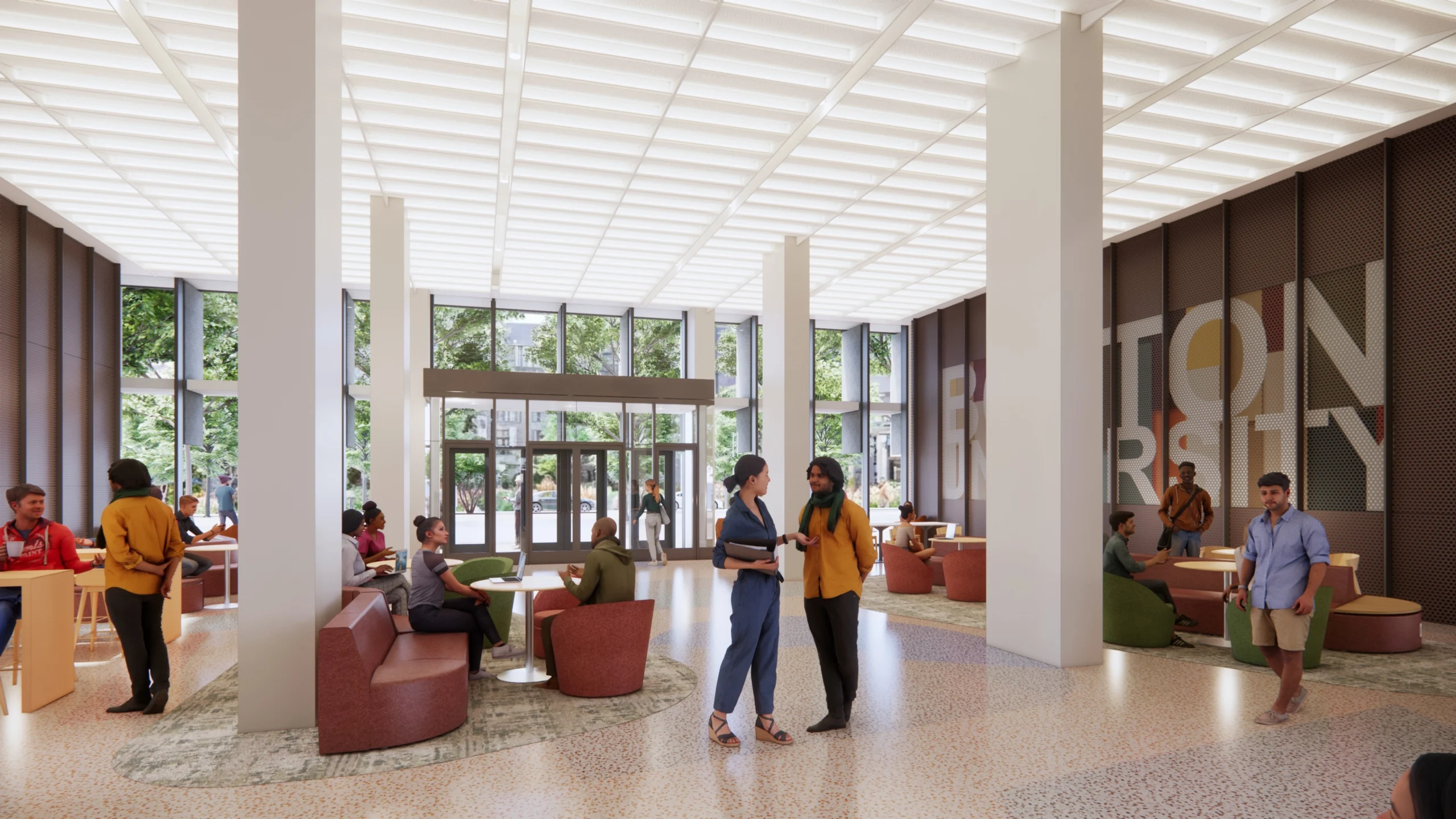
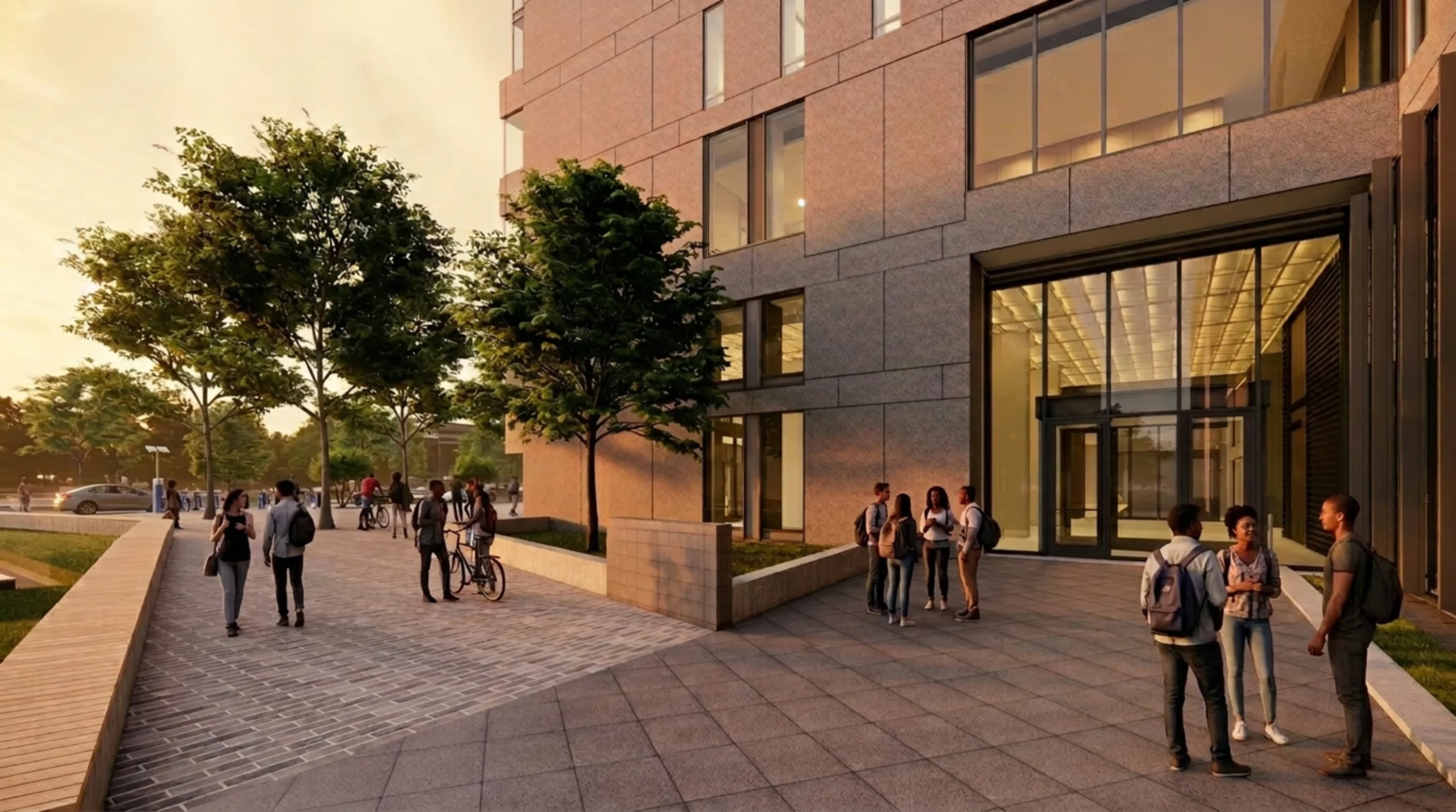
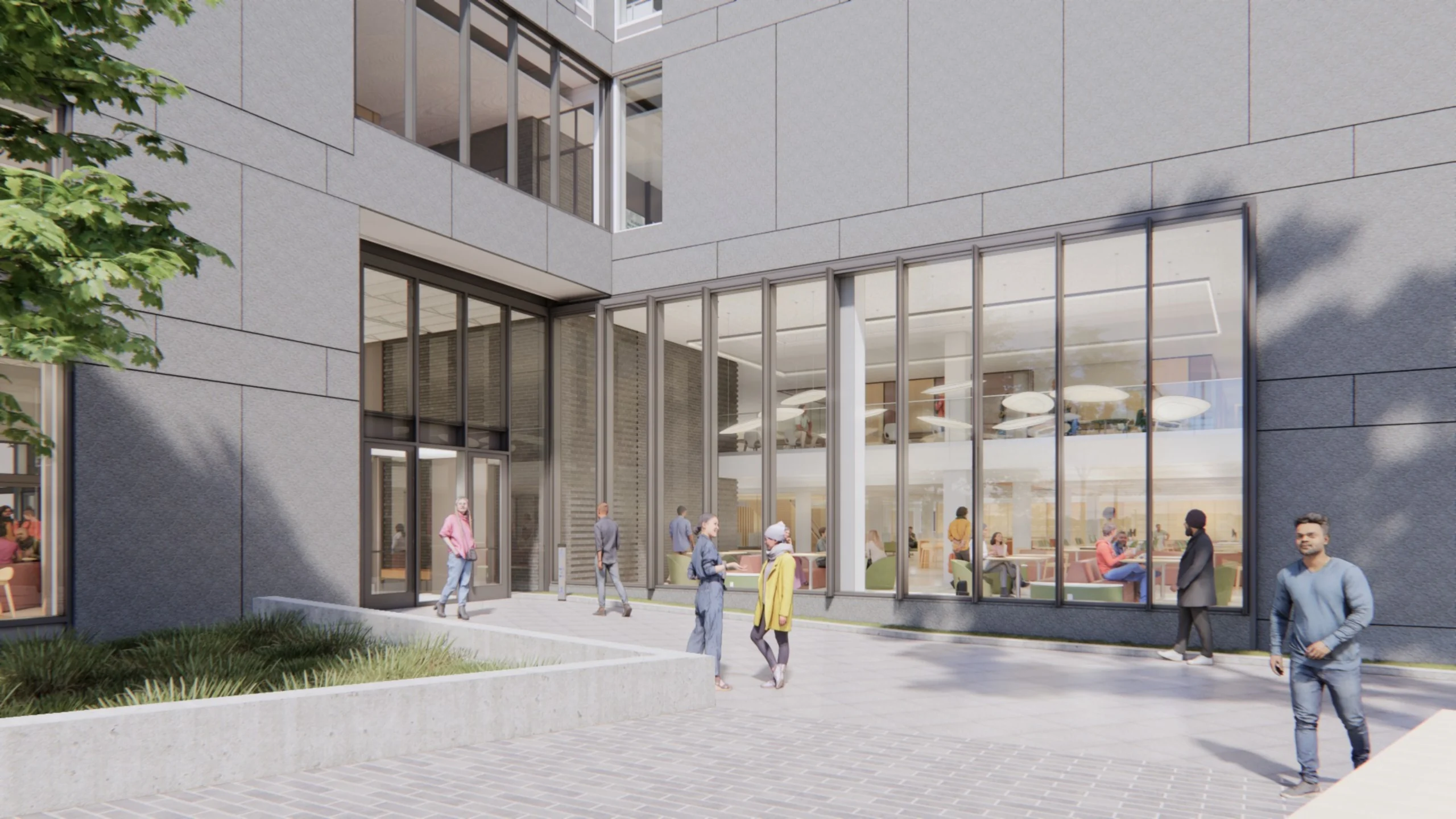
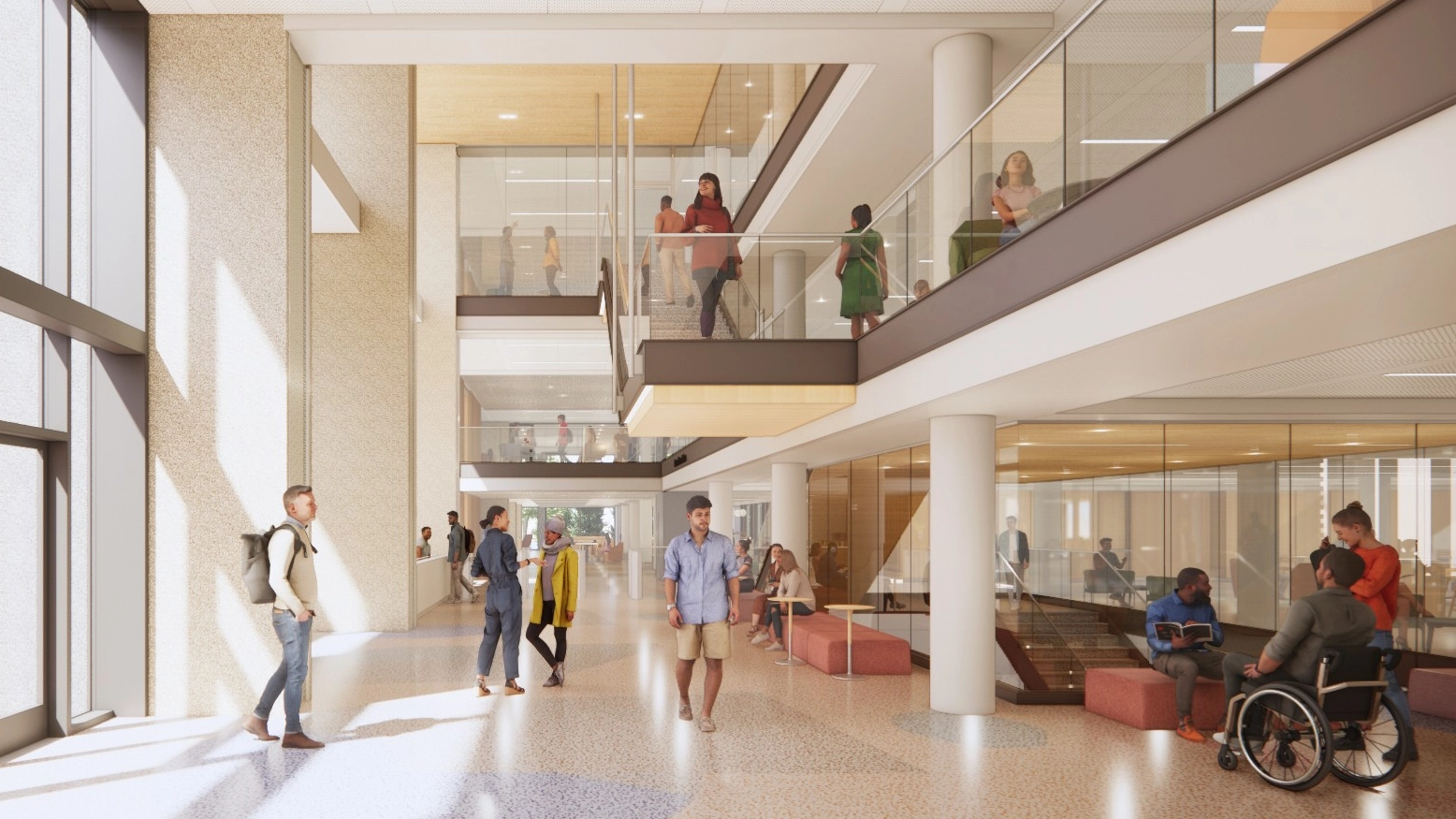
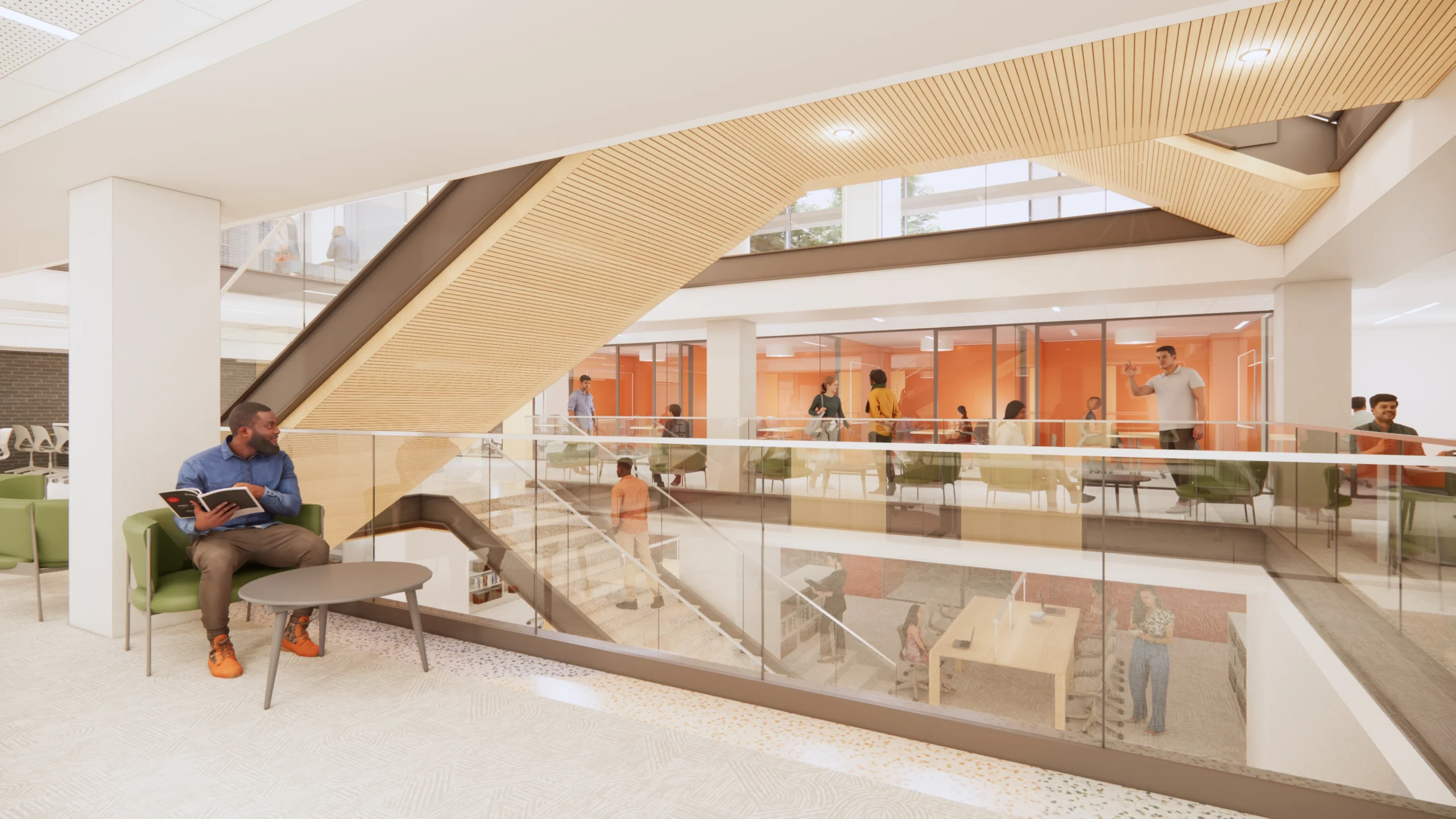
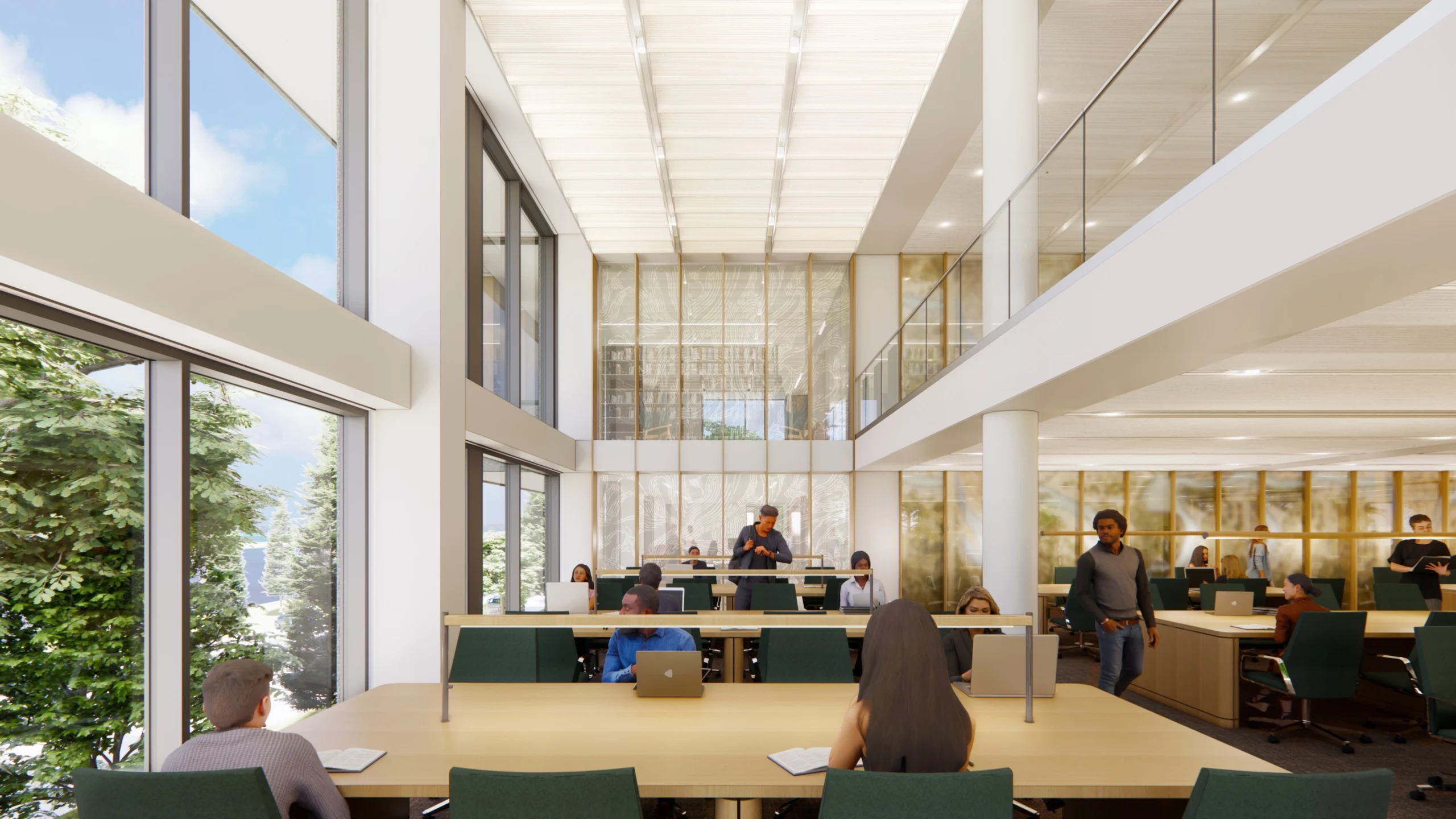
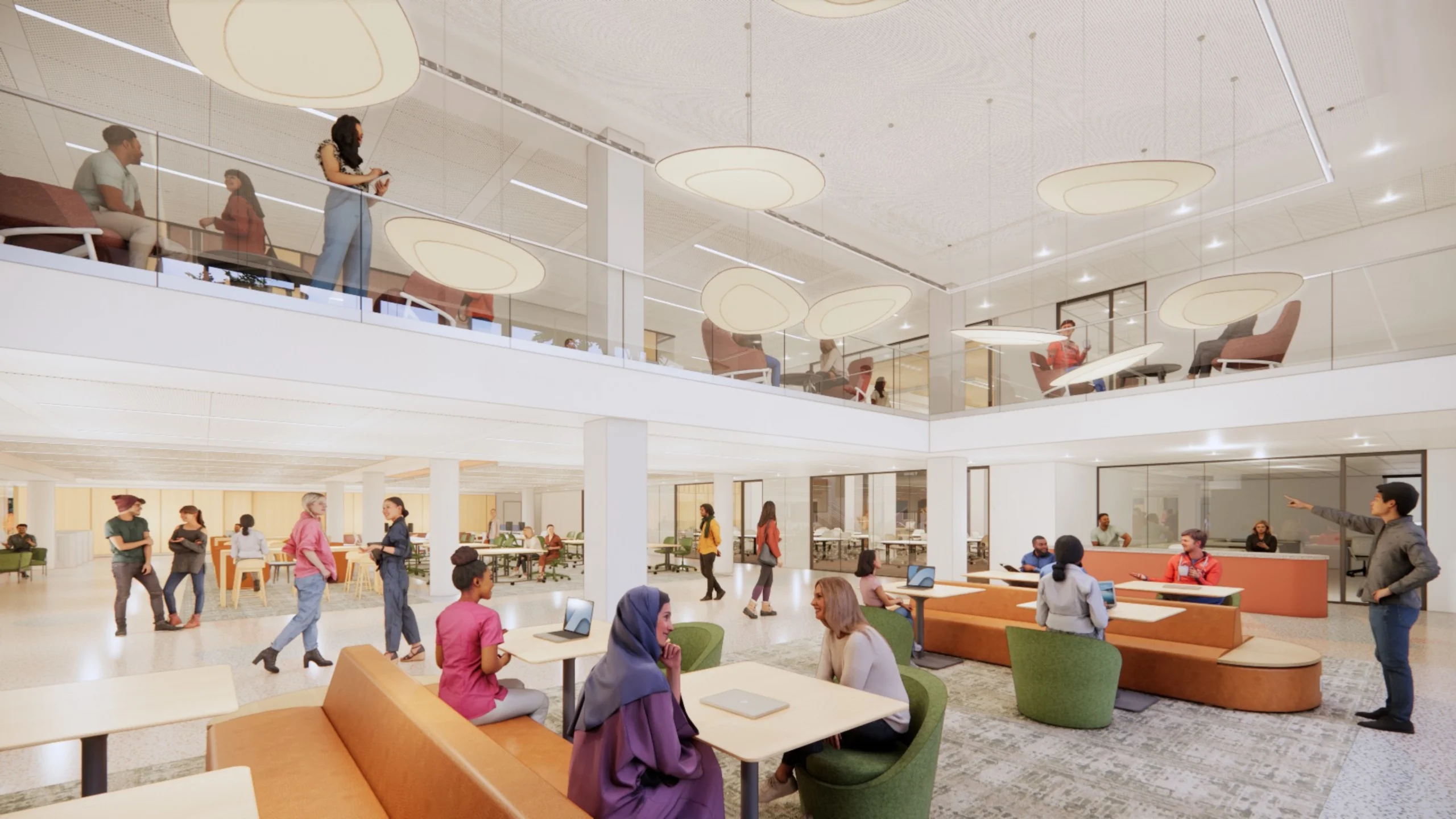
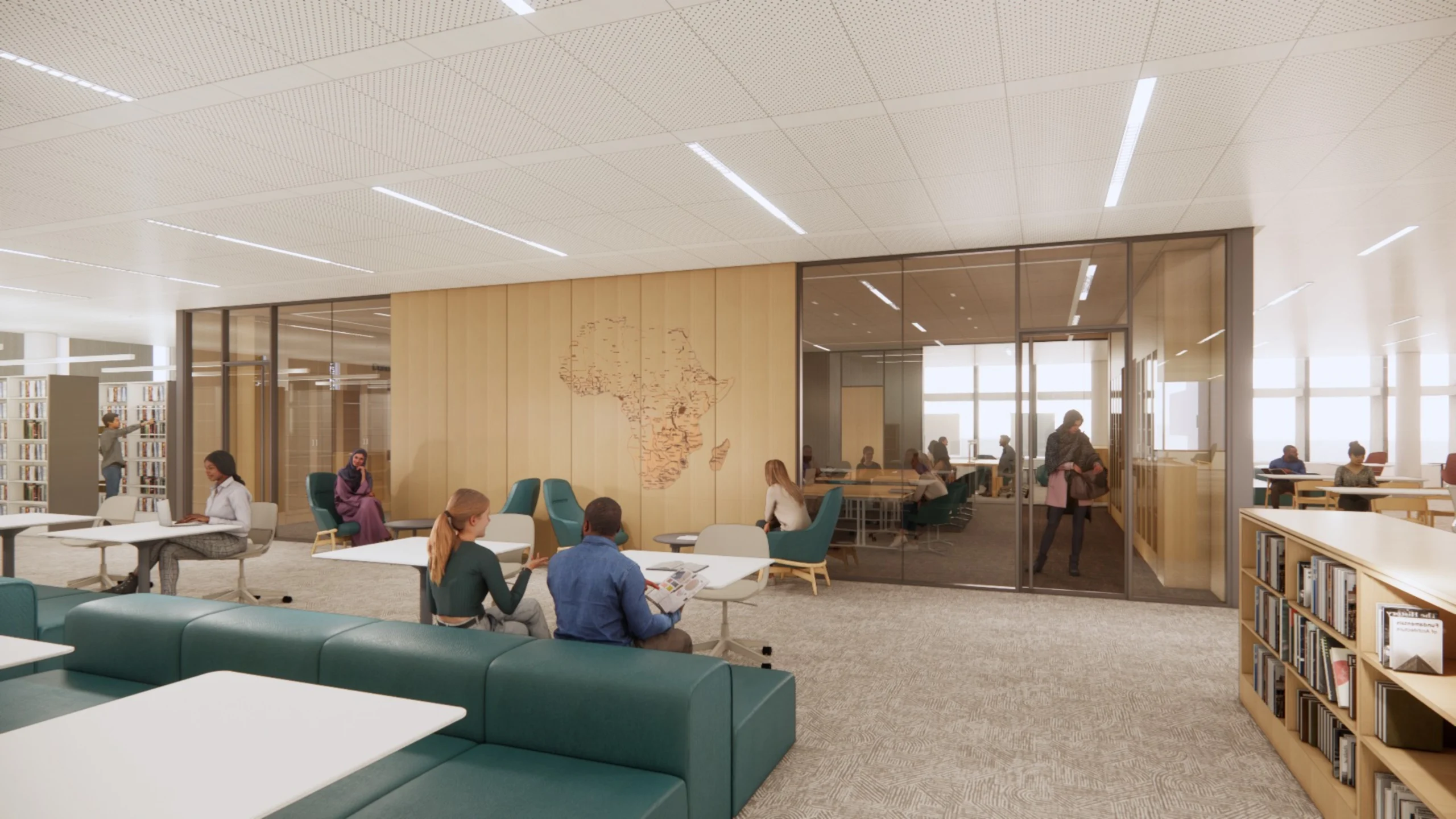
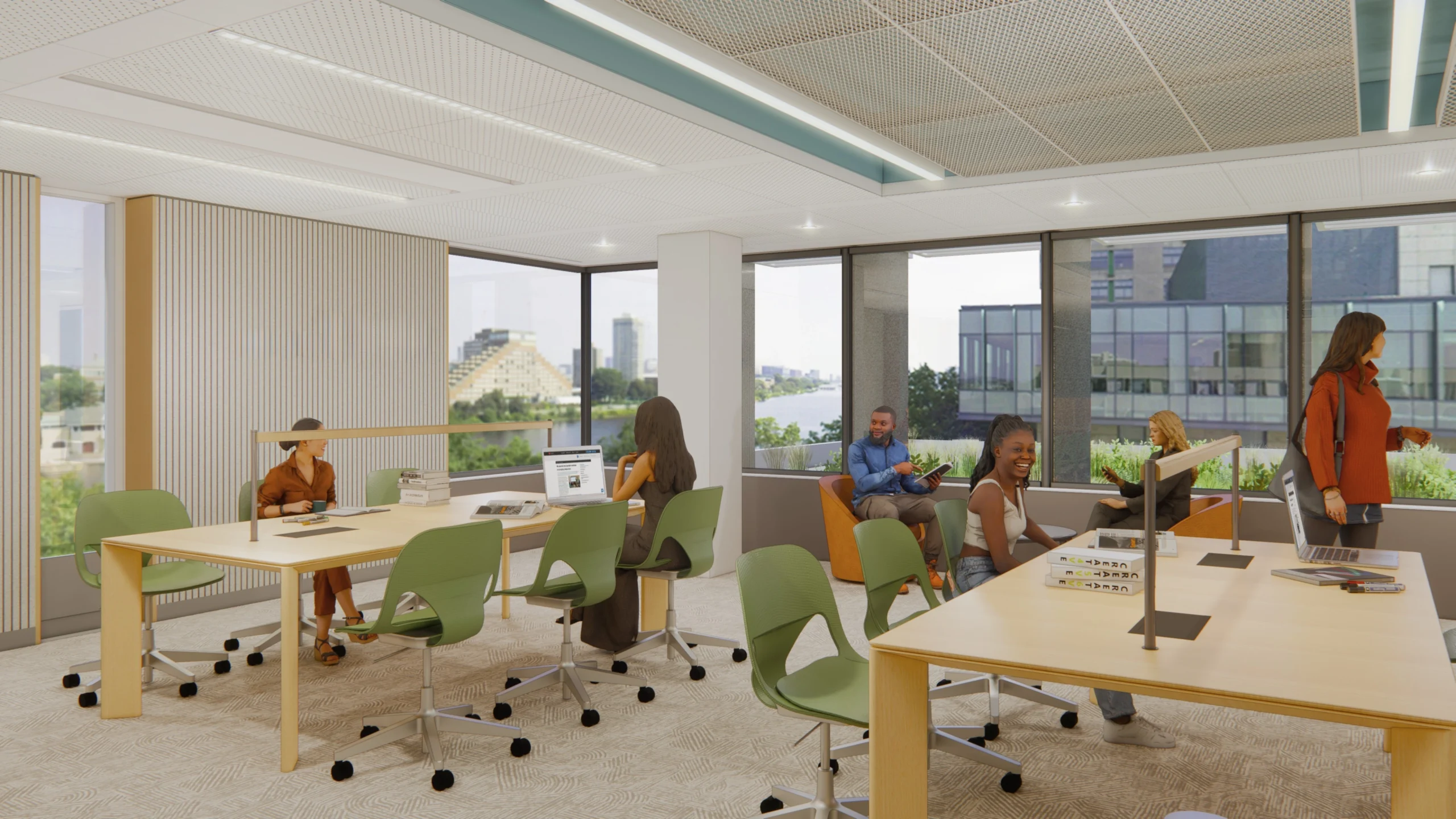
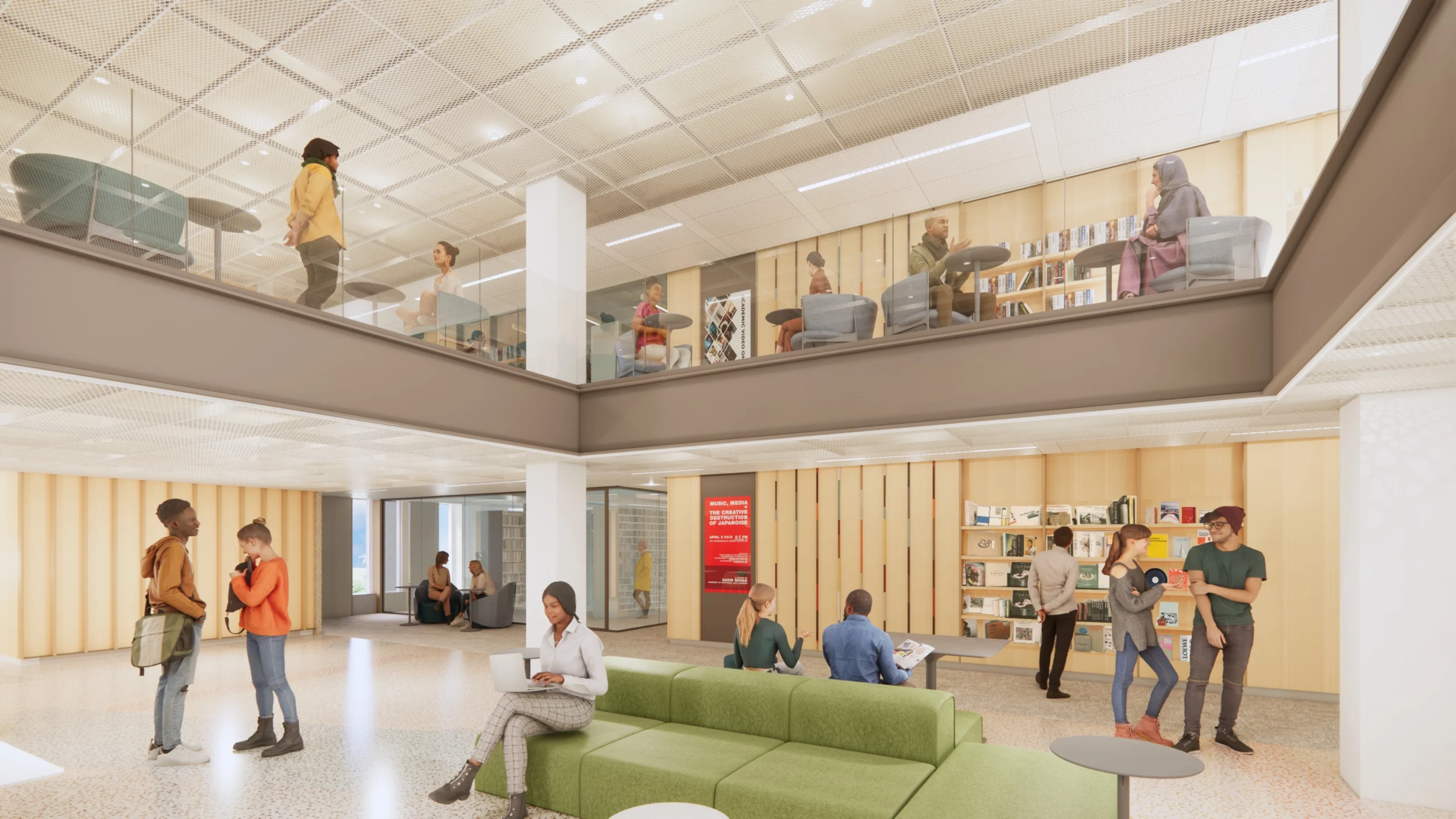
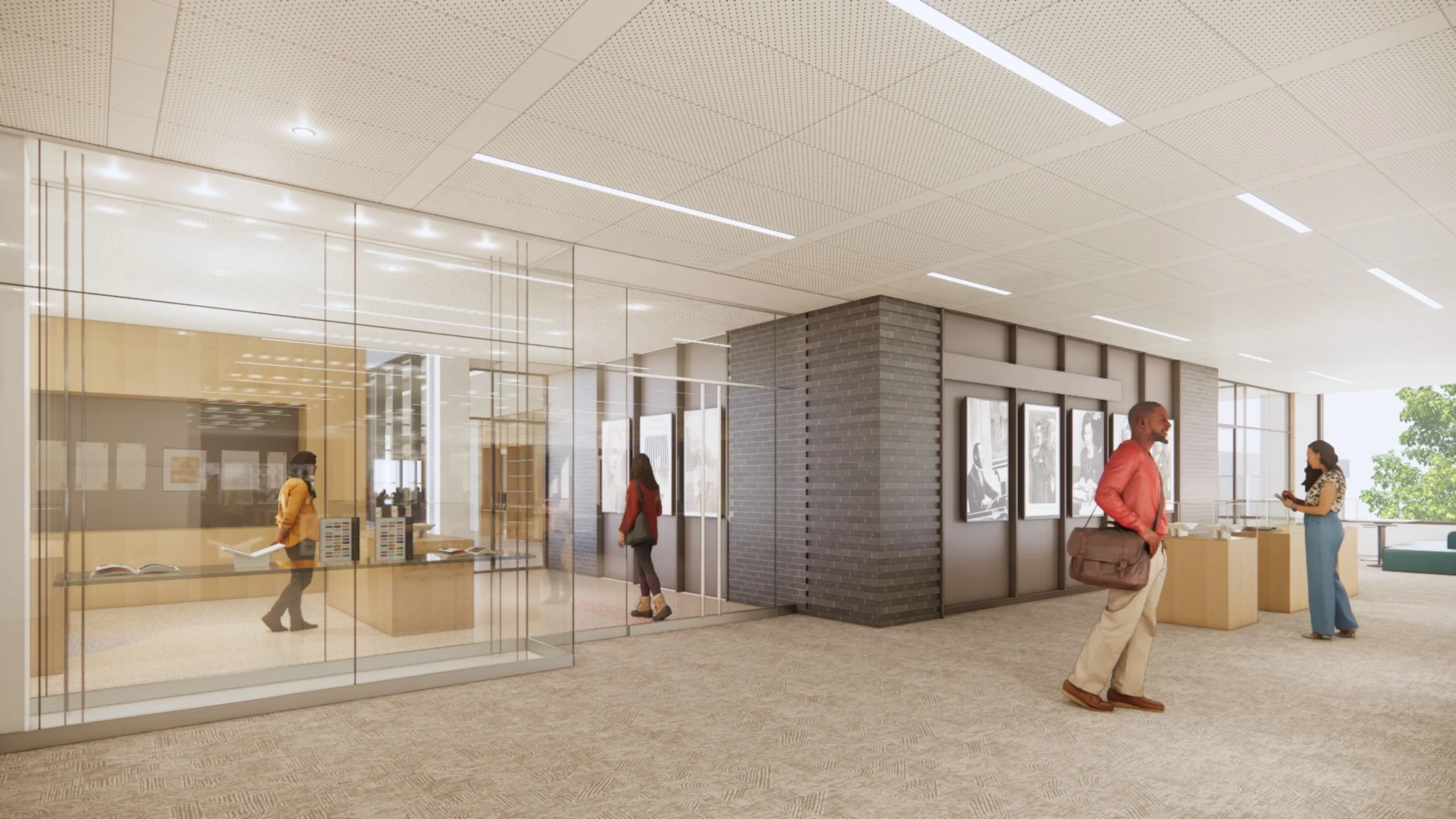
Inside, design concepts for the renewed library offer a diverse ecosystem of spaces that support the full spectrum of academic life. Flexible environments for collaboration and digital research are balanced with spaces for focused study, reflection, and wellness. Recognizing that the library is a space for all members of the academic community, our design approach prioritizes accessibility, intuitive navigation, and a variety of environments that allow individuals and groups to find a welcoming setting that supports their work. The design also elevates the visibility of Boston University’s special collections, including the Dr. Martin Luther King, Jr. archives, creating new opportunities for learning, discovery, and public engagement.
Sustainability is a key driver of the project and an essential aspect of the building’s long-term stewardship. By adapting and revitalizing an existing structure, the renovation will preserve significant embodied carbon while extending the useful life of an important campus asset. Planned upgrades to building systems, envelope performance, and infrastructure will improve energy efficiency, resiliency, and occupant comfort. The renovation also seeks to position Mugar for a lower-carbon future, demonstrating how preservation and sustainability can work together to support both environmental responsibility and architectural heritage.
Ultimately, the renewal of Mugar Library will be about more than restoring a landmark building. It will be an investment in the future of learning and scholarship at Boston University. Through a collaborative, research-driven design process, the transformed library will continue to serve as a welcoming center of intellectual life while carrying forward the enduring vision that shaped it nearly six decades ago.