


Designing in Relationship: How Collaboration with Indigenous Communities Shapes Place Based Futures
By Associate Principal Sonja Bochart, IIDA, LEED AP, LEED AP BD&C, WELL AP, LFA, and Designer Nicholl Hubbell, Assoc. IIDA, WELL AP
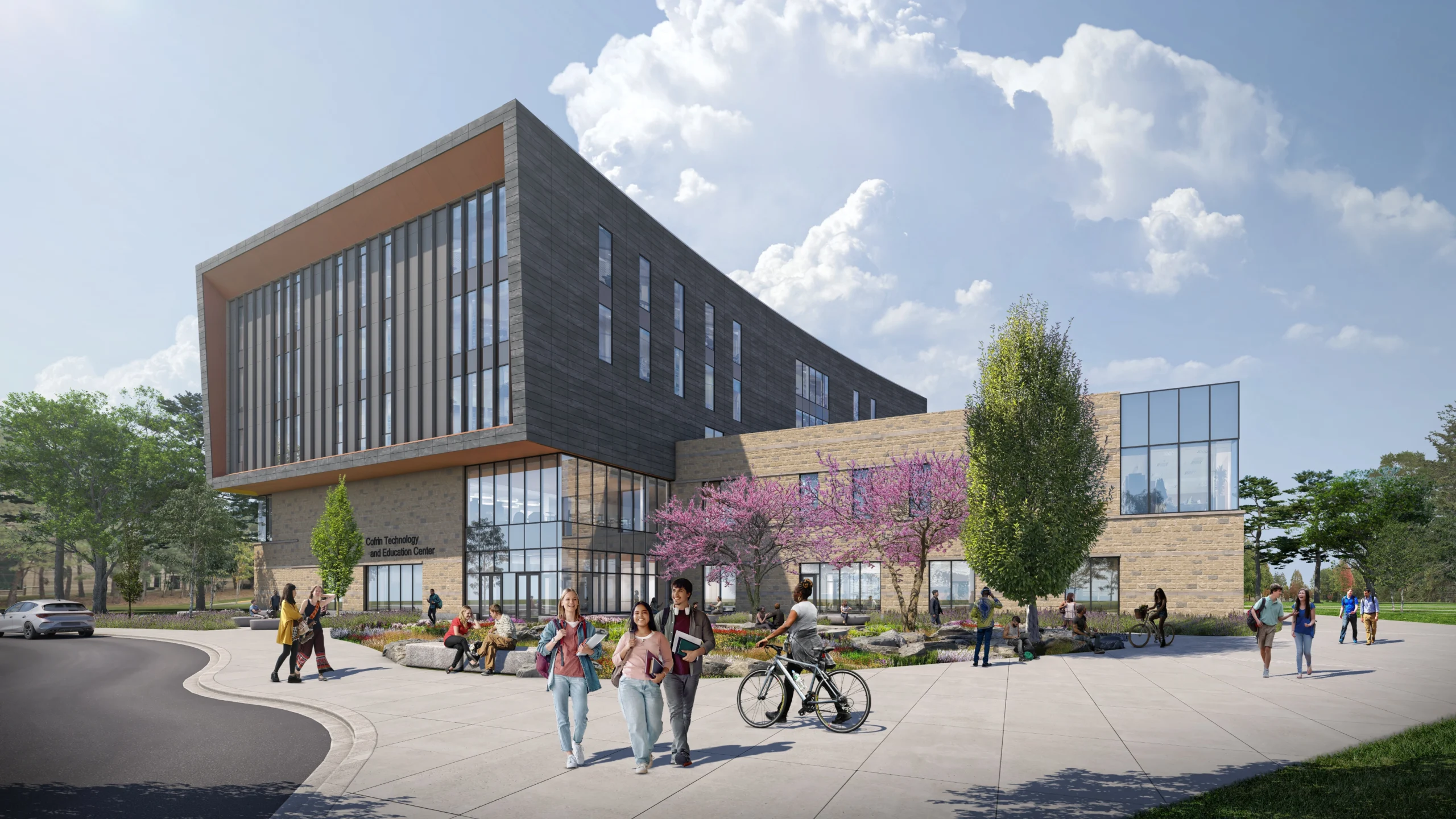
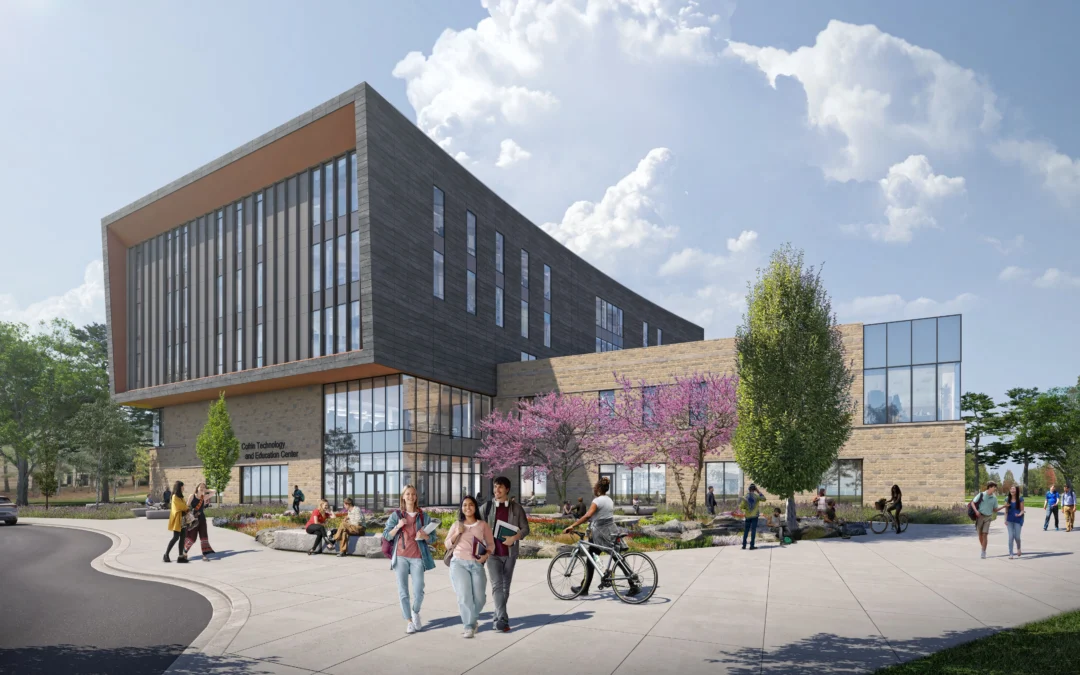
Cofrin Technology and Education Center, University of Wisconsin–Green Bay. Rendering © Shepley Bulfinch.
Across the country, design teams are being challenged to move beyond conventional project delivery and into a deeper, more reciprocal relationship with the communities and ecologies they serve. This shift is central to the work of Lens, our practice group focused on biophilia, ecological systems, and the essence of place. Increasingly, that work means engaging directly with Indigenous communities, whose perspectives are essential to authentic, place‑rooted design.
This is not a single project initiative, nor a one‑off workshop. It is an evolving practice, one that recognizes Indigenous wisdom as a critical foundation for regenerative design, community wellbeing, and a more relational understanding of the built environment.
Stakeholders engage in a biophilic design charette for Lake City Collective Cultural Center, Seattle, WA.
Why Indigenous Perspectives Matter in Design
Indigenous knowledge systems are inherently place‑based, shaped by generations of reciprocal relationships with the land, water, climate, plants, and animals. These systems offer what Western design practice often lacks:
- an understanding of place as a living entity,
- a cultural memory of how the land has been nurtured and altered over time, and
- a worldview centered on mutual relationships rather than extraction or control.
As the Lens team has explored in community workshops and project planning processes, Indigenous approaches share powerful alignments with regenerative design principles. Both emphasize a responsibility to future generations and the idea that humans are not separate from the ecosystems we inhabit. This shared ethos has shaped how we approach stakeholder engagement and design decision‑making.
Centering Place in Practice: What We’re Learning Through Projects
University of Wisconsin–Green Bay Cofrin Technology and Education Center
Our work at UW–Green Bay marked an early moment of convergence between Lens and Indigenous engagement. During biophilic design workshops for the Cofrin Center, First Nations staff and community representatives played a central role in defining what an authentic connection to place should look like.
A theme that surfaced across groups was the significance of water—ecologically, culturally, and spiritually. For local tribes, water has historically been essential for growing wild rice and holds deep cultural meaning. For the university and its strong environmental ethos, water is equally foundational.
That shared reverence translates directly into design expression, shaping a shared design language. This manifested in multiple ways throughout the facility, including a terrazzo floor pattern and tactile wall accents that mimic flowing water through the building’s entry.
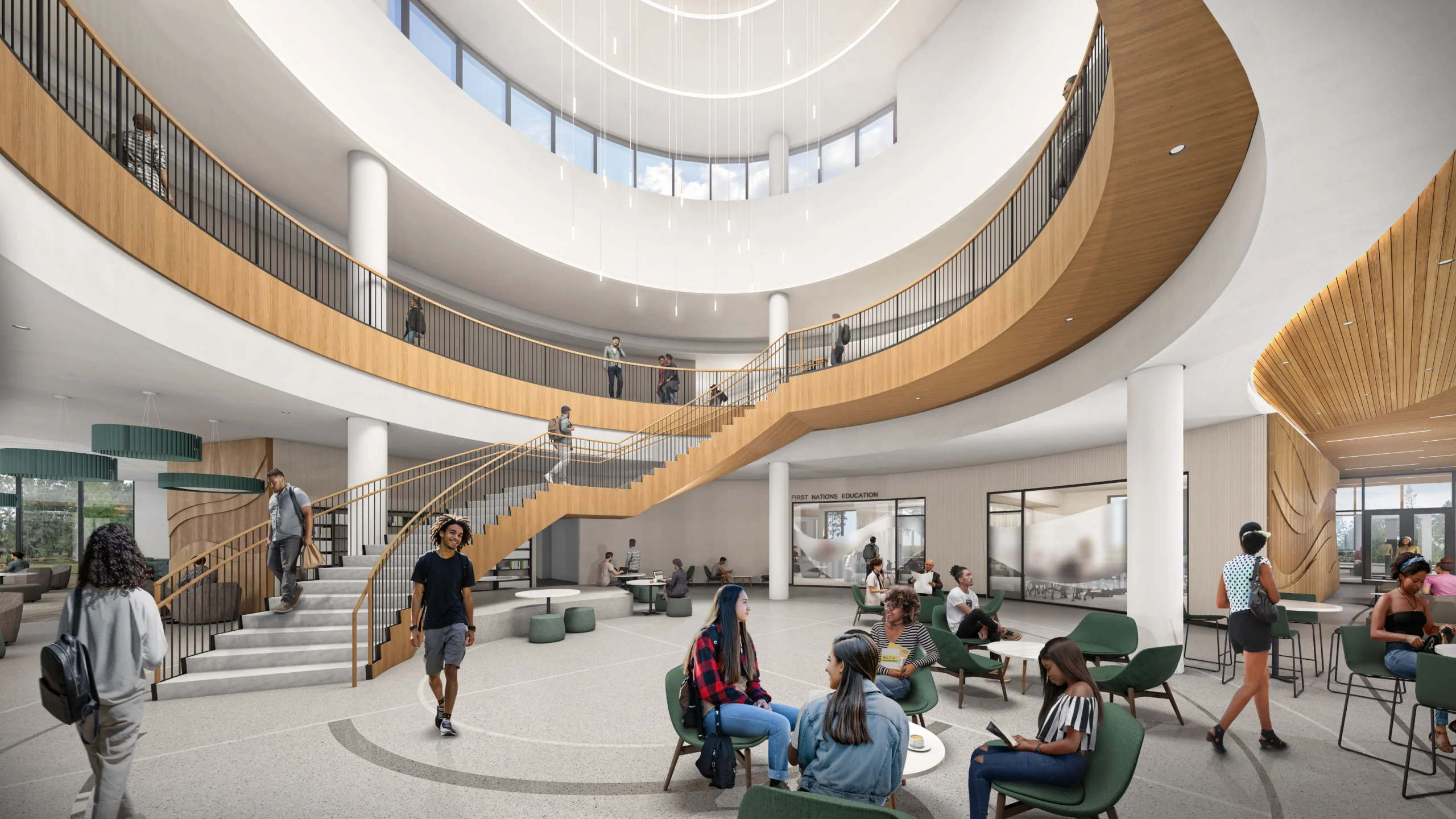
Cofrin Technology and Education Center, University of Wisconsin–Green Bay. Rendering © Shepley Bulfinch.
Lake City Collective – Community‑Led Visioning
In Seattle, Lens facilitated participatory biophilic design workshops for Lake City Collective, working with a primarily Latine community that included Indigenous participants. Here, the goal was not simply to gather feedback, it was to create a space where lived history, cultural identities, and collective memory could inform the design vision.
Although not an Indigenous‑led project, Indigenous principles played an anchoring role. Through simple but powerful practices, such as grounding the group with a land acknowledgement and framing discussions around reciprocal relationships with place, the workshops helped participants connect more deeply to site history and ecology.
This created new pathways for community members to shape a project that reflected their own stories while honoring the land’s longer cultural lineage.
Stakeholders engage in a biophilic design charette for Lake City Collective Cultural Center, Seattle, WA.
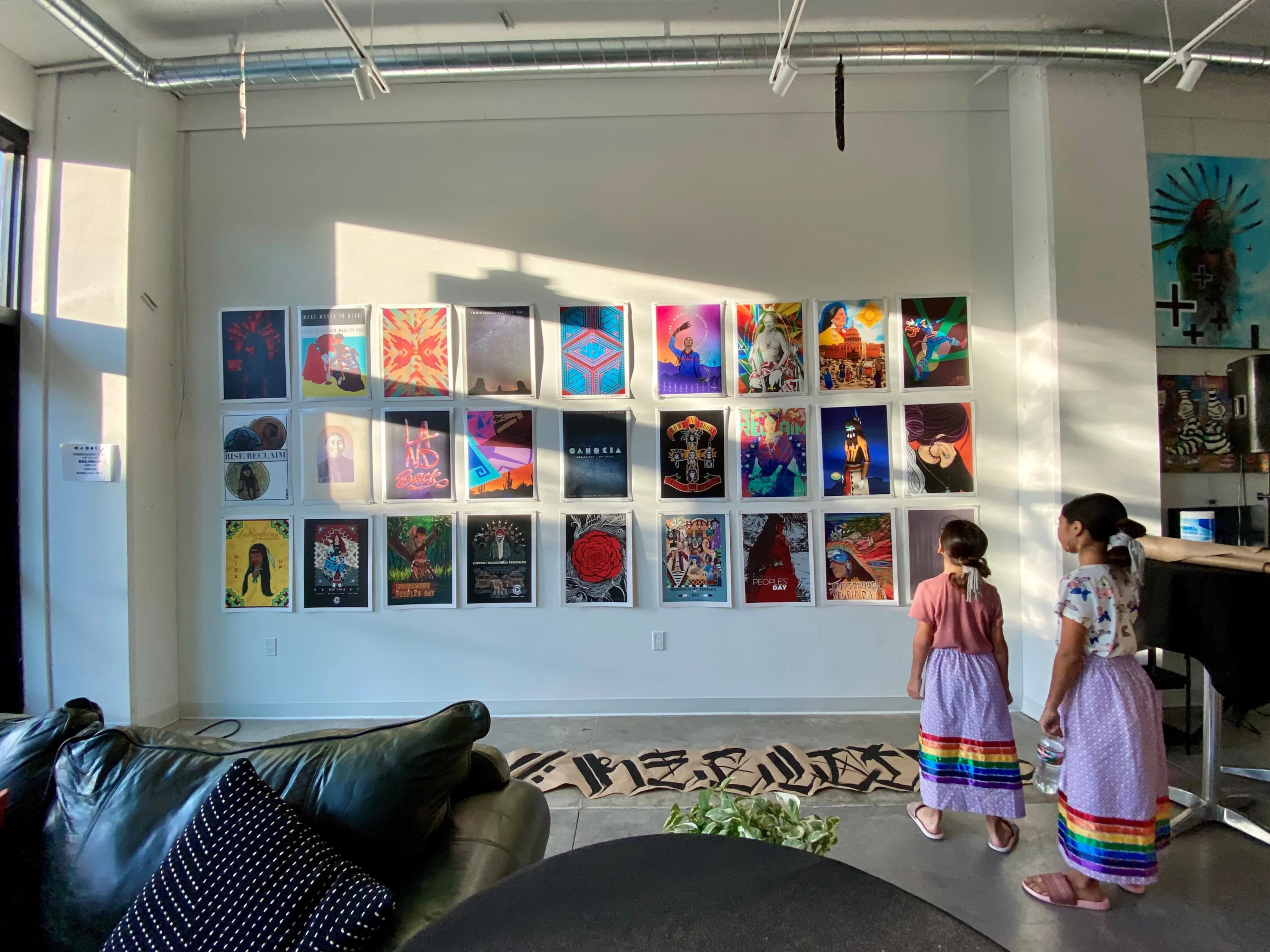
Cahokia, Arizona’s first Indigenous women-owned art gallery, Phoenix, AZ. Photo by Nicholl Hubell.
Cahokia, NMCC, and Other Indigenous‑Led Collaborations
In projects where Indigenous leadership is central—such as Cahokia and the New Mexico Community Capital—our role shifts from facilitation to listening, supporting, and amplifying.
With Indigenous clients guiding the vision, Lens helps integrate cultural priorities, ecological knowledge, and community values into design strategies. This can include teachings on relationality, acknowledging historical displacement, or identifying ecological indicators tied to traditional land use practices.
These collaborations reinforce an essential lesson: design excellence emerges when Indigenous communities drive the narrative and designers act as partners in stewardship.
Creating Space for Connection, Storytelling, and Co‑Creation
Across all these projects, Lens supports a consistent approach grounded in:
- Co‑creation rather than direction—Workshops are circular, participatory, and built around mutual learning rather than expert authority.
- Storytelling and cultural grounding—Understanding who and what shaped a place before us helps communities imagine what it could become.
- Bridging lived experience and design practice—Team members like Nicholl Hubbell, whose Navajo heritage brings personal and cultural insight, help create spaces of trust, belonging, and shared understanding.
- Regenerative, relational thinking—Moving beyond “do less harm” toward “design as relationship,” aligns with Indigenous worldviews that center interconnectedness.
This approach not only deepens the design process; it transforms outcomes. Projects become more resilient, meaningful, and deeply rooted in the places they inhabit.
Looking Ahead
As we continue collaborating with Indigenous communities, ecological experts, and local residents, our aim remains clear: to design environments that honor the stories and relationships that make these places unique.
Through these partnerships, we’re not just delivering buildings. We’re cultivating shared futures grounded in respect and connection.

Sonja Bochart, IIDA, LEED AP, LEED AP BD&C, WELL AP, LFA
Director
Sonja leads Lens using regenerative, living-systems strategies to advance well-being, place, and community, driving meaningful impact and transformative change for people, projects, and organizations.

Nicholl Hubbell, Assoc. IIDA, WELL AP
Designer
Nicholl brings a set of ideas, experience, and passion to any team she’s on. She finds excitement in design solutions that improve flow, aesthetics, and user health and wellness