


Elevating Care for Mental Health
As designers, we’re enabling a critical shift in the perception and treatment of behavioral health. Mental illnesses affect tens of millions of people each year in the U.S., yet according to estimates, only half of the people with mental illnesses receive treatment. While misperception about these conditions persists, there is a growing societal understanding of mental illness leading the demand for treatment and for facilities that deliver high-quality care to grow at an unprecedented rate.
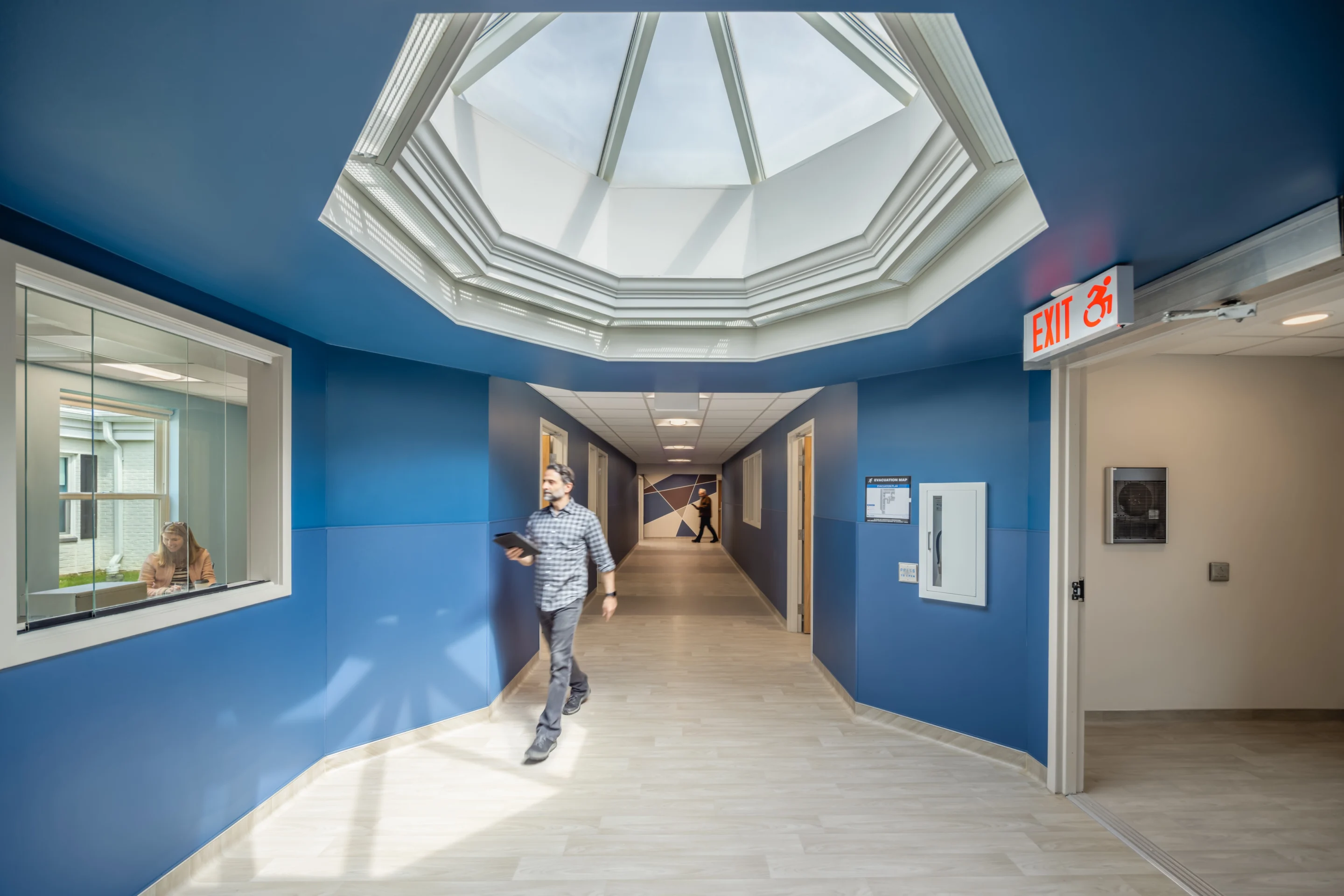
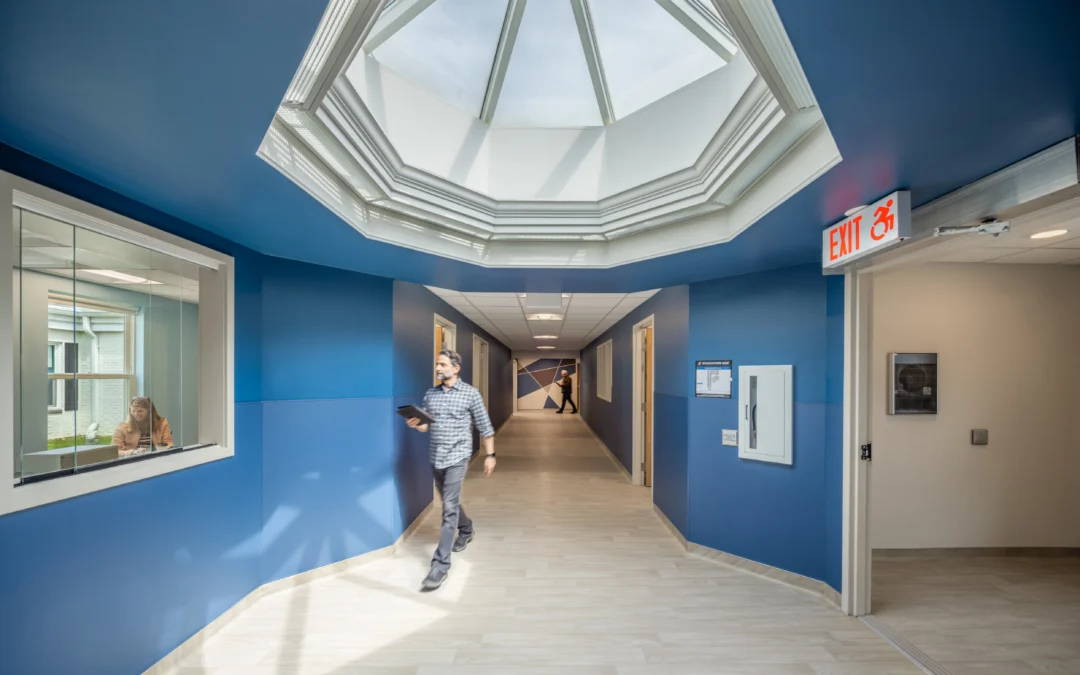
Community Mental Health Affiliates Transitional Living Center, New Britain, CT. Photo by Raj Das.
Against this backdrop, we are envisioning behavioral health as a system where people are carefully evaluated, fully treated and return to their day-to-day lives with the support they need. The key to healing is to create humane, accepting, and comfortable environments that bolster both the patients and the clinical professionals. So, what do these spaces look and feel like?
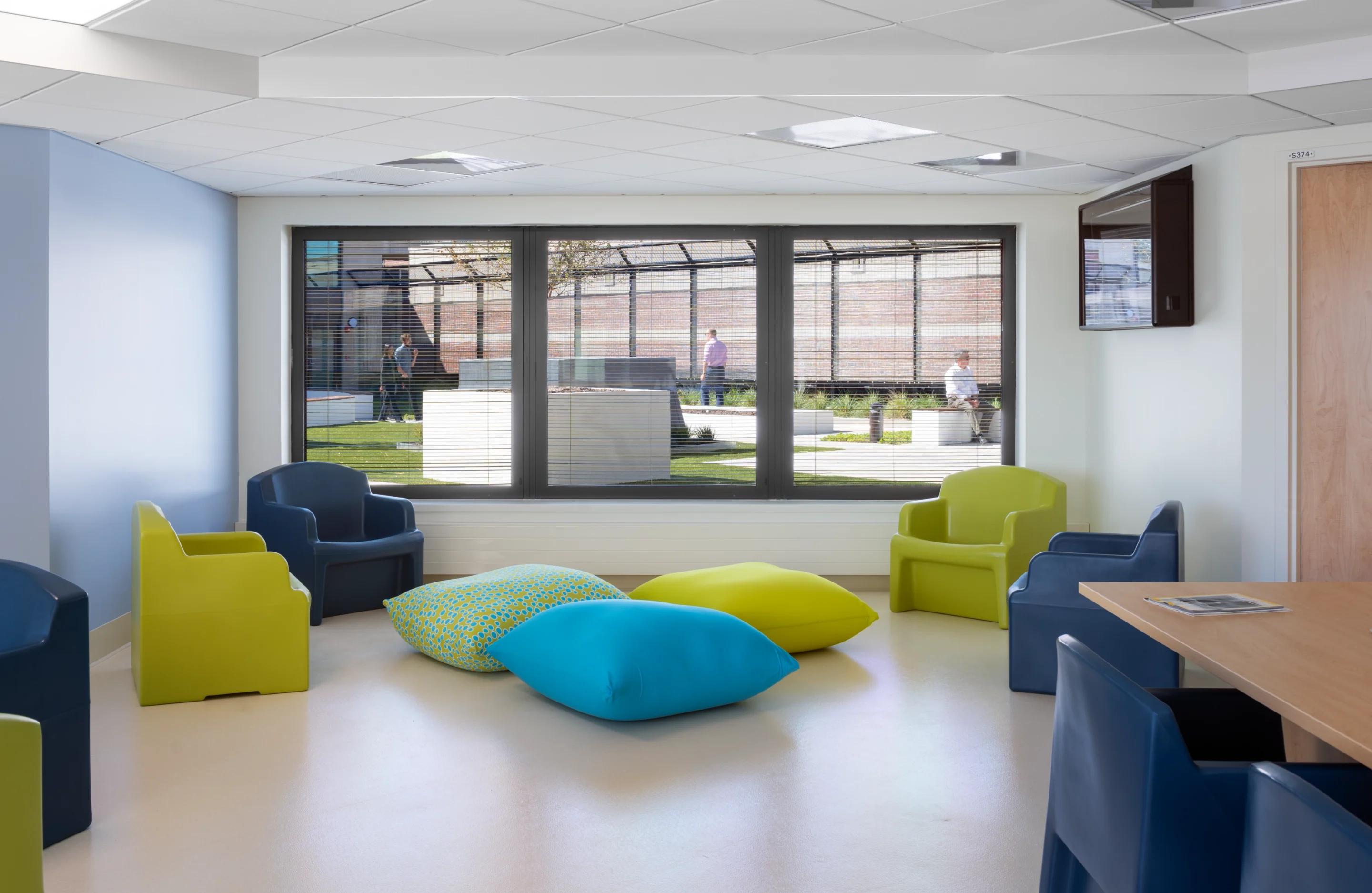
North Shore Medical Center Epstein Center for Behavioral Health, Salem, MA. Photo by Chuck Choi.
A New Kind of Healthcare System
At North Shore Medical Center, we worked alongside clinicians to design the Epstein Center for Behavioral Health, a state-of-the-art psychiatric facility in Salem, Massachusetts. Consolidating and expanding a facility that was previously a rehab hospital, we created an innovative, 120-bed facility, adding 54 new private beds.
The unique concept behind the design was embedding the psychiatric center into a hospital setting and expanding outpatient services to include emergency care. Combining medical, surgical and behavioral health services into a single space improves access of care, enabling patients to benefit from a range of specialized clinical expertise and sophisticated technologies available on site.
Through aligning with Massachusetts General Hospital, the Epstein Center is equipped to serve a multigenerational population–from pediatric- through senior-care. The facility works to integrate patients’ communities, making it easier for their families and caregivers to be involved in the process.
Humanizing and Uplifting Clinical Spaces
What does it mean to be fully treated? With the renovation for Community Mental Health Affiliates, our design team worked with partners to gain a better understanding of who the residents are and how the space can be designed to effectively support their mental health. Our approach to designing for care focused on both the mental and the physical conditions of patients and place them in environments that instill a sense of safety and support.
CMHA is a nonprofit mental healthcare services provider that has supplied 24/7 residential care to some of Connecticut’s most vulnerable individuals for two decades. When they acquired the former Andrew House convalescent home in New Britain, CMHA sought to turn the facility into a home for two residential programs that serve 35 individuals with chronic mental and medical health issues. Together, we transformed the facility to provide clients with a comfortable transitional space
The look and feel of the space where they are treated is especially important to the recovery process. Yet, clinical facilities have many design restrictions–not a single sharp edge is allowed, the high-risk rooms cannot have ACT ceilings or exposed blinds, and the bathroom fixtures and accessories are all fixed.
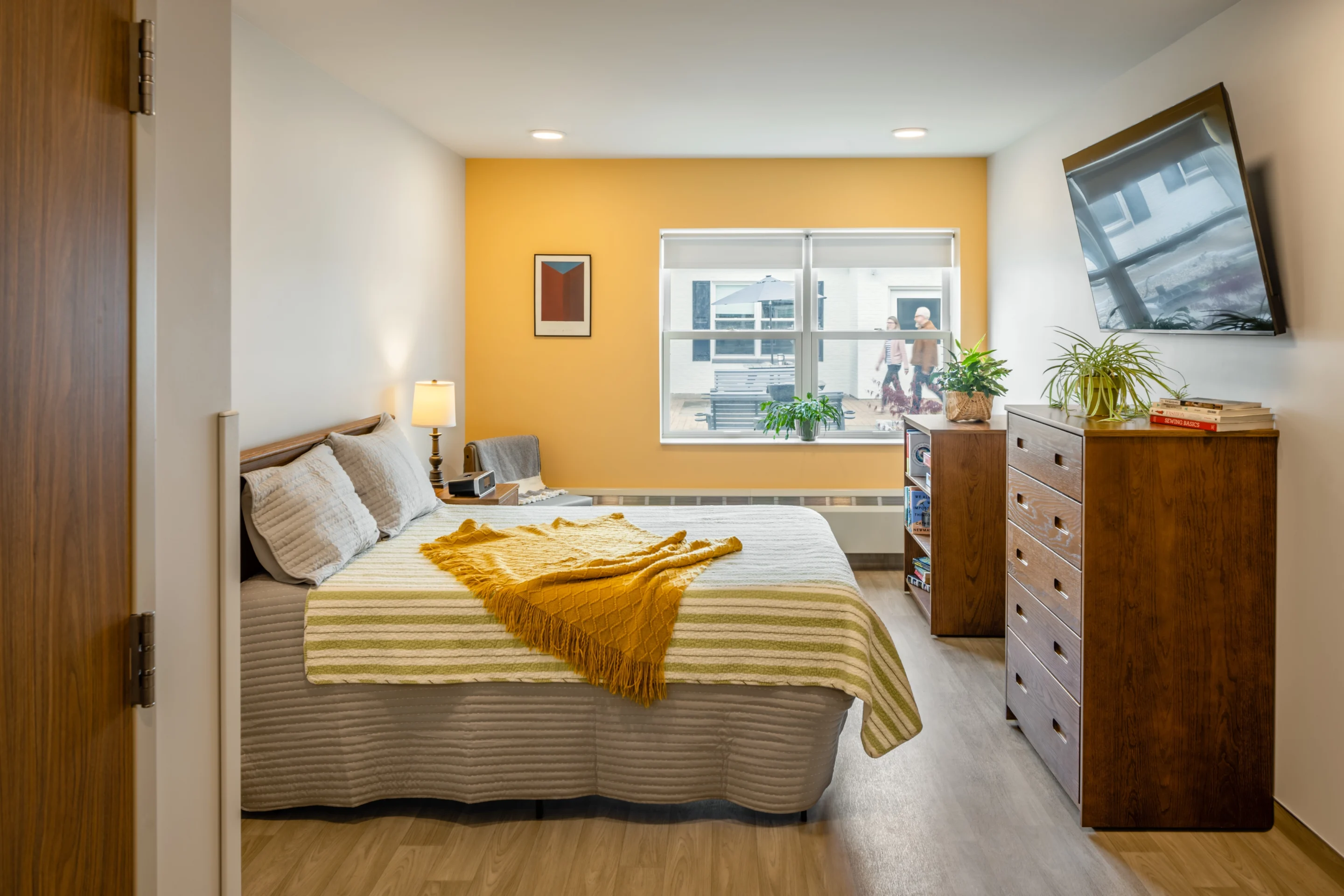
Community Mental Health Affiliates Transitional Living Center, New Britain, CT. Photo by Raj Das.
Designing behavioral health facilities challenge designers to find creative ways to deemphasize the clinical elements and arrive at thoughtful solutions. We identified safe products–such as ligature-resistant details and tamper proof fasteners—and design elements to make these settings more therapeutic and peaceful, with the right balance of privacy and openness.
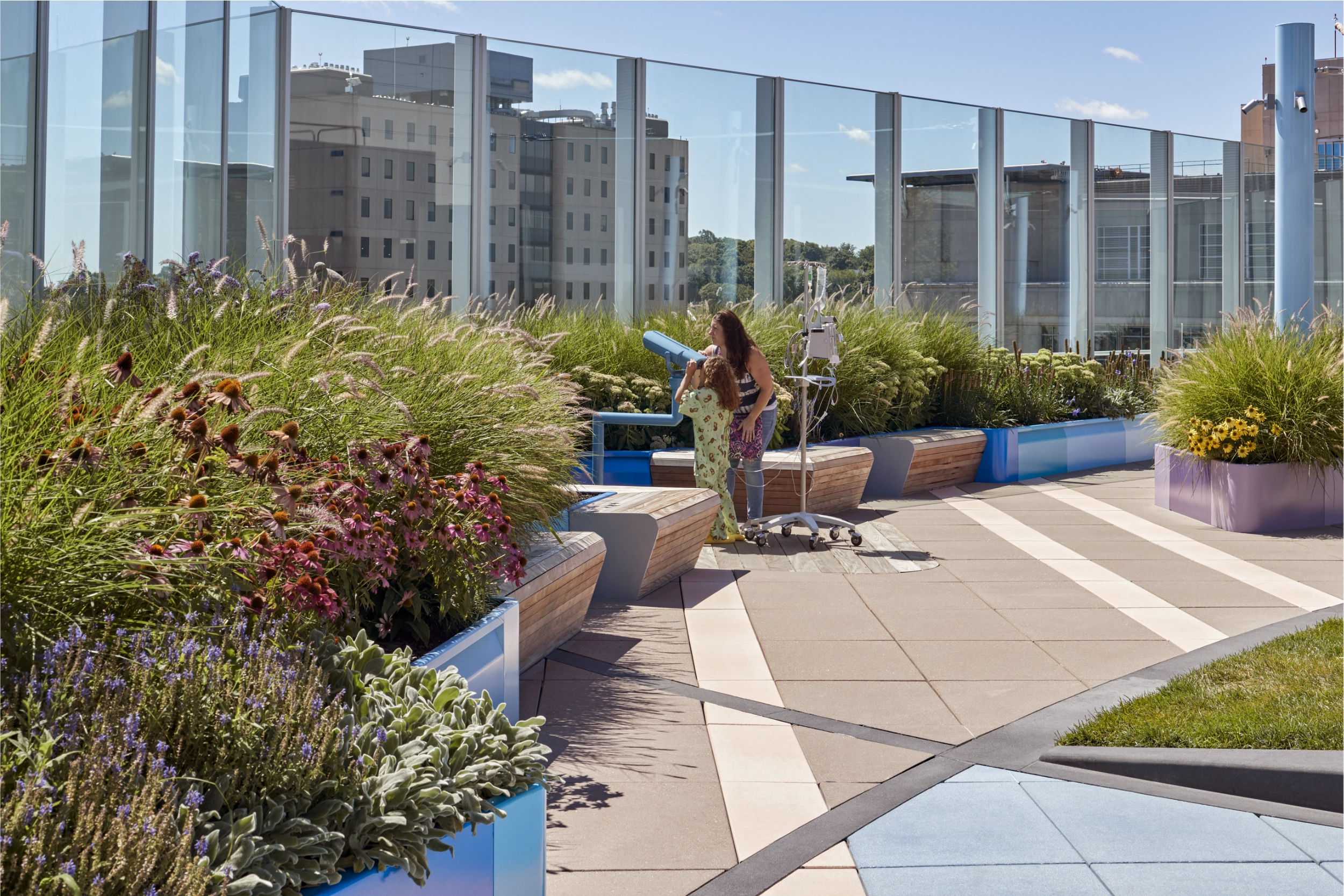
Boston Children’s Hospital, Boston, MA. Photo by Robert Benson. Landscape Architect Mikyoung Kim Design.
Reconnecting Patients
Access to natural light, windows that invite in the surrounding views, and colorful interiors—these are all ways to make patients feel more comfortable and improve outcomes. A rooftop garden brings in the outdoors, offering respite from the clinical spaces and promoting a sense of wellbeing.
Shared spaces provide chances for interaction and patients to relate with each other. By thoughtfully carving out spaces for relaxation and recreation, patients avoid isolation and are empowered to connect with others, making it easier to integrate back in their life after treatment.
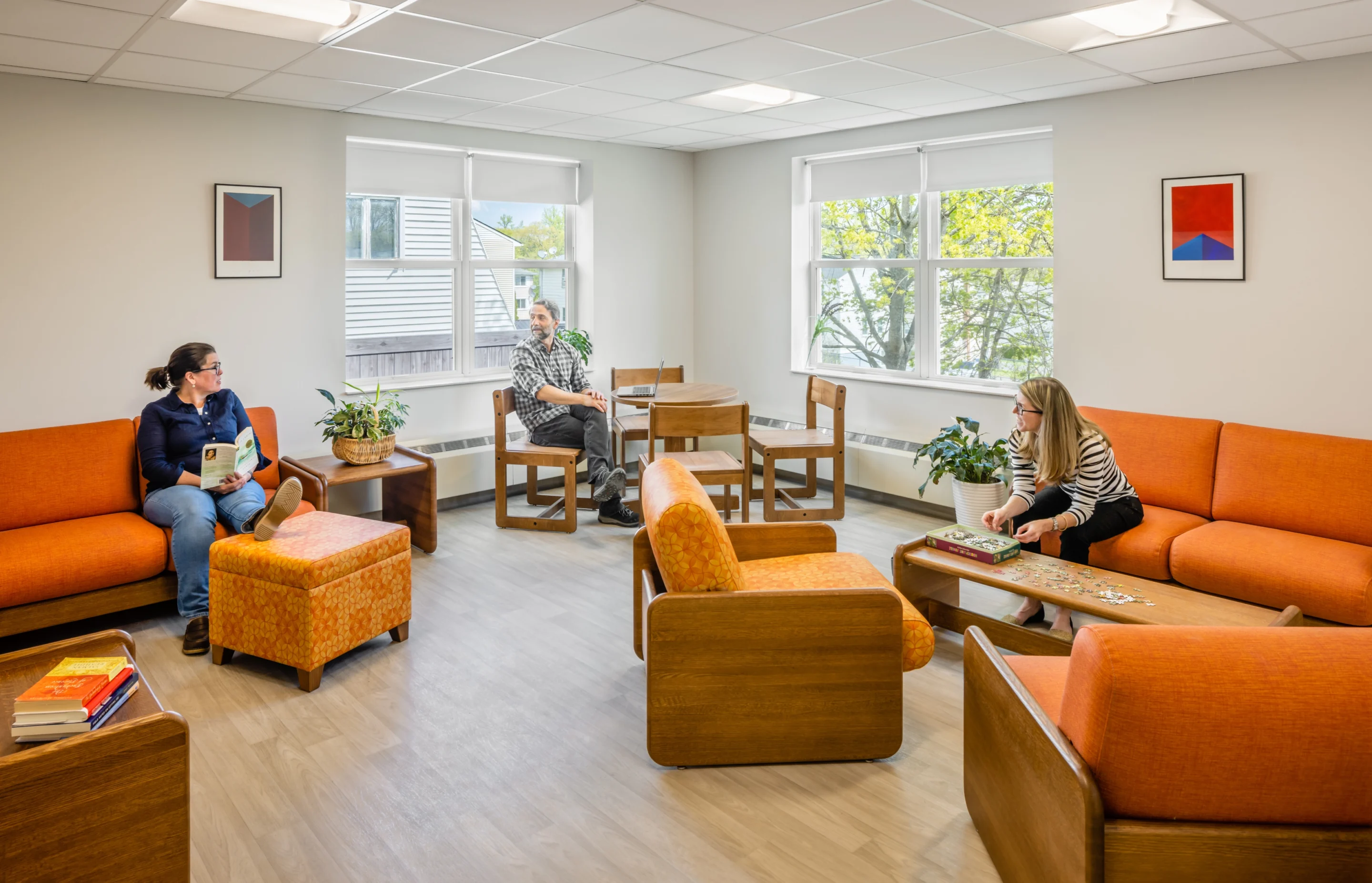
Community Mental Health Affiliates Transitional Living Center, New Britain, CT. Photo by Raj Das.
With planning the renovation and design of CMHA’s facility, our team was conscientious of ensuring additions are considerate of the individual’s mental health. For example, the repetition of door colors centered around creating a calming continuity throughout the space to support various conditions.
Through informed design, we are increasing awareness and engagement with mental health conditions and conveying that these patients are valued members of society.

Cathleen Lange, AIA, LEED AP
Principal
Cathleen holds more than 30 years of experience in healthcare design, specializing in planning, program coordination, and Lean methodologies.