


Student Housing Is Affordable Housing
By Pete Rasmussen, AIA, NCARB
Across the country, universities and their surrounding communities are grappling with the shared challenge of housing affordability. While conversations about skyrocketing rents often focus on families, local workers, and young professionals, one essential group is frequently overlooked: students. In many college towns, student housing is affordable housing. Understanding this connection is critical for institutions, city leaders, and designers who want to shape more resilient, equitable communities.
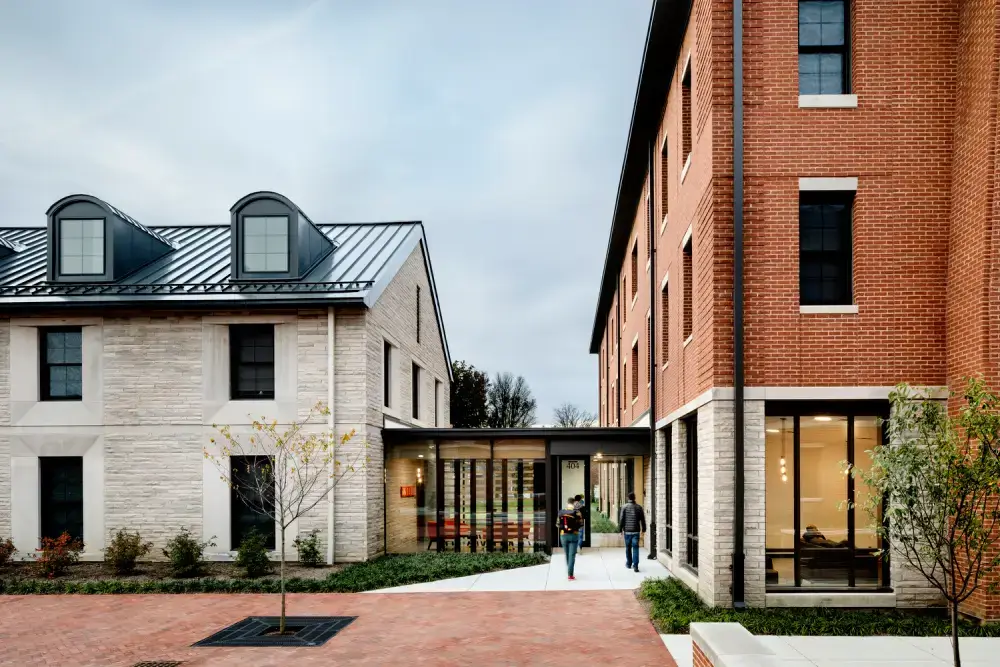
New Residential District and Renovation to Martindale Hall, Wabash College, Crawfordsville, IN. Photo by Jeremy Bittermann.
How Student Housing Shortages Raise Community Rents
In college towns across the U.S., the line between “student housing policy” and “community housing policy” has become increasingly blurry. When campuses do not provide enough beds, or when provided beds are too expensive, students naturally spill into surrounding neighborhoods. They rent single-family homes, older apartment complexes, and any available units near campus. And because student demand is both constant and high, this shift exerts pressure that reverberates through an entire city’s housing market.
Institutions chase a moving target to provide enough on-campus housing while balancing capital priorities. Growing student populations have consumed significant portions of the local housing stock in college towns. According to data from Moody’s, longtime residents, including schoolteachers, small business owners, and even university faculty, find themselves priced out as landlords raise rents to match what students are willing, or forced, to pay.
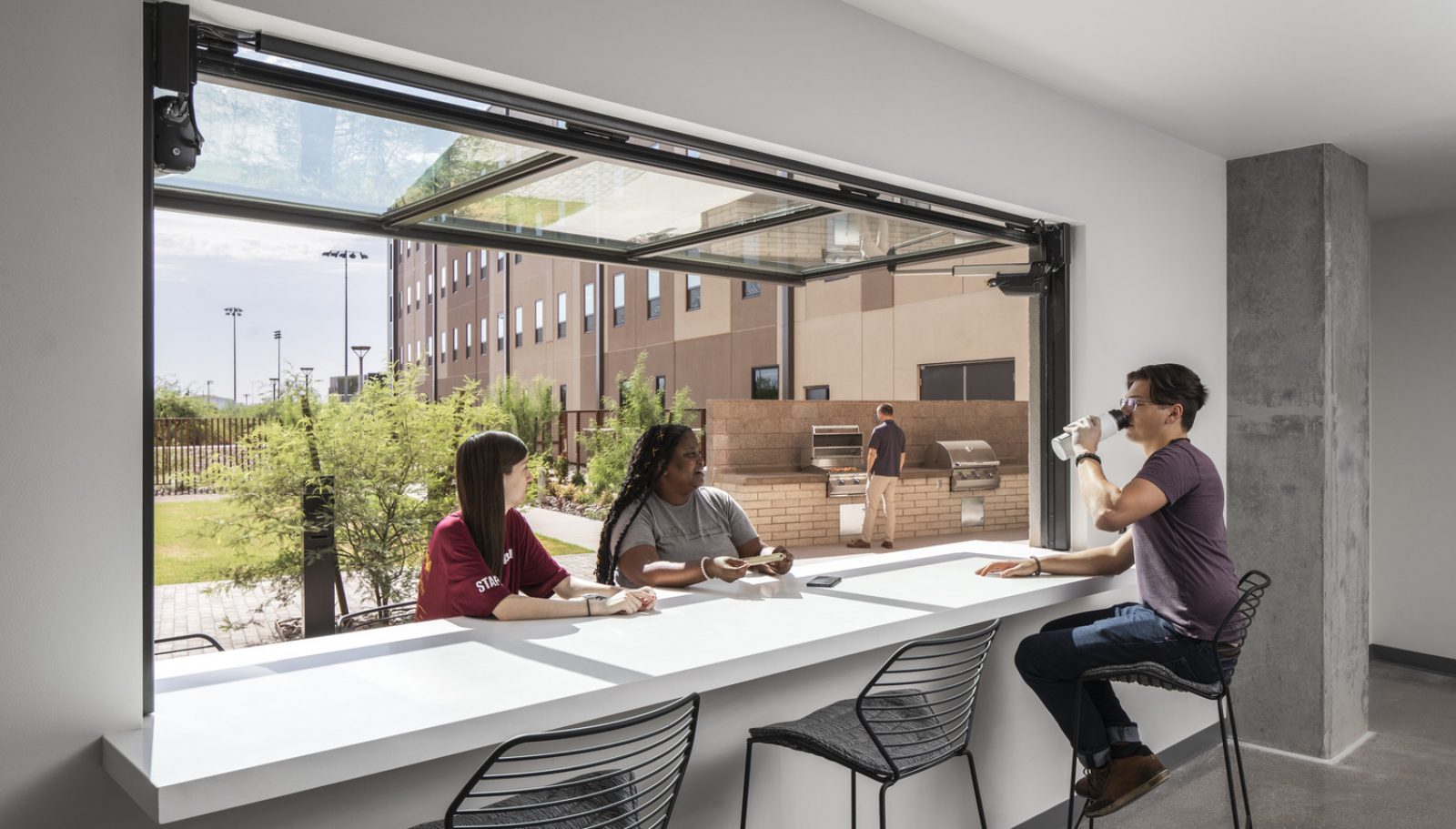
Lantana Hall, Arizona State University, Mesa, AZ. Photo by Kyle Zirkus.
Private developers have stepped in, building large off campus complexes marketed directly to students. These often charge high per-bed rents, which can drive up market expectations for the surrounding area. A building offering $1,350 per bed in a four-bed setup effectively normalizes a $5,400 “unit” rent, without accounting for the additional services often included with the per-bed-model for student housing costs. Over time, this “per-bed pricing model” can distort the rental landscape despite what local economics may support, simply because the demand has been created.
Addressing student housing availability is essential to stabilizing local housing markets. When universities build or partner to deliver more on campus or campus adjacent housing, they reduce pressure on surrounding neighborhoods and local towns, preserve affordability for residents, and help maintain healthier, more balanced communities. Student housing is not a separate system. It’s a critical part of the larger housing ecosystem.
Housing as a Student Success Strategy
While the affordability conversation rightly focuses on community impacts, it’s important to recognize the essential role housing plays in student wellbeing and academic success. The link between stable housing and strong educational outcomes is directly linked as early as primary school. When students move away from home for college, these effects are most easily tracked through on-campus housing models. Even for students who are campus adjacent, test scores and overall academic success drop once they are no longer in on-campus housing. In addition, these students experience:
- Better retention rates
- Better acccess to support services
- Formation of lasting social connections
- Improved mental health
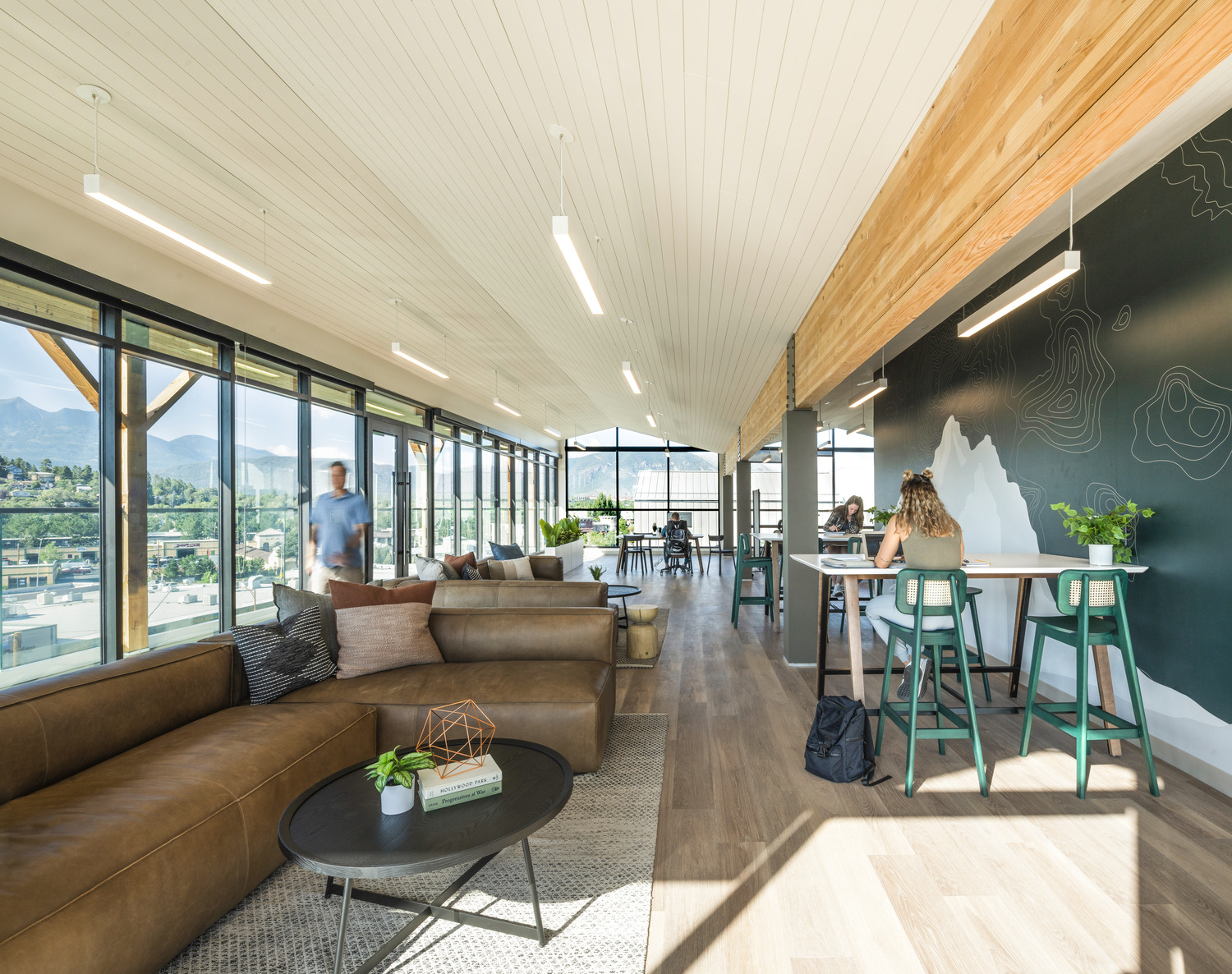
Uncommon Flagstaff, Flagstaff, AZ.
Many institutions require first-year students to live on campus for these reasons. However, these benefits only materialize when on-campus housing is available and affordable. If upperclassmen are pushed off campus due to limited capacity, they are thrust into the same competitive private market that challenges local residents. They may face longer commutes, fragmented support, and financial stress that undermines their academic success.
This is why many universities are now reframing housing as part of a broader strategy for:
- Enrollment growth: Prospective students consider housing quality and cost when choosing schools.
- Retention: Affordable, accessible student housing can keep students enrolled and engaged.
- Equity: First gen, low income, and nontraditional students disproportionately benefit from stable on-campus options.
This is part one of a two part series exploring the link between student housing and the community. Subscribe to our newsletter to receive the follow-up, where we discuss seamlessly integrating campus and community.

Peter Rasmussen, AIA, LFA
Principal
Pete is a leader in our higher education, housing, and community development work. He believes that good design can have a positive impact on the quality of everyday life of our communities.