


Where Workforce Strategy Meets Facility Design
Principal Michelle Amberson, AIA, ACHA, EDAC, and Principal Jason Costello, AIA, LEED AP, are featured in Healthcare Facilities Today, exploring how healthcare design can directly address one of the industry’s most pressing challenges: workforce shortages.
The article reframes workforce issues, often viewed strictly as an HR challenge, as deeply connected to the built environment.
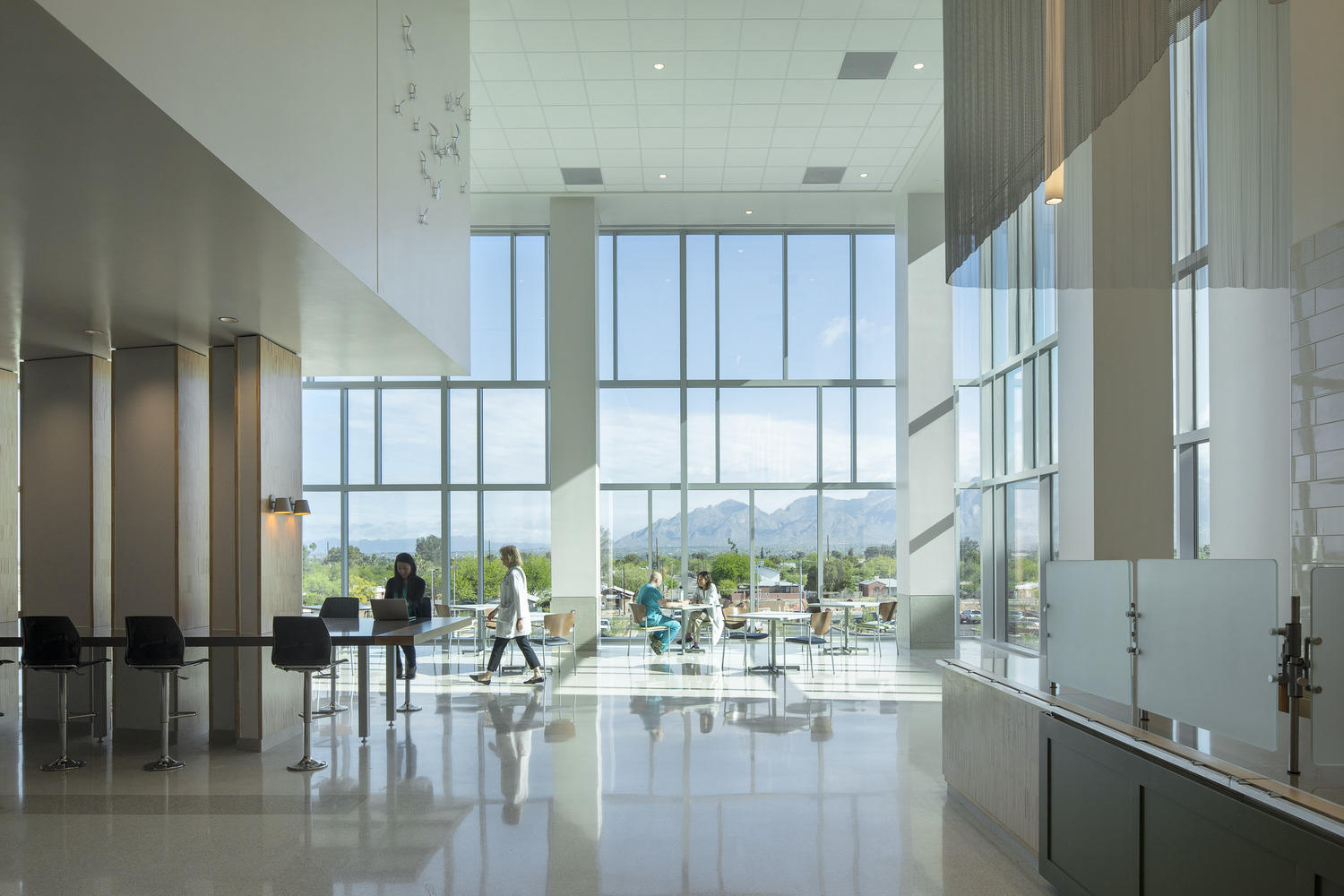
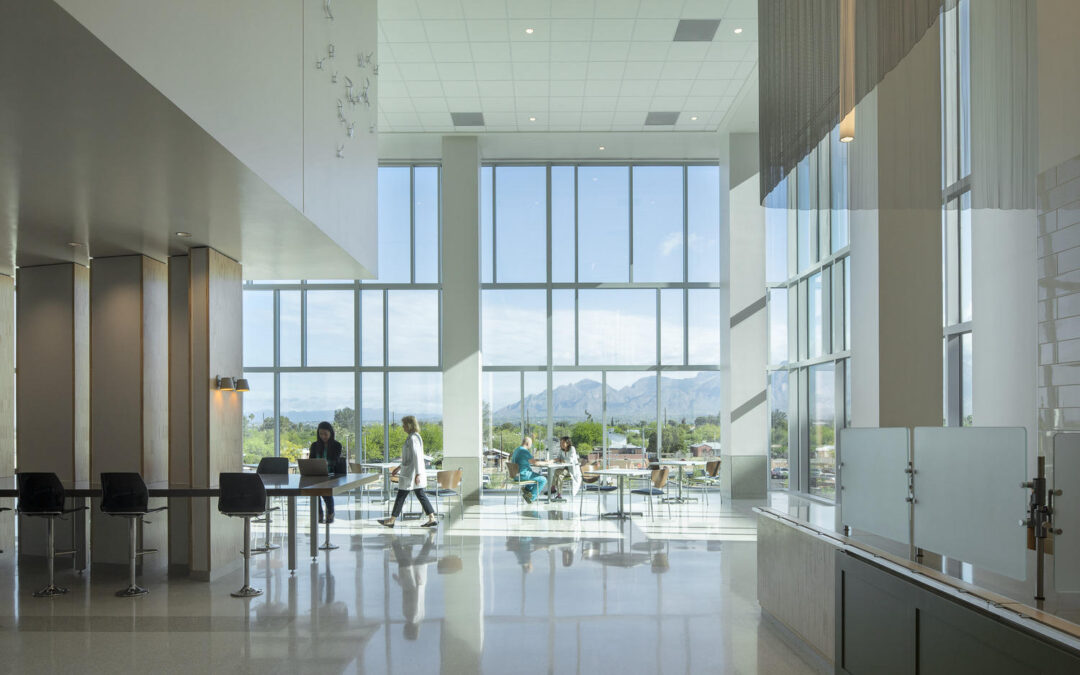
Banner University Medical Center, Tucson, AZ. Photo by Jeremy Bittermann.
Designing to Support the Workforce
Jason and Michelle highlight how inefficiencies in facility design can compound the strain on clinicians. Long travel distances, poorly organized layouts, and a lack of restorative spaces all contribute to burnout and turnover—issues that healthcare systems are already struggling to manage.

Principal Michelle Amberson, AIA, ACHA, EDAC

Principal Jason Costello, AIA, LEED AP
A Competitive Advantage in Recruitment
In a tight labor market, healthcare professionals evaluate not only compensation and culture, but also the environments in which they work. Well-designed facilities signal institutional investment in staff, while outdated or inefficient spaces can undermine both morale and an organization’s reputation.
This is particularly important for academic medical centers, where facilities must support complex care delivery alongside research, teaching, and simulation.
Optimizing Care Through Layout and Adjacency
One of the most impactful strategies Michelle and Jason discuss is improving spatial relationships between departments to streamline workflows and reduce unnecessary movement. Thoughtful adjacencies, such as placing interventional radiology near the emergency department, can significantly improve efficiency and even patient outcomes.
Designing for Retention and Well-Being
Ultimately, they share how healthcare design can be a strategic tool for strengthening the workforce. By aligning facility planning with clinical workflows and staff needs, organizations can create environments that support well-being, improve efficiency, and help retain top talent.

Emily Hooper
Senior Brand + Communications Manager
Emily leads brand and communications strategies across six physical and virtual studios.